Secrets of the Iberian Peninsula Luxury Cruise
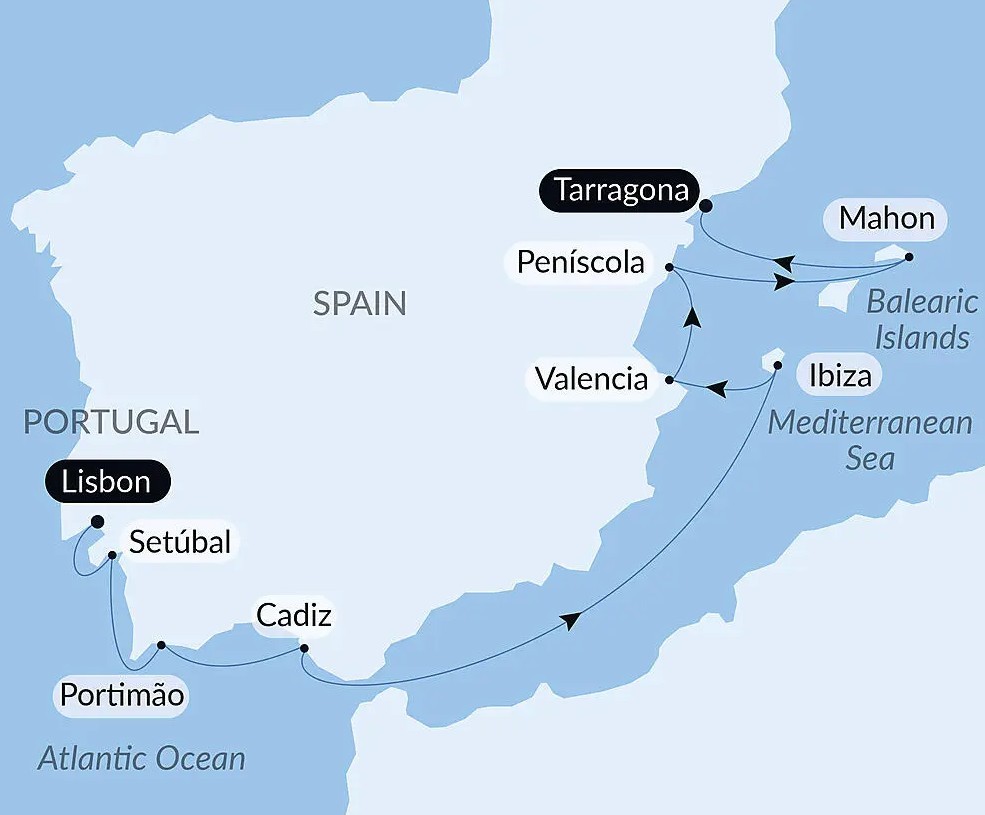
From the Atlantic to the Mediterranean, discover the striking contrasts of the Iberian shores. In the Algarve, ochre cliffs and secret beaches open onto an ocean of light, announcing Andalusia, nestled along the appropriately named Costa de la Luz. Here, flamenco bars, colourful little streets and medieval architecture all reveal the region’s lively soul. You will now sail along the Spanish coastlines, discovering remarkable lifestyle and heritage. From the province of Valencia to Catalonia, the architectural heritage, in turn Roman, medieval or modern, acts as a link between the ages. Then the Balearic Islands, with their turquoise coves and a gentle way of life, a perfect conclusion to this Iberian break, before reaching Barcelona.
Highlights
• A fascinating journey into the heart of the Iberian Peninsula’s cultural and natural treasures, featuring historic cities, pristine coastlines and the discovery of the lower-key Balearic Island of Menorca.
• Many places of interest mark the itinerary: Cadiz Cathedral; the Lonja de la Seda (the Silk Exchange - a UNESCO World Heritage Site) and the City of Arts and Sciences in Valencia; the Archaeological Ensemble of Tárraco in Tarragona (a UNESCO World Heritage Site); Peñíscola Castle.
• Discover the Balearic Islands, a blend of unspoilt islands and authentic villages.
Portugal’s capital city located on the banks of the Tagus, only a few kilometres from the Atlantic coast, is a city of exceptionally rich cultural diversity. At the mouth of the river harbour, impose two UNESCO World Heritage monuments, Jeronimos monastery and Belem tower. The Alfama hillside is also worth visiting: known for its fado bars and its Moorish streets, this district is the oldest one of the city and one of the most typical. Not far from there, Chiado’s elegant streets are home to big fashion labels and are an invitation to a bit of of luxury shopping.
A few kilometres south of Lisbon, Setúbal, one of Portugal's most important fishing ports, enjoys an exceptional geographical location. The city is surrounded by vast parks and nature reserves that protect the biodiversity of the Sado estuary and the Arrábida serra. Don't miss the possibility to discover the magnificent wild and unspoilt expanses that border the peninsula and the estuary, whose waters are home to many dolphins, which can easily be observed.
At the entrance of the River Arade, Portimão is a former sardine port that has become a famous seaside city. From this pleasant town, you can explore Silves, the former capital of the Algarve. The town is dominated by a Moorish castle, one of the best preserved in Portugal. You can also admire the incredible cathedral with its baroque façade, built on the site of an old mosque. Then you will go to Monchique, a small mountain town surrounded by a forest lush eucalyptus and cork oaks. In the maze of narrow cobbled streets and whitewashed houses, you will discover here a wilder and more authentic Algarve.
Andalusia’s Cadiz is located on the Costa de la Luz, in the south-west of Spain. From the beaches of Cortadura, to the flamenco bars of Santa Maria, through the colourful streets of la Viña, you will be amazed by this city, which is both steeped in history and extremely festive. In the medieval El Pópulo district, you will stroll along covered passages in the narrow gaps between houses. You will also be able to mosey around the lush Mina square. The star of the show is the magnificent cathedral and its dome crowned with yellow porcelain, presiding above the Ocean.
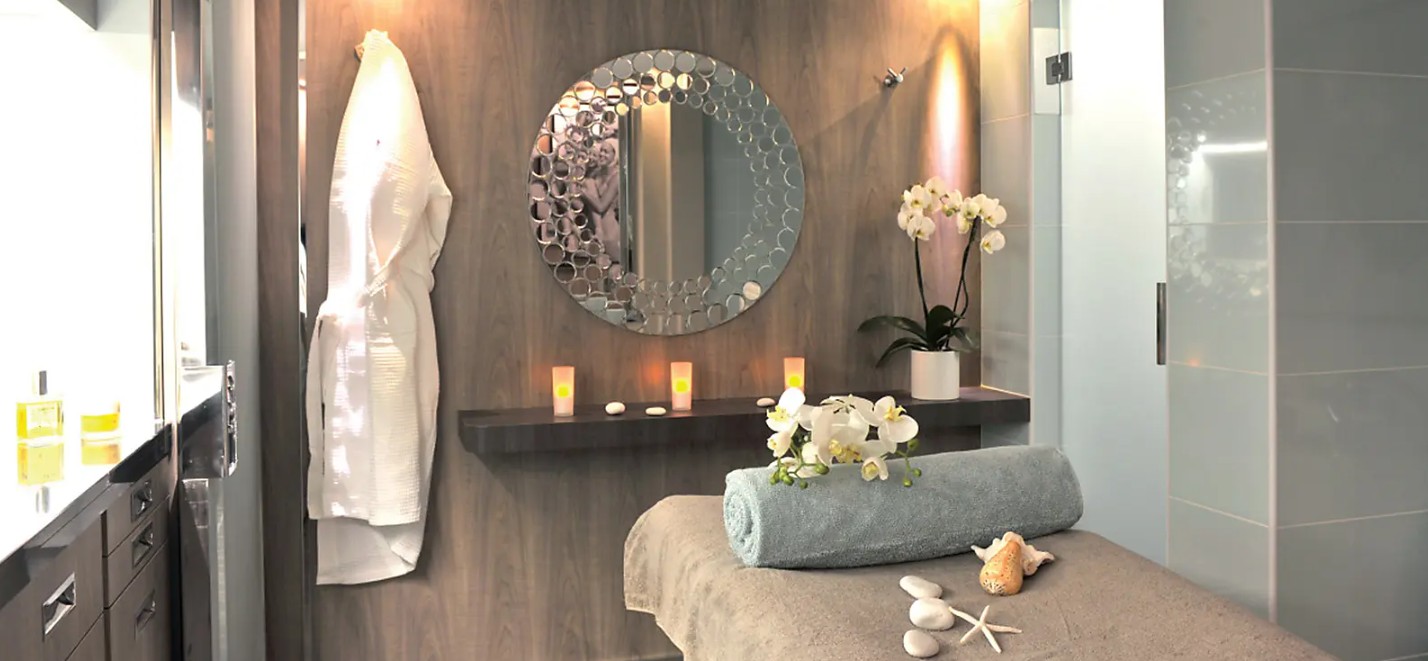
During your journey at sea, make the most of the many services and activities on board. Treat yourself to a moment of relaxation in the spa or stay in shape in the fitness centre. Depending on the season, let yourself be tempted by the swimming pool or a spot of sunbathing. This journey without a port of call will also be an opportunity to enjoy the conferences or shows proposed on board, depending on the activities offered, or to do some shopping in the boutique or to meet the PONANT photographers in their dedicated space. As for lovers of the open sea, they will be able to visit the ship’s upper deck to admire the spectacle of the waves and perhaps be lucky enough to observe marine species. A truly enchanted interlude, combining comfort, rest and entertainment.
The emblematic island of the Balearics, “the white island” was a haven for European artistic bohemians from the 1930s and a paradise for hippies in search of authenticity in the 1960s. It has been a giant nightclub for gilded youth since the 1990s. Behind this fiesta economy, Ibiza has managed to preserve the charms of its wild coves and its villages of white fincas with flat roofs that inspired Le Corbusier. The island is a UNESCO World Heritage Site thanks to its exemplary marine and coastal ecosystems but also thanks to the architectural vestiges of this former stronghold of the Mediterranean economy, from the Phoenicians up to the Renaissance.
Valencia - the city of Art and Sciences. Two hearts beat in this Spanish city: one is modern, avantgarde and almost futuristic; the other is more provincial, more traditional and nostalgic. Valencia has the temperament of a great Mediterranean city whose wide avenues form a border around the old town. The city has an abundance of architectural styles that coexist harmoniously, but above all it resolutely embraces the 21st Century with the futuristic structures of its Agora congress centre and City of Arts and Sciences, emerging from a crystal blue pool.
Considered one of Spain’s most beautiful villages, Peñíscola overlooks the turquoise sea, charming visitors with its cobbled streets and whitewashed houses. But it is above all the imposing castle perched on its rocky promontory that commands attention. Built by the Templars, and later converted into a papal residence under Benedict XIII, it overlooks the medieval old town and its shaded squares, craft shops, and traditional restaurants. The latter perfectly capture the richness of the culinary tradition in the Castellón region, renowned for its local products such as wine and olive oil.
You will be welcomed by the colourful houses of Mahon, its narrow streets and pretty squares that appear as you stroll around this richly contrasting city. Mahon reveals its different neighbourhoods, alternating between monuments, villas and white buildings. Discover the Santa Maria church, a building of neo-gothic inspiration, rebuilt in the 18th Century. It is worth a visit to see its monumental organ with more than 3,000 pipes and four keyboards. Around the Carmen church you will find a local market, full of stands selling avarcas, typical Menorcan sandals originally made by peasants. Let yourself fall under the spell of this Mediterranean treasure.
Tarragona is situated on the Costa Dorada, in the south of Spain’s Catalonia region. Known as Tarraco in Roman times, the city boasts very important archaeological and architectural vestiges that are magnificently well preserved. These earned it a place on the UNESCO World Heritage list in 2000. Do not miss this opportunity to visit the Roman amphitheatre, which is located on a beautiful natural site by the sea and is exceptionally well preserved. A stroll through the streets of the old medieval town to the cathedral, which was completed in the 14th century, is a wonderful way to end your visit to this welcoming city.
Itineraries are subject to change.
|
Book now |

Superior Stateroom
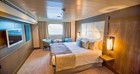
Deluxe Stateroom
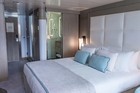
Prestige Deck 4
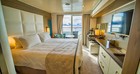
Prestige Deck 5
Prestige Deck 6
Deluxe Suite
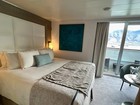
Prestige Deck 5 Suite
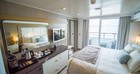
Prestige Deck 6 Suite
Owner's Suite
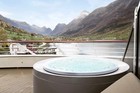
|
Book now |
Superior Stateroom
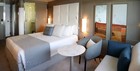
Deluxe Stateroom
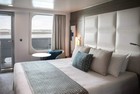
Prestige Stateroom Deck 4
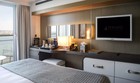
Prestige Stateroom Deck 5
Prestige Stateroom Deck 6
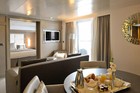
Deluxe Suite
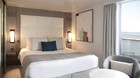
Prestige Suite Deck 5
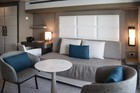
Prestige Suite Deck 6
Owner's Suite
Vessel Type: Luxury Expedition / Cruise Ship
Length: 142 metres
Passenger Capacity: 264 (200 in Antarctica)
Built: 2011
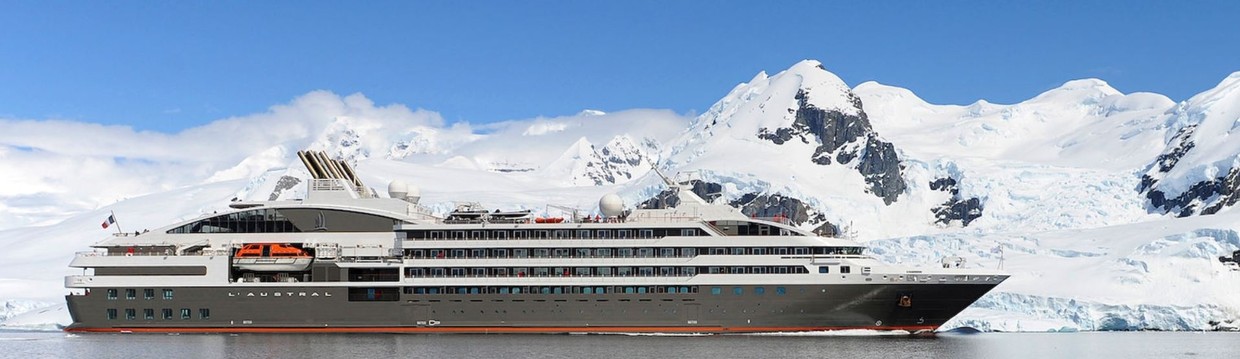
L’Austral is a sleek, French-designed expedition yacht combining modern elegance with an intimate atmosphere. With just 132 staterooms for 264 guests, she offers the refined feel of a private yacht, enhanced by attentive service and stylish interiors featuring fine materials, harmonious colours, and discreet touches of brightness. Built by Fincantieri in Ancona, Italy, she is 466 ft long with a 59 ft beam, ice-class certified (1C), and equipped with the latest eco-design innovations, continually upgraded to improve environmental performance.
Designed for both polar adventures and tropical voyages, L’Austral features six guest decks, elegant dining venues, and 11 Zodiacs for immersive exploration. Life on board blends relaxation and discovery, with refined gastronomy, welcoming social spaces, and an emphasis on responsible travel. From the subantarctic islands to sunlit coasts, she offers a chic and comfortable way to experience the world, always with PONANT’s signature style of elegance, intimacy, and connection to the sea.



Vessel Type: Luxury Expedition / Cruise Ship
Length: 142 meters
Passenger Capacity: 264 (in twin cabins, 200 in Antarctica)
Built: 2011
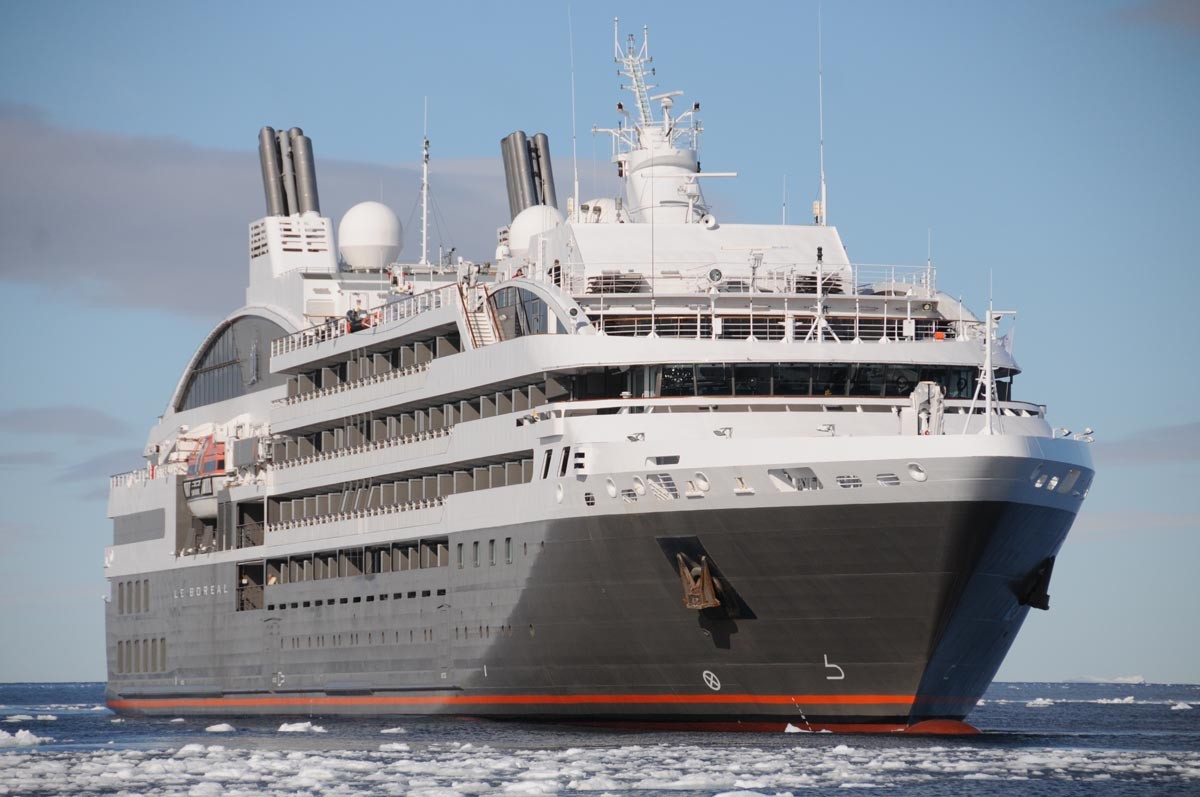
Le Boréal, along with her sisterships L’Austral, Le Soléal, and Le Lyrial, embodies PONANT’s signature blend of luxury, intimacy, and serene well-being. Designed with both conviviality and tranquillity in mind, she offers inviting shared spaces alongside peaceful retreats for moments of quiet escape. Her sleek exterior and refined interiors reflect the careful thought and craftsmanship that define the fleet, with a décor that captures the spirit of a private yacht. Featuring 132 staterooms and suites, she welcomes up to 264 guests in an atmosphere that feels both elegant and personal.
Built in 2010 by Fincantieri in Ancona, Italy, Le Boréal measures 466 ft in length, with a beam of 59 ft, an ice-class 1C hull, and eco-design innovations continually updated to improve her environmental performance. With six passenger decks, 11 Zodiacs for exploration, and attentive French-flag service, she is equally at home navigating icy polar waters or warm, sunlit coasts. Life on board combines refined gastronomy, engaging social activities, and immersive excursions, creating a travel experience where elegance meets adventure.


Special Offers
Online prices reflect the current brochure fare savings of up to 30%. Prices may change based on demand. Terms and conditions apply. This special offer is subject to availability. Please contact us for more details.
Inclusions
• Accommodation in stateroom
• The full meal plan
• The Open Bar: beginning with boarding, and during the duration of the cruise, a wide selection of drinks (mineral water, soft drinks, wine, beer, champagne, spirits, coffee, tea) is served on request and at any time of the day. Certain premium alcoholic beverages on the menu are not included in the Open Bar
• Free Wi-Fi internet access 24 hours a day*
• Activities offered during expedition cruises
• Access to all the common areas on board our sister ships and Ponant Explorers: fitness room, steam room, hair salon, swimming pool (sea water, heated), solarium, lounges, theater, boutique & leisure area
Exclusions
• Flights other than those mentioned in the itinerary
• Travel insurance
• Passport and visa costs if applicable
• Premium beverages package (Can be purchased on board)
• Optional Excursions where applicable
• Spa treatments on board
• Pre and post cruise accommodation unless otherwise stated
• Transfers unless specified
• Gratuities
Our Associates Include


