Coral Frontiers & Kimberley Icons Australia Cruise
This itinerary combines our classic Kimberley itinerary with a visit to the spectacular Rowley Shoals Marine Park and Ashmore Reef. Witness magnificent coastal vistas created by towering rock ridges, silent secluded gorges, abundant wildlife, and massive tidal movements. Expert guides interpret 40,000-year-old rock art, and retrace the history of Phillip Parker King who first charted this spectacular coastline 200 years ago. Board our Xplorer tender and witness the magnificent King George River and its towering 80-metre sandstone escarpments. Join an expert guide to learn about the history of the ancient Wandjina and Gwion Gwion rock paintings. Witness waterfalls cascading off Montgomery Reef as it rises out of the ocean on the ebbing tide, whilst discovering the reef’s diverse marine life. Finish off the voyage at a chain of coral atolls offering some of the best snorkelling and diving opportunities in the world.
Highlights
• Experience cruising down scenic King George River getting up close to 80m tall sandstone cliffs
• Witness the tidal phenomenon that is the Horizontal Waterfalls from our Zodiac tender vessels
• Visit Indigenous rock art galleries and learn about ancient Wandjina and Gwion Gwion art
Birdwatch, dive and snorkel at Ashmore Reef
• Get up close to Montgomery Reef and discover the tidal reef’s diverse marine life
• Snorkel or dive the pristine and rarely visited Rowley Shoals Marine Park and Scott Reef, accompanied by our onboard Marine Biologist
Darwin Departures: Arrive at Darwin Fort Hill Wharf for boarding at 9:30am, with time to settle into your stateroom before our 10:00am departure. There will be a light breakfast available upon boarding before we cruise across Joseph Bonaparte Gulf and sail into Western Australian waters.
Broome Departures: Arrive at our designated meeting point at 3:30pm before our transfer before our transfer to Broome Deep Water Port for boarding at 4:00pm. Settle into your stateroom before our 5:00pm departure.
Take the time to become acquainted with all the facilities onboard before join the expedition team in the Bridge Deck Lounge for an introduction to the Kimberley. As dusk falls meet your fellow travellers, the Captain and crew for the Captain’s Welcome Drinks.
Cruise down the scenic King George River, through steep-sided gorges carved by a flooded river system that carved a swathe through the Kimberley landscape 400 million years ago. We will take the opportunity to get up close and view the honeycomb erosion patterns of the 80m tall sandstone cliffs.
Depending on tides and weather, step ashore at either Bigge Island, Swift Bay, or Wollaston Bay, remote locations famed for their remarkable Wandjina and Gwion Gwion (Bradshaw) rock art. On short walks of no more than 600 metres return, discover ancient galleries painted on sandstone cliffs, cave walls, and low rock overhangs. Learn about the stories behind these sacred sites, from early contact depictions to the iconic Wandjina figures. Keep an eye out for local wildlife, including little rock wallabies, nesting turtles, and crocodile tracks along the shore.
Located on the outer edge of the continental shelf, Ashmore Reef and Cartier Island are remote coral and sand islands teeming with marine and birdlife. Declared a National Nature Reserve in 1983, the reef supports over 250 coral species, 70 fish species, nesting turtles, and visiting dugongs, dolphins, and whale sharks.
Depending on conditions, enjoy diving and snorkelling in the crystal-clear waters of Ashmore Reef, with also the chance to kayak. Between activities, take time to birdwatch and spot marine life around this pristine sanctuary, where nature thrives far from human habitation.
Some 300km off Australia’s northwest coast, Scott Reef comprises four atolls, including Seringapatam Reef, site of the 1884 Yarra wreck. Visited by Indonesian fishermen for centuries, the reef has faced recent coral bleaching but remains rich in marine life. Enjoy snorkelling, diving, photography, and nature interpretation, with possible glass-bottom boat tours. Weather and tides may allow a landing on a remote sand cay for a rare and isolated perspective.
Montgomery Reef is a biologically diverse area covering over 300 sq km and was named by Phillip Parker King. Twice daily, as the sea recedes in mammoth 11m tides, Montgomery Reef rises from the Indian Ocean in a cascade of rushing water revealing a flat-topped reef pockmarked with rock pools and rivulets. As the reef emerges, we get up close in our Xplorer and Zodiac inflatable tenders to witness the spectacle as our Expedition Team share their knowledge on the formation of the reef and the myriad wildlife. Opportunistic birds take advantage of the emerging reef, feeding on marine life left exposed in rock pools. Turtles, dolphins, dugongs and sawfish too are also attracted to feeding opportunities as the ocean recedes. The ocean is awash in a swirl of eddies and whirlpools as the moon’s gravitational force takes hold. Then, a few hours later the entire water-borne drama is reversed as the tide comes in and Montgomery Reef disappears below sea level.
The Horizontal Falls are one of the Kimberley’s biggest attractions and are a result of the mammoth 11m tides for which the Kimberley is renowned. Naturalist David Attenborough described the Horizontal Falls as ‘one of the greatest natural wonders of the world.’ This natural phenomenon has been created as the ocean thunders through a narrow gorge in the McLarty Ranges. Water builds up on one side and is forcibly pushed through the bottleneck, creating a rushing horizontal waterfall of swiftly flowing seawater. Witnessing the rapids on our Zodiac inflatable tenders is one of the highlights of our Kimberley expedition cruises. Talbot Bay is at the heart of the Buccaneer Archipelago, where rocks on the 800 or so islands are estimated at over 2 billion years old. At Cyclone Creek, you will see evidence of massive geological forces in the impressive rock formations and cruise through the Iron Islands past Koolan Island.
Please Note: 2026 will be the final year we can operate tender cruises through the First Gap. From 2027 onwards, we’ll still be able to take you by zodiacs and tenders right up to the Gap, where you can witness the powerful tides rushing in and out at their peak flow for the day.
The Lacepede Islands are a protected class-A nature reserve and are significant as a seabird nesting rookery for brown boobies and roseate terns. Other species often sighted at the Lacepedes include Australian Pelicans, frigate birds, egrets and gulls. The four low-lying islands are also an important breeding and nesting habitat for green turtles. If weather and tide conditions are suitable, we will explore the lagoons by Xplorer and Zodiac tender vessels.
The Rowley Shoals sits 170 nautical miles offshore, Rowley Shoals’ three atolls, Clerke, Mermaid, and Imperieuse, which all offer unique diving and snorkelling. With sheer walls, channels, and crystal-clear water, the site provides striking underwater scenery. Conditions permitting, explore via Xplorer with guided snorkels, drift channels, and beachcombing on Bedwell Island, home to red-tailed tropicbirds.
Our incredible adventure along the Kimberley Coast concludes. Bid farewell to new-found friends, the Captain and crew.
Broome Arrival: Arrive in Broome this morning for a 8:00am disembarkation. A post-cruise transfer to Broome CBD, Cable Beach or Airport is included. If you’re not transferring directly to the airport why not spend the day visiting world-famous Cable Beach or stroll the historic streets of Chinatown in central Broome.
Darwin Arrival: Arrive in Darwin at 9:00am and disembark Darwin’s Fort Hill Wharf. Post cruise transfers to CBD hotels or the airport are included. If you’re not transferring directly to the airport why not spend the day enjoying the tropical city of Darwin with its landscaped waterfront and harbourside Wave Pool.
This itinerary is an indication of the destinations we visit and activities on offer. Throughout the expedition we may make changes to the itinerary as necessary to maximise your expeditionary experience. Allowances may be made for seasonal variations, weather, tidal conditions, and any other event that may affect the operation of the vessel. Coral Expeditions suggests that you do not arrive on the day of embarkation or depart on the day of disembarkation due to any changes that may occur in scheduling. Visits to outer reefs, islands and atolls will be subject to weather conditions at the time. If we cannot visit these locations they will be replaced with additional locations on the Kimberley Coast.
|
Book now |
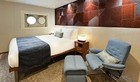
Coral Deck Stateroom
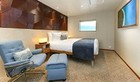
Promenade Deck Stateroom
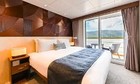
Explorer Deck Balcony Stateroom
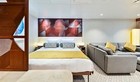
Bridge Deck Balcony Suite
|
Book now |
Coral Deck Stateroom
Promenade Deck Stateroom
Explorer Deck Balcony Stateroom
Bridge Deck Balcony Suite
|
Book now |
Coral Deck Stateroom
Promenade Deck Stateroom
Explorer Deck Balcony Stateroom
Bridge Deck Balcony Suite
|
Book now |
Coral Deck Stateroom
Promenade Deck Stateroom
Explorer Deck Balcony Stateroom
Bridge Deck Balcony Suite
|
Book now |
Coral Deck Stateroom
Promenade Deck Stateroom
Explorer Deck Balcony Stateroom
Bridge Deck Balcony Suite
Vessel Type: Expedition
Passenger Capacity: 120
Built: 2020
Coral Geographer is the newest and most advanced vessel in the Coral Expeditions fleet, launched in 2021 and designed to reach some of the world’s most remote and untouched destinations. Purpose-built for expedition cruising, she carries a maximum of 120 guests and offers a refined yet relaxed onboard atmosphere. With a shallow draught and cutting-edge navigation systems, Coral Geographer can access secluded bays, island shores, and small coastal villages in destinations such as Australia’s Kimberley, South and West Coasts, as well as international voyages to New Zealand, Japan, the Philippines, and beyond. Her twin Xplorer tenders and fleet of zodiacs enable seamless shore excursions, while open deck spaces and Indigenous Australian artwork throughout the ship enhance the connection to land and culture.
All staterooms are outward-facing with private ensuites, and most include balconies, including six spacious Bridge Deck Suites with outside-facing bathrooms and horizon baths. Life onboard centres around exploration, comfort, and connection — from single-seating dining with fresh small-batch meals, to lectures and briefings in the lounge, to sunset drinks at the Explorer Bar. Guests enjoy complimentary Wi-Fi, a gym, library, lift access between decks, and welcoming Australian hospitality. Coral Geographer is a modern expedition ship that combines world-class capabilities with the personal touch of small-ship cruising.


Inclusions
• All excursions with our Expedition Team
• Use of Xplorer, Zodiacs and Kayaks
• Snorkelling & SCUBA equipment (SCUBA diving at an additional cost)
• Daily lectures and briefings with Guest Lecturers
• All meals, chef-prepared on board
• Captain’s welcome and farewell events, and open bridge access
• Selected wines, selected beers and house spirits, juices, and soft drinks served with lunch and dinner
• 24-hour barista-style coffee and tea station
• All entrance fees to National Parks, ports, traditional owner fees and charges imposed by governing authorities
• Tips and gratuities
• Use of all onboard facilities, incl. a reference library
• Your expedition photos captured during the voyage
• Post-cruise transfers
• Wifi Access – Standard speed connectivity enabling email, social image sharing, web browsing and messaging
• Snorkelling equipment – On selected voyages only where snorkelling is available
Exclusions
• Pre-cruise transfers
• Pre and post cruise flights/charter flights – Please note on some of our international voyages we do have charter flights as an option. This can be included in the cruise fare price, this information will be listed under each itinerary
• Pre and post cruise accommodation
• Travel Insurance
• Entry visas & travel permits for the country you are travelling to/from
• Alcoholic & non alcoholic specialty beverages outside of lunch and dinner service
• Premium Internet services
• Laundry service (available at a cost)
• Items of a personal nature such souvenir purchases
• Optional helicopter flight over Mitchell Falls is approximately $890 per person. Subject to a minimum of 12 passengers. Helicopter flights are booked once onboard, with a 24hr cancellation policy. – Please note this in on our Kimberley voyage only
• Scuba Diving – Optional extra on selected voyages only

 Expedition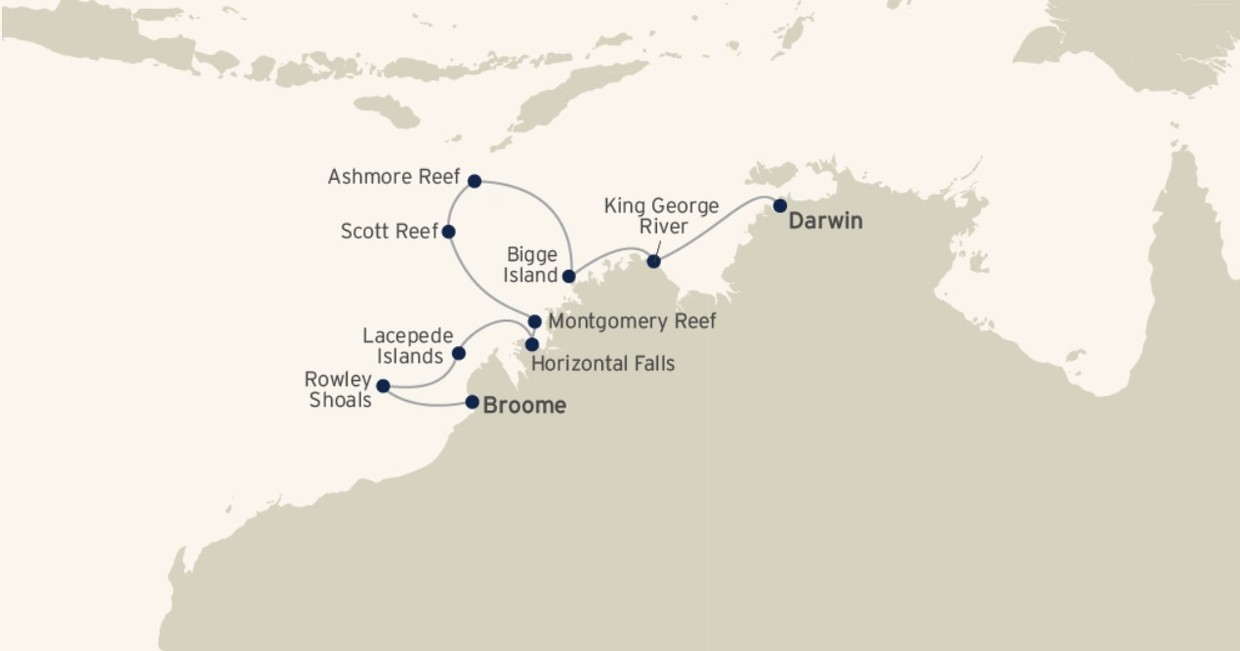
Our Associates Include


