Greenland & Wild Labrador: A Torngat Mountains Adventure Cruise
On the Canadian mainland, the Torngats rise as the highest peaks east of the Rockies, steep slopes surging from deep blue fjords where whales cruise and polar bears patrol. Ancient rock and open silence invite stillness and sharper attention. At the heart of the journey is Torngat Mountains National Park, shaped by Inuit leadership and knowledge, explored by foot and Zodiac at the land's pace. Newfoundland's music and sense of belonging, Inuit welcome in Nunatsiavut communities, and Nuuk's Kalaallit culture and contemporary life add vivid counterpoints.
Some departures may have slightly modified itineraries. Please confirm the itinerary with an Expedition Specialist.
Highlights
• Explore the breathtaking Torngat Mountains National Park with its rugged tundra and stunning fjords.
• Visit L’Anse aux Meadows, the only authenticated Viking settlement in North America.
• Experience Greenland's vibrant Nuuk and the majestic Kangerlussuatsiaq Fjord.
Kangerlussuaq lies within a broad glacial valley between the Greenland Ice Sheet and the sea. Its dry climate and unusually stable weather led to the establishment of an American air base here during the Second World War and continue to make it one of Greenland’s most important aviation gateways. The surrounding region has a much longer history as a place of Inuit travel and hunting.
After arriving by charter flight from Toronto, board the expedition vessel and begin the long passage through Kangerlussuaq Fjord. Mountains, glacial valleys, and pale meltwater mark the transition from Greenland’s interior to its western coast. Crossing the Arctic Circle, the route opens towards the long light and expansive waters of late Arctic summer.
Kangerlussuatsiaq means “the rather big fjord” in Kalaallisut, while the Danish name Evighedsfjorden translates to “the fjord of eternity,” underscoring its vastness and seemingly never-ending nature. See why Kangerlussuatsiaq Fjord lives up to its name and marvel at this complex coastal waterway that includes calving glaciers, sheer bird cliffs, and streams cascading against a towering mountain backdrop. Explore this sublime glacial landscape by ship and by Zodiac. The waters here are relatively warm, due to the West Greenland Current and the subarctic location.
At the mouth of an immense fjord system, Nuuk rises between the sea and the mountains. Its name means “headland” in Kalaallisut, the Greenlandic language, a fitting description for a capital gathered at the water’s edge. Colourful wooden houses line the old harbour, contemporary buildings reshape the skyline, and the saddle-shaped peak of Sermitsiaq rises across the water, giving Nuuk its unmistakable natural backdrop
Human history in the region reaches back thousands of years, while the modern city grew from a colonial settlement established in 1728. The Greenland National Museum brings these layered histories together through boats, clothing, archaeological finds, and the remarkably preserved Qilakitsoq mummies.
Nuuk is also a centre of contemporary Greenlandic life. Kalaallisut carries through everyday conversation, music, and public life, while artists and chefs draw new ideas from culture and place. Katuaq, Greenland’s cultural centre, takes its name from the word for “drumstick,” fitting for a gathering place that helps set the city’s creative rhythm. There is much to discover in this distinctly Greenlandic capital, where a lively cultural scene extends beyond museums and performance spaces into cafés, shops, and everyday city life.
Cross the Davis Strait, a storied stretch of ocean connecting Greenland and Labrador. While whales and seabirds trace your course, life aboard turns to learning and exchange. Inuit cultural educators, scientists, artists, and historians share knowledge, stories, and laughter that deepen understanding of the Arctic and its peoples. Reflection and discovery flow together on this day at sea.
The sea that has shaped this expedition reaches its most dramatic expression in Torngat Mountains National Park. At the northern edge of Labrador, some of the highest and most rugged mountains in eastern North America rise directly from the water. Fjords extend deep into the range beneath walls reaching 900 metres, while small glaciers endure among rocks nearly four billion years old.
Torngait means “place where the spirits dwell.” This is the homeland of Labrador and Nunavik Inuit, whose travel routes, hunting grounds, stories, and knowledge are inseparable from the landscape. Inuit hosts bring this relationship into view, sharing perspectives shaped by generations of travelling, living, and observing the land and sea.
Polar bears travel the coast, caribou move through the valleys, and the Torngats support the world’s only known black bear population living entirely above the tree line. Over four days, the scale of the park unfolds through changing fjords, weather, wildlife, and time shared with Inuit. Here, sea, stone, and living culture come together at the heart of the journey.
Above the tree line on Labrador’s northern coast, the long white building of Hebron Mission National Historic Site of Canada stands against a vast landscape of mountains, tundra, and sea. Established by Moravian missionaries in the 1830s, Hebron became a centre of religious, commercial, medical, and community life for Labrador Inuit.
In 1959, Hebron was closed without consultation, and 249 Inuit were relocated to communities farther south, separating families from their homeland. A monument now records their names, the provincial government’s apology, and the relocatees’ response in Inuktitut and English.
Yet Hebron is more than a place of loss. As families return and restoration continues, it is again becoming a place of gathering, where the past is remembered and connections to homeland are renewed for generations to come.
Come ashore in a Nunatsiavut community, where the spirit of the Labrador coast comes vividly to life. Here, history, art, and daily life intertwine, revealing stories of resilience, pride, and connection to land and sea. Walk through a community where tradition and modern life coexist, where voices rise in song, artisans share their craft, and every conversation offers insight into Inuit self-governance and cultural renewal. Framed by striking coastal hills and ancient rock formations, this visit offers a powerful sense of place and a deeper appreciation of Inuit Labrador.
Along the Labrador coast, sheer headlands give way to quiet coves and forested valleys that reach toward the sea. For centuries, Inuit, Innu, and settler communities have lived within this landscape of contrasts, its beauty matched only by its demands. During the great cod fishery, harbours once filled with schooners, salt fish, and the rhythm of seasonal life. Today, cultural sites and small outports echo those stories, revealing how people and sea have long sustained one another. Guided hikes and Zodiac excursions invite you to trace these same shorelines, where every turn offers a glimpse of Labrador’s raw power and enduring spirit.
At the tip of Newfoundland’s Great Northern Peninsula lies L’Anse aux Meadows, the only authenticated Norse site in North America and a UNESCO World Heritage treasure. Step back a thousand years to when Norse voyagers made landfall here, marking the first known meeting between Europeans and the Indigenous peoples of this continent. Wander among grassy mounds and reconstructed sod dwellings that bring the past to life, and trace the stories unearthed by archaeologists who followed the sagas and clues preserved in the earth.
Follow the Labrador Current along Newfoundland’s rugged northeast coast, where fishing villages cling to headlands shaped by wind and tide. Its cold waters once supported the greatest fishery in the world, king cod, drawing settlers to carve out lives along the rocky shores. These coastal communities, though ever adapting, still carry the imprint of their sea-going heritage. Out at sea, whales surface and seabirds wheel overhead, drawn by the nutrient-rich flow. Here, wild landscapes and enduring traditions meet, revealing a shoreline defined as much by people and history as by the restless sea itself.
Cradled by steep hills and guarded by the dramatic Narrows, St. John’s—Newfoundland and Labrador’s spirited capital—is one of the world’s great natural harbours and one of North America’s oldest cities. Brightly painted row houses climb the slopes beside Signal Hill, where the Atlantic stretches endlessly beyond. In its winding streets and lively waterfront, history and creativity thrive side by side, filling the air with music, laughter, and the unmistakable spirit of Newfoundland.
Published itineraries reflect our intended route and experiences but cannot be guaranteed. Weather, sea and ice conditions, government regulations, operational considerations, wildlife, and other circumstances may require changes to the planned schedule. Visits to specific communities also depend on local conditions and the needs, availability, and requests of the communities themselves. When changes are necessary, we will seek the best available alternatives, including another community visit where circumstances allow.
|
Book now |
Cabin Category 1
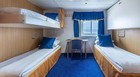
Cabin Category 2
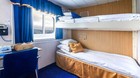
Cabin Category 3
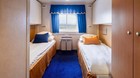
Cabin Category 4
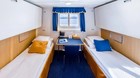
Cabin Category 5
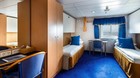
Cabin Category 6
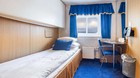
|
Book now |
Cabin Category 1
Cabin Category 2
Cabin Category 3
Cabin Category 4
Cabin Category 5
Cabin Category 6
|
Book now |
Category 1
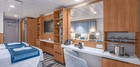
Category 2

Category 3
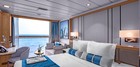
Category 4
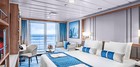
Category 5

Category 6
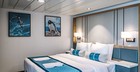
Category 7
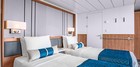
Category 8

Category A
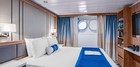
Category 9

|
Book now |
Cabin Category 1
$11,336 USD pp
Cabin Category 2
$13,136 USD pp
Cabin Category 3
$14,216 USD pp
Cabin Category 4
$14,936 USD pp
Cabin Category 5
$15,836 USD pp
Cabin Category 6
$21,357 USD pp
|
Book now |
Cabin Category 1
$11,336 USD pp
Cabin Category 2
$13,136 USD pp
Cabin Category 3
$14,216 USD pp
Cabin Category 4
$14,936 USD pp
Cabin Category 5
$15,836 USD pp
Cabin Category 6
$21,357 USD pp
|
Book now |
Category 1
$10,497 USD pp
Category 2
$12,147 USD pp
Category 3
$12,822 USD pp
Category 4
$13,422 USD pp
Category 5
$13,872 USD pp
Category 6
$14,547 USD pp
Category 7
$15,222 USD pp
Category 8
$16,122 USD pp
Category A
$17,370 USD pp
Category 9
$17,997 USD pp
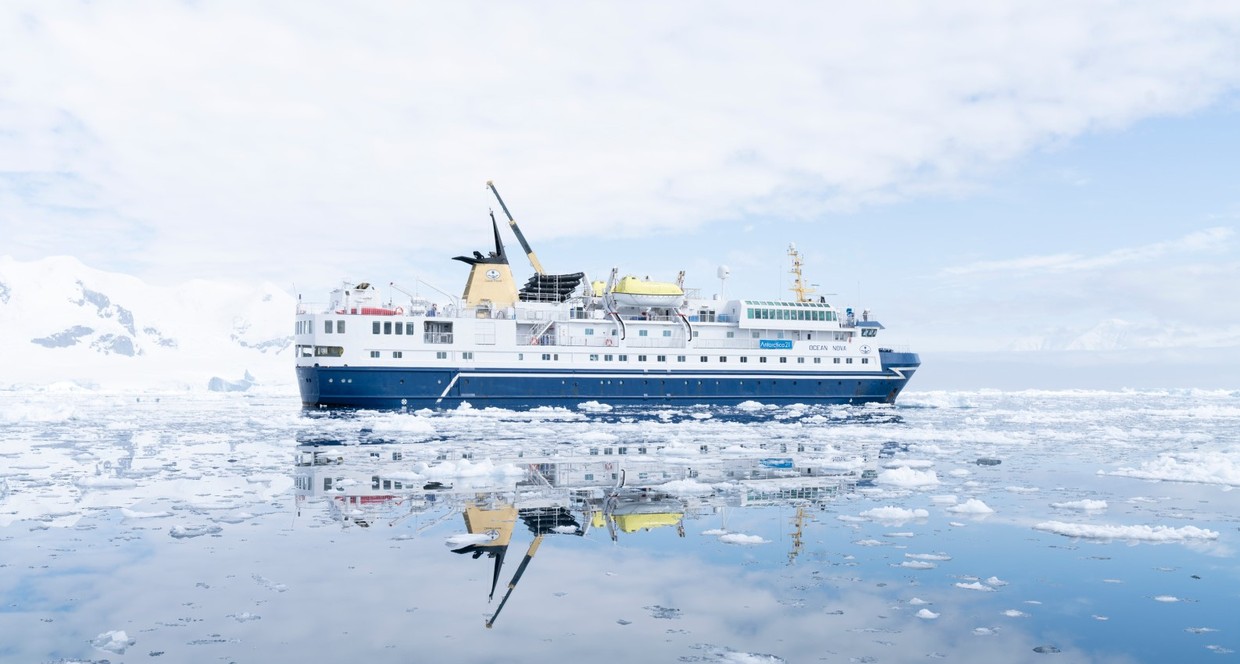
Vessel Type: Expedition
Length: 73 metres
Passenger Capacity: 86
Built / Refurbished: 1992 / 2006
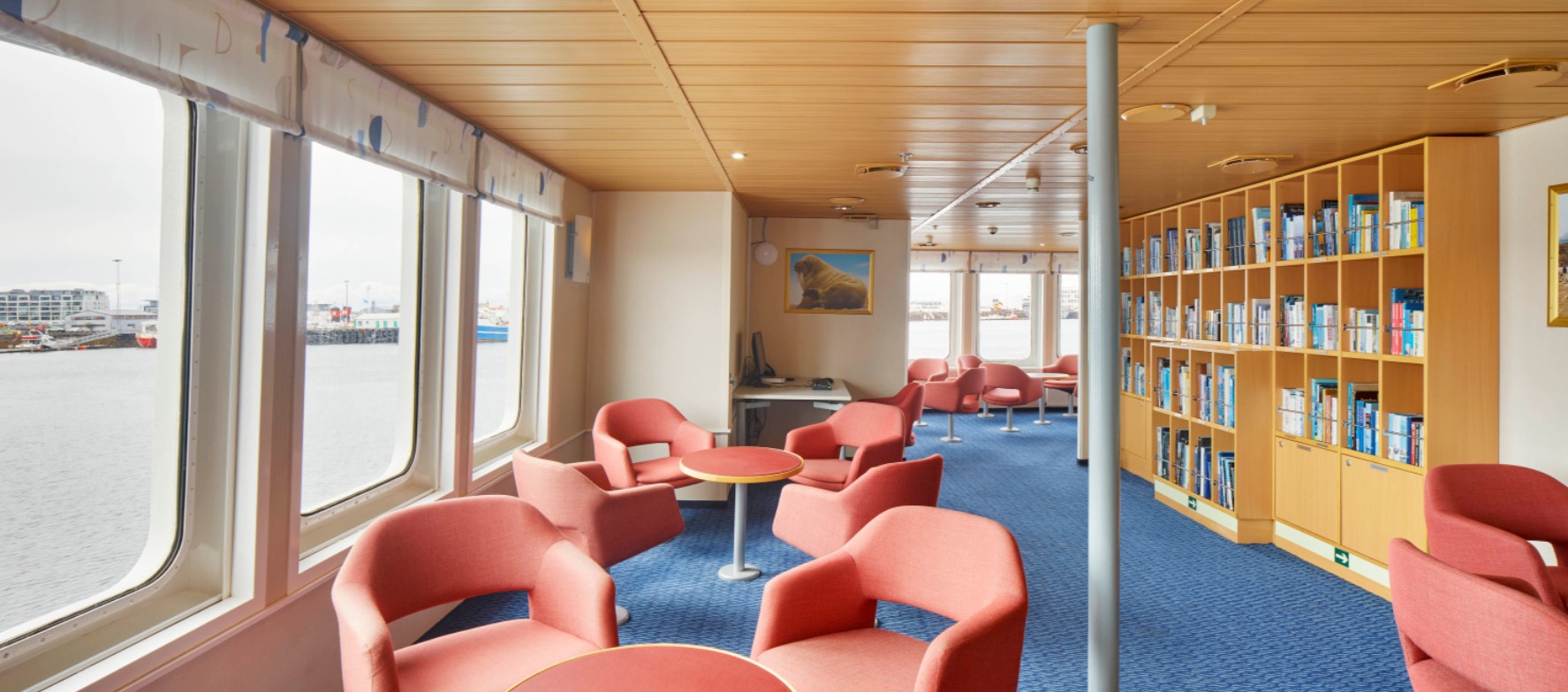
The Ocean Nova, built in Denmark in 1992 and fully refurbished in 2006, is a small yet comfortable expedition vessel accommodating up to 84 passengers. Cabins are spread across two decks and include single, double, and triple accommodations, all with sea views and private facilities. Designed with Scandinavian light woods, the cabins feature ample storage, desks, and flexible bedding arrangements, ensuring a practical and cosy retreat after a day of exploration. Passengers can relax in the Panorama Lounge, which offers panoramic views, daily briefings from the expedition team, and lectures on subjects ranging from ornithology to geology, while the library, small gym, and medical facilities enhance onboard comfort.
Dining aboard the Ocean Nova is informal yet enjoyable, with a single-sitting dining room offering a combination of table service and buffet, allowing all guests to dine together while taking in views through the portholes. Life on board is relaxed and immersive, often spent on deck watching for wildlife or simply admiring the surrounding landscapes. With one of the highest ice classes (1B) and a powerful 2000 hp diesel engine, the Ocean Nova is equipped to navigate icy waters or tranquil lochs with ease. A crew of 34, including North European officers, ensures both passenger safety and an enriching expedition experience, complemented by fully enclosed lifeboats and an onboard medical clinic.



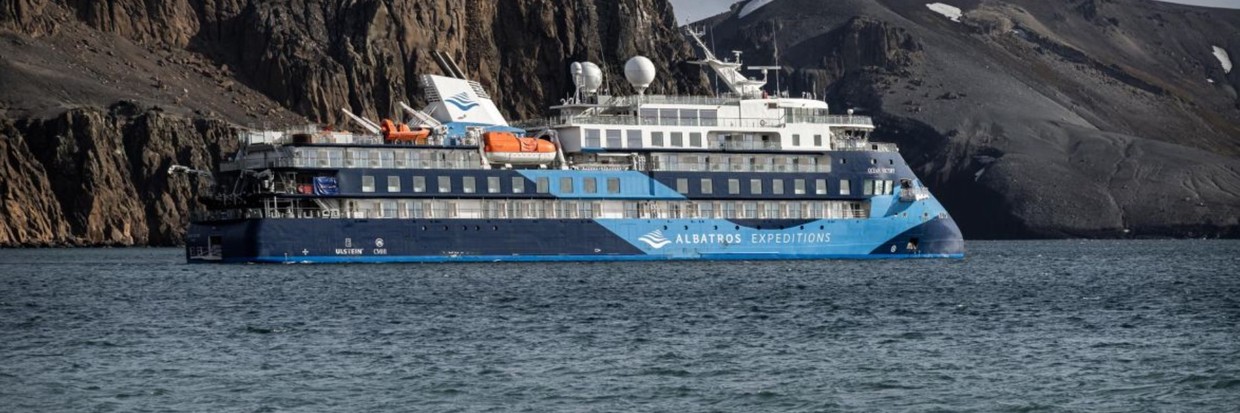
Vessel Type: Luxury X-Bow®-Infinity Class Vessel
Passenger Capacity: 174 passengers in 93 cabins
Built: 2021
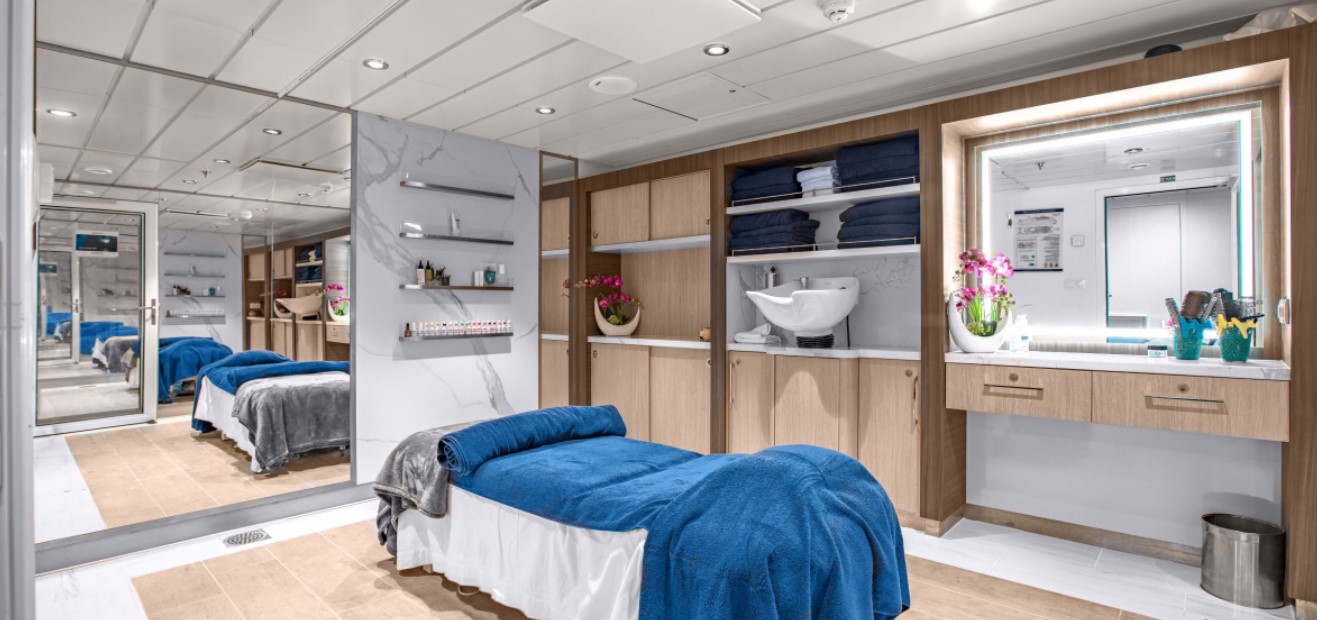
Ocean Victory carries the same next-generation expedition design as its sister ship, purpose-built for the demands of Antarctica and the Arctic. The patented X-Bow structure delivers a steadier, more comfortable ride through heavy seas and deeper ice, while the heated mudroom and multiple exterior access points streamline zodiac operations. Large stateroom windows, broad observation areas and hydraulic platforms keep the Polar environment in constant view, and amenities such as Jacuzzis, spa, gym, lounge spaces and bistro service support a high standard of comfort without dulling the focus on exploration.
Efficiency and environmental performance are central to the vessel’s build. Diesel–electric propulsion reduces fuel consumption and lowers emissions by roughly 50 percent compared with traditional expedition ships. Most cabins include private balconies, communal spaces are deliberately generous, and all core expedition infrastructure - photography support, science areas, medical capability and dedicated passenger services - is integrated into daily operations. The result is a modern, stable and environmentally responsible platform for seamless travel across both Polar regions.




Northbound Charter Flight $1,700 USD
Northbound Charter Flight: Toronto, ON, Canada to Kangerlussuaq, Greenland. Early-morning departure.
Save 25% on all Ocean Victory expeditions
Early Booking Bonus: save up to 25% on 2028 expeditions. Offer ends December 8, 2026. Terms and conditions apply. This special offer is subject to availability. Please contact us for more details.
Save 10% on all Ocean Nova expeditions
Save 10% on all Ocean Nova expeditions. Offer ends December 8, 2026. Terms and conditions apply. This special offer is subject to availability. Please contact us for more details.
Inclusions
• Accommodation – Comfortable cabins with private bathrooms, towels, bathrobes, and toiletries
• All Meals – Buffet-style breakfast and lunch, à la carte dinners, early-bird breakfast, afternoon tea, and late-night snacks
• Expedition Activities – Guided excursions, including Zodiac cruises, onshore explorations, wildlife viewing, and community visits
• Onboard Educational Programming – Expert-led presentations, workshops, and interactive learning sessions about the destinations visited
• Onboard Facilities – Lounges, libraries, bars, wellness facilities (gym, sauna), and observation areas for scenic viewing
• Specialized Equipment – Rubber boots and life jackets provided for excursions
• Complimentary Expedition Jacket – Provided on all voyages.
• All Applicable Taxes and Fees – Credit card fees and port charges included in the expedition cost
• Basic wifi is included in the price on Exploris One, however, connectivity may vary depending on region
• Beverage package is included in the fare on Exploris One
Exclusions
• Optional Activities – Kayaking, pre/post tour extensions, and other specialized enhancements (eg, Fibre Arts Program)
• Gratuities – Recommended but not included in the expedition fare.
• Pre and Post Night Hotel Accommodation – we recommend travellers arrive in the gateway city at least 1 night prior to departure, and continue homeward travel one day after disembarkation
• Medical Evacuation Insurance – Mandatory for all travelers but not included.
• Alcohol and other beverages (such as canned soda) are available for purchase aboard Ocean Endeavour and Ocean Nova
• Wifi packages are available for purchase on Ocean Endeavour and Ocean Nova
 Expedition
Our Associates Include


