The Jewels of Scotland Cruise
Set a course through sapphire Celtic waters and experience the highlights of the remotest corners of Europe. Beginning in the vibrant Irish capital of Dublin, this thrilling voyage visits some of the hardest-to-reach corners of Scotland, including the Neolithic monuments and Viking heritage of windswept Orkney, and the dual UNESCO World Heritage Site of St Kilda. From the storied stones of the Giant’s Causeway to the glens and distilleries of Mull and the enigmatic Loch Ness, experience Scotland and Ireland upon the sea, like the Gaels of old.
Highlights
• St Kilda: Britain’s remotest archipelago and dual UNESCO World Heritage Site, defined by abandoned stone settlements, vast seabird colonies, and extreme Atlantic exposure.
• Geological and archaeological continuity: Giant’s Causeway, Orkney’s Neolithic Heart, and the Antrim Coast compress thousands of years of natural and human history into a single voyage.
• Cultural Atlantic fringe: from Dublin and Portrush to Mull, Orkney, and Aberdeen, the route traces the shared Irish–Scottish–Norse maritime world at the edge of Europe.
Our expedition begins in Dublin, the beating heart of Ireland. Hosting sites such as the famous Ha’penny Bridge and the spellbinding Book of Kells in Trinity College, the magnificent St Patrick’s Cathedral and the legendary Guinness Storehouse, visitors are spoiled for choice in the Irish capital. In the afternoon, settle into your cabin aboard Ocean Victory and toast your departure into the Irish Sea as we set a course for Antrim.
Sitting on the island’s northern coast, Portrush is one of Ireland’s premier seaside resort towns, sitting on the breath-taking Antrim Coast. Bizarre geological happenstance has created this spectacular coastline, home to landmarks such as Dunluce Castle (made famous by hit show Game of Thrones) and the storied stones of the Giant’s Causeway, indisputably the most famous geological site on the island of Ireland. In the afternoon, we will visit nearby Rathlin Island, home to some of Ireland’s largest seabird colonies.
Easily one of Britain’s most picturesque towns, Tobermory is the ‘capital’ of the Isle of Mull and positively oozes Scottishness, from the Tobermory Distillery on the harbourfront to the golden eagles which frequent the crags above town. Colourful buildings line the harbour, a mix of cosy cafes, welcoming pubs and boutique galleries selling gorgeous local artworks. Situated between the Sound of Mull and the island’s rugged interior, Tobermory is the ideal jumping-off point to explore this island gem.
Britain’s remotest archipelago, St Kilda is Britain’s only dual UNESCO World Heritage Site, inscribed for both its human and natural wonders. We drop anchor in the bay overlooking the Village – a unique settlement often compared to Macchu Picchu, entirely built from stone by the islanders who once called this island home. Windswept, rugged and difficult to farm, the locals of St Kilda left for less difficult lands in 1930, leaving the island to the vast colonies of seabirds and tiny ancient Soay sheep which were once the islanders’ main source of food.
The capital and largest town of the Orkney Islands, Kirkwall’s narrow streets beckon visitors to explore the town’s deep Scottish and Norse heritage. Highlights include the magnificent St Magnus Cathedral and the Highland Park distillery – Scotland’s northernmost whisky producer. However the islands’ history stretches back much further to the Neolithic. Sites such as Skara Brae and the Ring of Brodgar are among the best preserved on Earth, bearing witness to 5,000 years of history; these are inscribed as a UNESCO World Heritage Site – the Neolithic Heart of Orkney.
Sitting in the calm Firth of Cromarty, Invergordon is a port town serving the North Sea oil industry and the nearby city of Inverness. The are is synonymous with the famous nearby Loch Ness, and of course its legendary monster. Make sure to bring your binoculars for a day of exploring these mythical lands!
On the final day of our expedition, Ocean Victory arrives in the heart of the Granite City. After a fond farewell to the Officers and Crew, step onto the granite stones of Scotland’s most important port city, the ideal place to head back home with treasured Scottish memories, or as a jumping off point to explore the wonders of the Scottish Highlands.
Itineraries are subject to change.
|
Book now |
Triple Stateroom
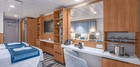
French Balcony Stateroom
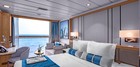
Balcony Stateroom
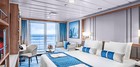
Superior Balcony Stateroom

Grand Balcony Stateroom
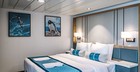
Single Stateroom
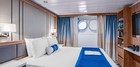
Balcony Suite

Junior Suite

Freydis Suite/Premium Suite

Vessel Type: Luxury Expedition
Passenger Capacity: 169 (95 cabins)
Length: 104.4 m
Built: 2022
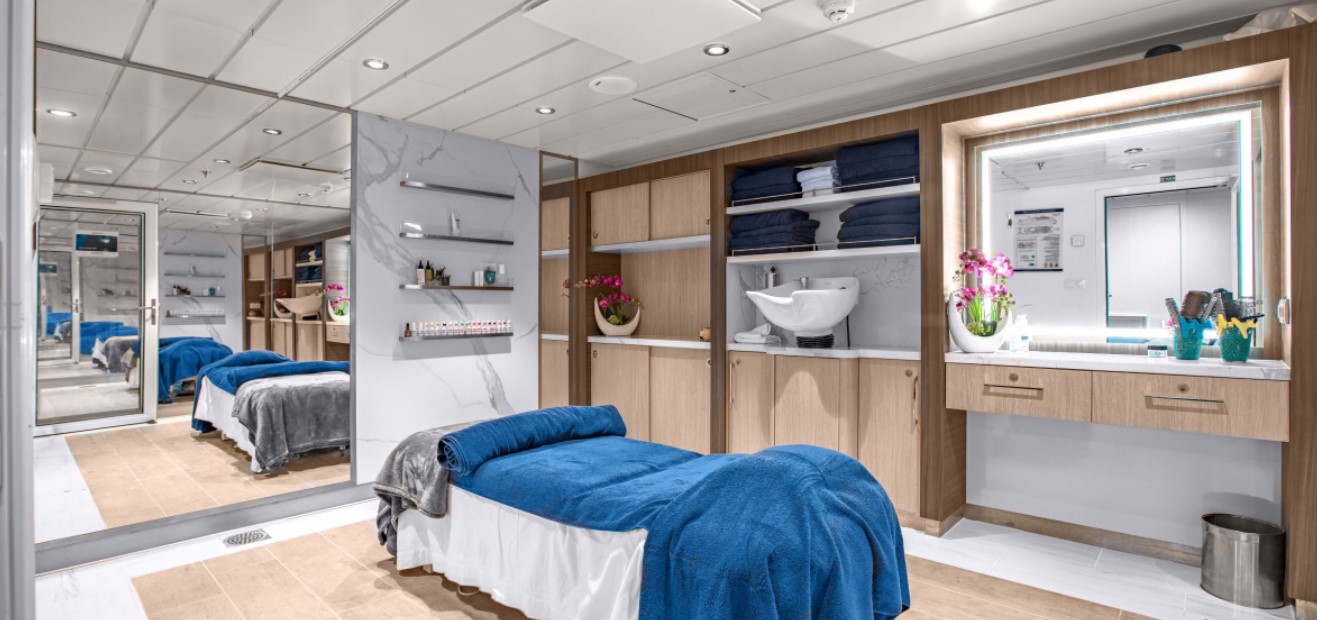
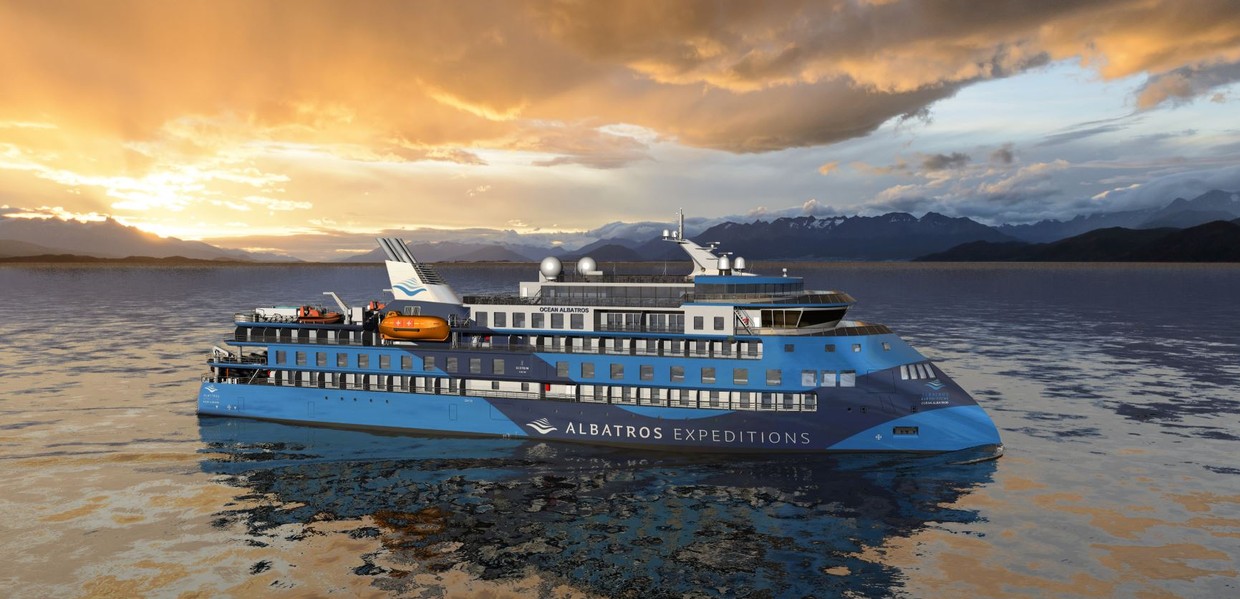
Ocean Albatros is built for serious Polar travel, pairing long-honed expedition capability with a modern, stabilised design. Its X-BOW structure delivers a markedly smoother ride and enables confident movement through deeper ice, giving passengers access to remote regions that traditional vessels cannot approach. Spacious staterooms with wide views, extensive observation areas, near-water hydraulic platforms and a fast, heated mudroom support uninterrupted exploration. The atmosphere on board remains streamlined and functional, with amenities such as Jacuzzis, sauna, spa, gym, library and a generous lounge layout arranged to maximise comfort without distracting from the environment outside.
Efficiency and sustainability are embedded into the ship’s operations. Dual diesel–electric engines reduce emissions significantly while maintaining reliable range and power, enabling the vessel to operate with a carbon footprint roughly half that of older expedition ships. Most cabins include private balconies, communal areas are deliberately generous, and dining spans both a full restaurant and a bistro. Expedition logistics - zodiacs, science activities, photographic support and medical readiness - are built into the core offering, ensuring a consistent, competent experience from the Arctic to Antarctica.


Vessel Type: Luxury X-Bow®-Infinity Class Vessel
Passenger Capacity: 174 passengers in 93 cabins
Built: 2021
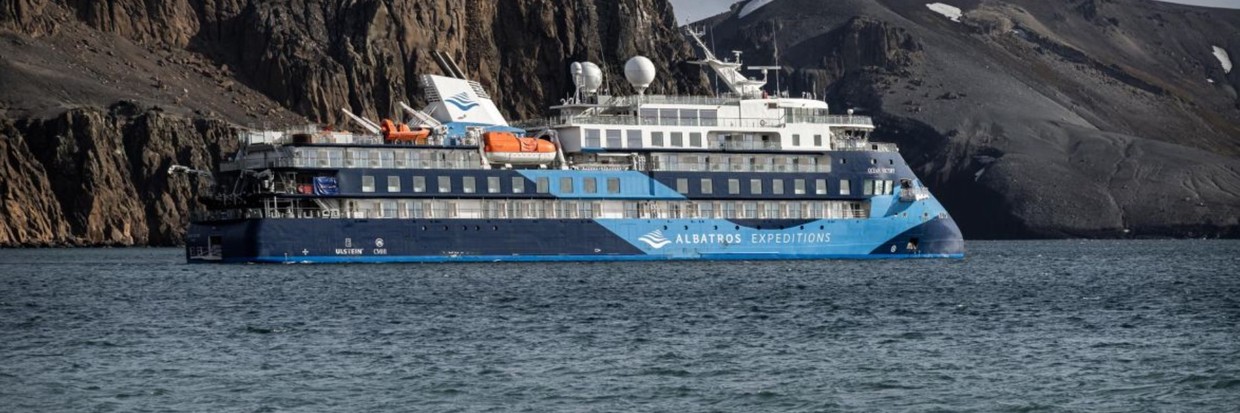
Ocean Victory carries the same next-generation expedition design as its sister ship, purpose-built for the demands of Antarctica and the Arctic. The patented X-Bow structure delivers a steadier, more comfortable ride through heavy seas and deeper ice, while the heated mudroom and multiple exterior access points streamline zodiac operations. Large stateroom windows, broad observation areas and hydraulic platforms keep the Polar environment in constant view, and amenities such as Jacuzzis, spa, gym, lounge spaces and bistro service support a high standard of comfort without dulling the focus on exploration.
Efficiency and environmental performance are central to the vessel’s build. Diesel–electric propulsion reduces fuel consumption and lowers emissions by roughly 50 percent compared with traditional expedition ships. Most cabins include private balconies, communal spaces are deliberately generous, and all core expedition infrastructure - photography support, science areas, medical capability and dedicated passenger services - is integrated into daily operations. The result is a modern, stable and environmentally responsible platform for seamless travel across both Polar regions.




Inclusions
INCLUDED ON ALL VOYAGES - Regardless of your destination, every voyage includes:
• Shipboard accommodation in your selected cabin category
• All meals on board (breakfast, lunch, dinner, and snacks)
• Coffee, tea & filtered water available 24 hours
• Welcome and Farewell cocktail receptions
• House wine, beer, and soft drinks with dinner (where applicable by season)
• 500MB Wi-Fi allowance per guest for personal devices
• All scheduled Zodiac cruises, shore landings, and guided excursions (as per itinerary)
• English-speaking Expedition Team
• Daily briefings and educational lectures
• Onboard photography coach (available to all guests)
• Citizen Science program participation
• Complimentary use of expedition parka and rubber boots for the duration of the voyage
• Participation in the Polar Plunge
• Access to onboard medical clinic and fitness facilities
• All port taxes & landing fees
• Digital Expedition Memento (voyage log, map, wildlife list, and curated photo selection)
Suite Exclusives (Available for Balcony, Junior, Brynhilde, and Freydis Suites on Ocean Albatros/Victory and Seaventure Owner’s Suite):
• Wine and fruit platter upon arrival
• Restocked in-suite mini bar (non-alcoholic)
• Complimentary laundry service
• In-room espresso machine (where applicable)
ANTARCTIC VOYAGES: ADDITIONAL INCLUSIONS
Prior to Embarkation (Ushuaia Departures):
• One pre-voyage hotel night with breakfast
• Group transfer from Ushuaia Airport (USH) to the designated hotel (Day 1 arrivals only, with confirmed flight details)
• Group transfer from hotel to ship for embarkation
Post-Disembarkation:
• Group transfer from ship to Ushuaia airport, hotel, or central drop-off point
For Fly & Cruise programs additionally included:
• Charter flight between Punta Arenas & King George Island
• Hotel accommodation in Punta Arenas as outlined in itinerary
• Transfers between hotel & airport
• Pre-flight briefing, biosecurity check & equipment fitting
ARCTIC VOYAGES: VOYAGE-SPECIFIC INCLUSIONS
• Certain itineraries include mandatory transfer or flight packages. Full details are outlined within each specific voyage description.
Exclusions
• International airfare
• Mandatory emergency evacuation insurance
• Trip cancellation & interruption insurance
• Passport, visa & vaccination expenses (if required)
• Gratuities for ship crew & expedition staff
• Premium alcoholic beverages & specialty bar items
• Spa treatments, laundry & personal expenses
• Optional activities (e.g. kayaking, camping, snowshoeing, immersive photography program)
• Wi-Fi packages
• Pre- or post-voyage extensions (unless specified)
 Expedition
Our Associates Include


