South Spitsbergen - Bear Island - Norway Expedition Cruise
Chart the icy waters of Spitsbergen, exploring spectacular fjords and glaciers in Hornsund, a world of imposing sea cliffs and Arctic history. With seas rich in seals and whales, there are chances for spotting polar bears throughout. Before reaching Tromsø, a visit to remote Bear Island awaits.
Highlights
• Bear Island - The southernmost island in the archipelago of Svalbard, Bear Island is known for its stark beauty and precipitous bird cliffs
• Hornsund - Part of the South Spitsbergen National Park, the Hornsund is a fjord found on the west side of Spitsbergen, on the southern tip of the island.
• Longyearbyen - The gateway to all things Svalbard, this small coal mining settlement is the capital of the realm of the polar bear
• Minke Whale - Though the smallest of the fin whales, these migrating mammals can let out a cry as loud as a plane taking off
You touch down in Longyearbyen, the administrative center of Spitsbergen, the largest island of the Svalbard archipelago. Enjoy strolling around this former mining town, whose parish church and Svalbard Museum are fascinating attractions. Though the countryside appears stark, more than a hundred plant species have been recorded here. In the early evening, the ship sails out of Isfjorden, where we might spot the first minke whale of the voyage.
We start the day by quietly cruising the side fjords of the spectacular Hornsund area in southern Spitsbergen, enjoying the scenery of towering mountain peaks. The mountain of Hornsundtind rises to 1,431 meters (4,695 feet), while the peak of Bautaen testifies to why early Dutch explorers gave this island the name Spitsbergen, meaning "pointed mountains." There are 14 magnificent glaciers in the area, and we have a chance of encountering seals and polar bears. The bird cliffs are now mostly quiet, with many species having departed aside from some first-year fulmars.
We arrive at the southeastern end of Bear Island, an excellent place for viewing the high cliff faces and "Perleporten."
Northward, in Kvalrossbukta, the opportunity to land and visit the remains of a whaling station from early in the previous century should present itself. We might also land in a shallow valley, such as Rendalen.
Sailing southward, we are likely to see whales in the surrounding sea, and when night falls again, we have a good chance to see the Aurora Borealis in the skies above.
Tromsø, also known as the gate to the Arctic, has been an important town from where Arctic expeditions set out to the north for centuries. From here, one can fly to Oslo and beyond.
Itineraries are subject to change.
|
Book now |

Quadruple Porthole

Triple Porthole

Twin Porthole

Twin Window

Twin Deluxe

Superior

Junior Suite

Grand Suite with Private Balcony

|
Book now |
Quadruple Porthole
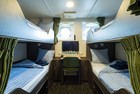
Triple Porthole
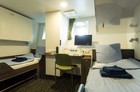
Twin Porthole
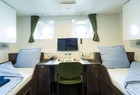
Twin Window
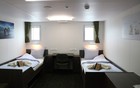
Twin Deluxe
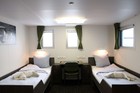
Superior
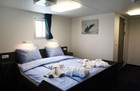
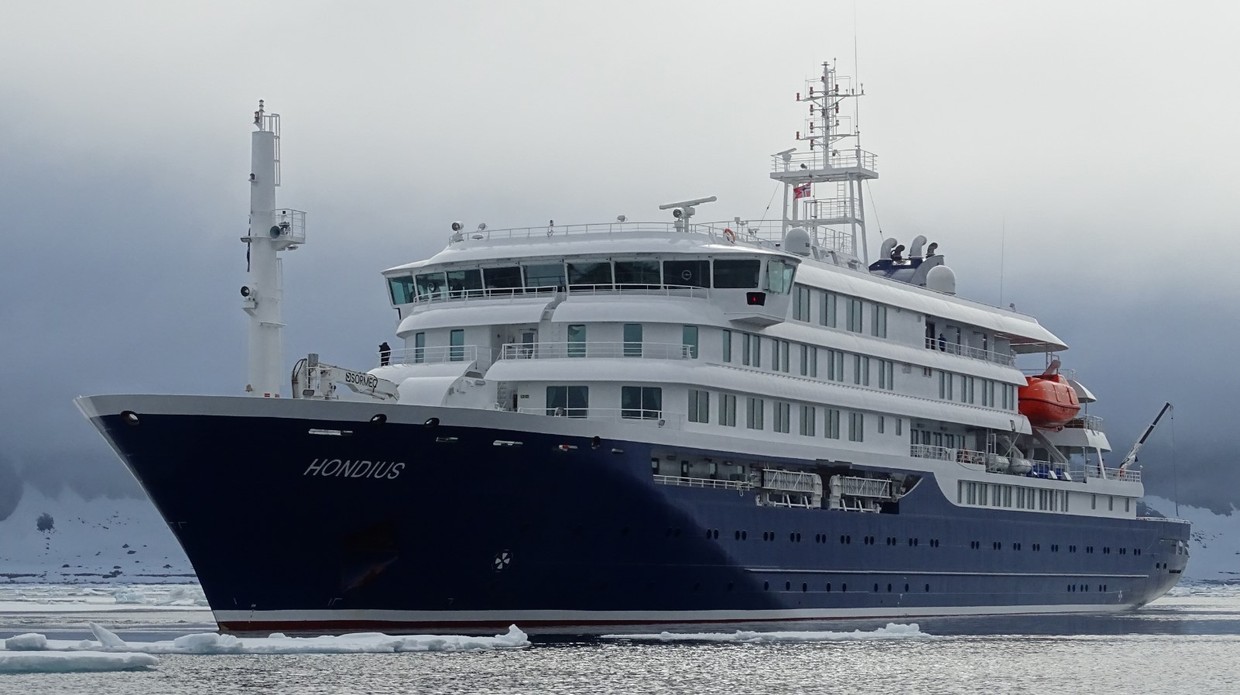
Vessel Type: Polar Class Expedition Ship
Length: 107.6 metres
Passenger Capacity: 170
Built: 2019
Hondius is a purpose-built Polar Class 6 expedition ship designed to operate safely and efficiently in the Arctic and Antarctica. Its ice-strengthened hull, advanced navigation systems, and powerful twin engines support fast repositioning and reliable performance in challenging polar conditions. Interiors follow a clean, mid-century modern style, with accommodation for 170 guests across a wide range of cabin types, from suites with balconies to porthole cabins for groups. Public spaces include an expansive observation lounge and a dedicated lecture room used for workshops and briefings, reinforcing the vessel’s focus on education and discovery rather than traditional cruise entertainment.
The ship is engineered for low environmental impact, using modern power management, LED lighting, and biodegradable materials. Shore access is prioritised through two gangways, an indoor Zodiac boarding area, and a large fleet of rigid-hull inflatables that support quick landings and near-shore exploration. With 70 crew, guides, and staff on board, Hondius offers the comfort of a well-run hotel while maintaining the flexibility required for wildlife encounters, shifting ice, and rapidly changing weather, ensuring maximum time in the field and minimal time at sea.


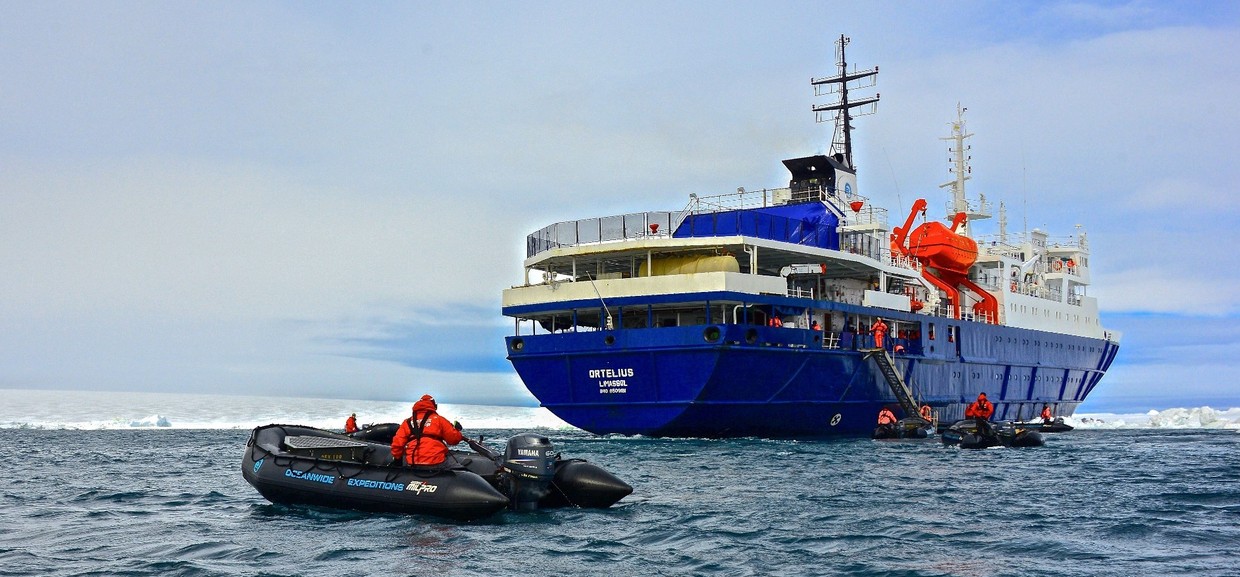
Vessel Type: Expediton
Length: 91m
Passenger Capacity: 108-123
Built / Refurbished : 1989 / 2015
Ortelius is a fully ice-strengthened Polar Class UL1 vessel built for demanding expeditions in one-year and multi-year sea ice. Originally constructed in 1989 for the Russian Academy of Science, its robust engineering and wide open-deck spaces make it well suited to deep-field exploration in the Arctic and Antarctica. The ship carries 108 passengers and operates with a substantial team of nautical crew, hotel staff, expedition leaders, and lecturers, supported by a fleet of ten Zodiacs for frequent shore landings and wildlife access. Interiors are functional and comfortable, offering standard hotel amenities alongside a lecture room and bar.
The vessel is designed for maximum time ashore and flexible routing, prioritising nature observation over traditional cruise programming. Some cabins may have partially obstructed views due to structural requirements, but the best vistas are always outside on deck or from the bridge. Ortelius offers stable performance, reliable ice navigation, and a straightforward, expedition-focused environment, making it a strong choice for travellers who want direct contact with polar landscapes without unnecessary embellishment.


Inclusions
• Voyage in selected accommodation category
• All meals while on board the ship
• Coffee and Tea while on board
• All shore excursions and landings by zodiac as per the itinerary
• Lectures held on board by Expedition Team and naturalists
• Port Charges/Taxes
• Comprehensive Pre-departure materials
• Free internet (1.5 GB of free internet connectivity per day)
• Free use of rubber boots and snowshoes
Exclusions
• International and domestic airfares whether commercial or charter
• Pre and Post-voyage accommodation
• Passport and visa costs if applicable
• Travel insurance including medical evacuation cover
• Beverages not listed in inclusions
• Any items of a personal nature including any medical costs incurred on board
• Meals when not on board the ship
• Gratuities (Recommended USD$15 per passenger per day)

Our Associates Include


