Ride the Trade Winds from the ABC Islands to Costa Rica
This long-distance voyage links the Caribbean with the Pacific, combining extended sailing passages with landmark crossings and nature-rich destinations. After departing Curaçao, the route leads to Cartagena, where fortified walls and colonial streets reflect centuries of maritime history, before continuing toward Panama for a full daylight transit of the Panama Canal. On the Pacific side, remote islands and coastal anchorages introduce a slower rhythm, followed by immersive encounters with Costa Rica’s biodiversity, from rainforest-fringed ports to wildlife-rich national parks, ending the journey along the country’s lush Pacific shoreline.
Highlights
• Trade Evergreens for Palm Trees: It’s the new way to holiday, with reggae rhythms as your Christmas soundtrack.
• World Heritage in Caribbean Colors: Cartagena, the most beautiful colonial city in South America.
• Perfect Sailing Conditions: With the steady trade winds at your back towards Panama.
• Panama Canal Experience: Pass through the huge locks during daylight hours to witness the modern marvel at work.
• Where Panama City Made It Big: The historic quarters of the mega-metropolis.
• Gateway to the Rainforest: Visit Puerto Jiménez, an old gold-mining town nestled in nature.
• Pacific Coast Paradise: Costa Rica is calling with adventure on hidden islands and protected preserves.
• Birdwatcher's Paradise and Hacienda Life: A trip to the Palo Verde National Park.
Curaçao, alphabetically the last of the ABC, is the largest in the Netherlands Antilles in terms of land area. The neat capital, Willemstad, a trading post for the Dutch West India Company in the 17th century, with its well preserved colonial architecture, is a UNESCO World Heritage Site. The picturesque location of the wide harbor canal, boulevards with beautifully restored facades and colorful, typically Dutch gabled houses make Willemstad a lively "Little Amsterdam". Take in the wonder of the bright Caribbean light, beneath palm trees, with azure bays and pearl-white beaches.
Climbing the rigging, untying ropes, setting sails – today is all about sailing. Time to lean back and relax in the deck chair and watch the passionate crew hoisting the sails by hand.
Cartagena was once the richest city in the New World and a popular target for pirate attacks, since a large part of the Spanish treasure was stored there. Sir Francis Drake also instilled terror into the Spanish city. After Drake's invasion, the city was fortified with a 7 mile-long rampart and the immense San Felipe Fort. Today Cartagena is one of the most beautiful colonial cities on the American continent and is protected by UNESCO as a World Heritage Site.
Climbing the rigging, untying ropes, setting sails – today is all about sailing. Time to lean back and relax in the deck chair and watch the passionate crew hoisting the sails by hand.
The idea of connecting the Atlantic and Pacific at the narrowest part of Central America had been around for many hundreds of years, but from a technical perspective this tremendous achievement only became possible much later. The French took on the project in 1881, after the successful opening of the Suez Canal in Egypt in 1869. But it would be more than 30 years before the canal was finally completed in 1914. This masterpiece of technology is just under 50 miles long, has 12 lock basins and negotiates a difference in altitude of 85 feet. The Panama Canal is one of the world's most important waterways and most spectacular ship canals.
A monument on the seafront commemorates the man who gave the city its name. In 1513, Spanish conquistador Vasco Núñez de Balboa arrived here, becoming the first European to reach the Pacific Ocean over land. Nowadays, the Puente de las Américas, an enormous arched bridge carrying the Panamericana road, spans the Pacific entrance to the Panama Canal in Balboa connecting North and South America. East of the canal, breathtaking skyscrapers tower above Panama City, whose glitzy boomtown ambiance contrasts starkly with the lovingly restored Casco Viejo. Balboa’s old town dates back to the colonial era, and the ruins of Panama Viejo are listed as a UNESCO World Heritage Site.
A monument on the seafront commemorates the man who gave the city its name. In 1513, Spanish conquistador Vasco Núñez de Balboa arrived here, becoming the first European to reach the Pacific Ocean over land. Nowadays, the Puente de las Américas, an enormous arched bridge carrying the Panamericana road, spans the Pacific entrance to the Panama Canal in Balboa connecting North and South America. East of the canal, breathtaking skyscrapers tower above Panama City, whose glitzy boomtown ambiance contrasts starkly with the lovingly restored Casco Viejo. Balboa’s old town dates back to the colonial era, and the ruins of Panama Viejo are listed as a UNESCO World Heritage Site.
The name of this Pacific archipelago in the Gulf of Panama pre-dates the Spanish conquest to a time when its inhabitants were pearl fishermen and traded in beautiful oyster pearls. Where in previous centuries, pirates and buccaneers hid out and buried their loot, other treasures can now be found. Over 200 pearl islands, of which even the smallest are inhabited, form an almost undisturbed paradise with a diverse range of lakes and rivers, enchanting white coral beaches, golden sandy beaches and black volcanic beaches, rounded off with lush green tropical vegetation. The island of Contadora has special significance as the place where U.S. President Jimmy Carter signed the Panama Canal Treaty in 1977, ceding sovereign rights over the Panama Canal to the Republic of Panama.
Climbing the rigging, untying ropes, setting sails – today is all about sailing. Time to lean back and relax in the deck chair and watch the passionate crew hoisting the sails by hand.
Deep in the Pacific South of Costa Rica lies the small town of Puerto Jiménez on the diverse Osa Peninsula. As the area is almost entirely covered by pristine rainforest, it's a dream destination for nature enthusiasts, and you won't find hordes of tourists here. Life in this 1,700-resident town is tranquil: in the mid-20th century, loggers and gold prospectors briefly brought a boom to Puerto Jiménez, but calm returned thereafter. Today, visitors can fully immerse themselves in the natural beauty of the surroundings. In the Piedras Blancas Rainforest Park, the high humidity creates lush greenery – providing a home for coatis, jaguars, and vibrant tropical birds.
Quepos was a lively little port at the time of booming banana exports. Today it is a gateway to the Manuel Antonio National Park, which lies to the south. The park covers an area of just 2 1/2 square miles and is one of the most diverse rainforests in Costa Rica. Paths lead you from the beautiful sandy beach straight to the heart of this untamed green kingdom. More than 1,000 varieties of plant and prolific wildlife, including whole herds of inquisitive apes, sloths, coatis, raccoons, iguanas, birds, and unique colorful butterflies have made this place their home.
Climbing the rigging, untying ropes, setting sails – today is all about sailing. Time to lean back and relax in the deck chair and watch the passionate crew hoisting the sails by hand.
As still as a lake, the sea lies under the tropical sun: thanks to its sheltered location in a tree-lined bay, Playa Panama is considered the most relaxing and tranquil beach on the Guanacaste coast – the perfect place to unwind. The Palo Verde National Park stretches along one bank of the Rio Tempisque. It features the densest population of water fowl in the whole of Costa Rica and is one of the best areas for bird watching in Central America – almost 300 species of bird have been identified here. The best vantage point to see them is on a boat trip through the mangroves.
Pura vida! Protected by the Nicoya Peninsula with its beautiful nature parks, Puntarenas is located on a narrow headland that extends into the Gulf of Nicoya. To the right and left of the pier long beaches line the coast, along which the promenade with hotels, bars and restaurants runs. Only about 71 miles separate the popular port city on the Pacific side of Costa Rica from the capital San José. Worth seeing are the gold and national museum as well as the beautiful buildings like the classical national theater and the elegant and playful post and telegraph office.
Itineraries are subject to change.
|
Book now |
Category E: Superior cabins, outside. From
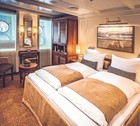
Category D: De luxe cabins, outside. From

Category F: Superior single cabins, outside. From

Category C: De luxe lido cabins, outside. From
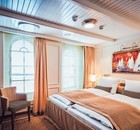
Category B: Junior suites with balcony. From
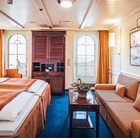
Category A: Suites with balcony. From
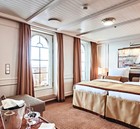
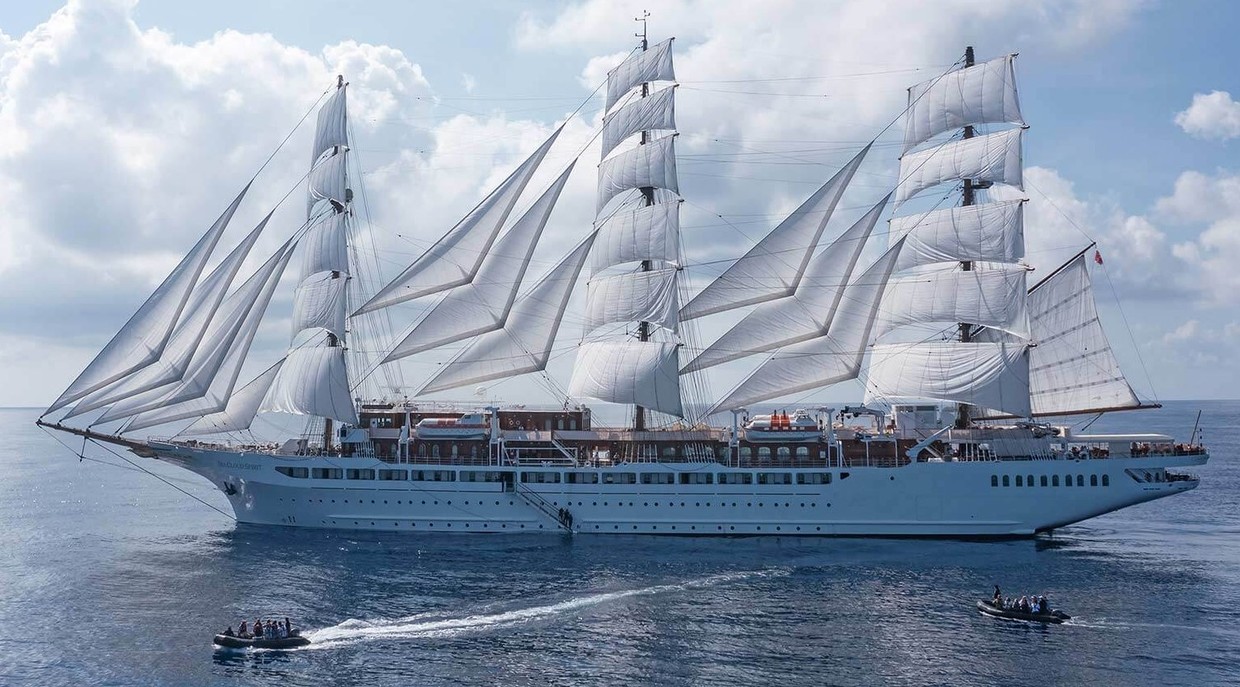
Vessel Type: Three-mast full-rigged ship
Length: 138 meters
Passenger Capacity: 136
Built: 2021
SEA CLOUD SPIRIT is a modern three-mast, full-rigged windjammer launched in 2021, combining traditional sailing heritage with contemporary shipbuilding and engineering. With an overall length of 138 metres and carrying up to 4,100 m² of sail across 28 sails, she is one of the largest and most advanced sailing cruise ships in the world. Built under the Maltese flag, the vessel accommodates a maximum of 136 passengers supported by a crew of approximately 85, preserving an intimate onboard atmosphere while delivering authentic tall-ship sailing. In addition to her classic rigging, SEA CLOUD SPIRIT is equipped with efficient diesel-electric propulsion, ensuring modern operational reliability alongside genuine sail-powered navigation.
Onboard, the ship offers 69 outside cabins and suites, many with private balconies, all fitted with high-end amenities and refined finishes. Public spaces include a panoramic restaurant, lido bar and bistro, elegant lounge with a Steinway grand piano, library, sun deck, and boutique. A full wellness and spa area, fitness centre with ocean views, swim platform, water sports equipment, and Zodiac boats support both relaxation and active exploration. Designed as a true sailing vessel rather than a conventional cruise ship, SEA CLOUD SPIRIT sets a benchmark for combining windjammer tradition, spacious design, and 21st-century comfort at sea.


Inclusions
• Beautifully appointed cabin in selected category
• Gratuities
• Welcoming bottle of champagne in your cabin
• All meals from early-bird breakfast to the exquisite 4-course dinner menu with choice of main course
• 5-course gala dinner during the cruise
• Welcome and farewell cocktail with champagne
• Selected wines and beers thoughtfully chosen to complement lunch and dinner
• All soft drinks and juices throughout the cruise
• All alcohol-free coffee and tea specialties
• Bottled water on the excursions
• Fresh fruit basket in your cabin, replenished daily
• English-speaking tour guide
• Travel documents
• All port fees
• Use of watersports facilities such as snorkeling equipment, Stand-Up-Paddles and Towable Tube (weather permitting)
• Free laundry service for cat. A-C (SEA CLOUD) and cat. A+B (SEA CLOUD II and SEA CLOUD SPIRIT)
Exclusions
• International and domestic flights unless otherwise stated
• Travel Insurance
• Passport and visa costs where applicable
• Shore excursions
• Alcoholic beverages other than those listed in inclusions
 Yacht
Yacht
Our Associates Include


