Northeast Greenland Extreme - Aurora Borealis & Long Hikes
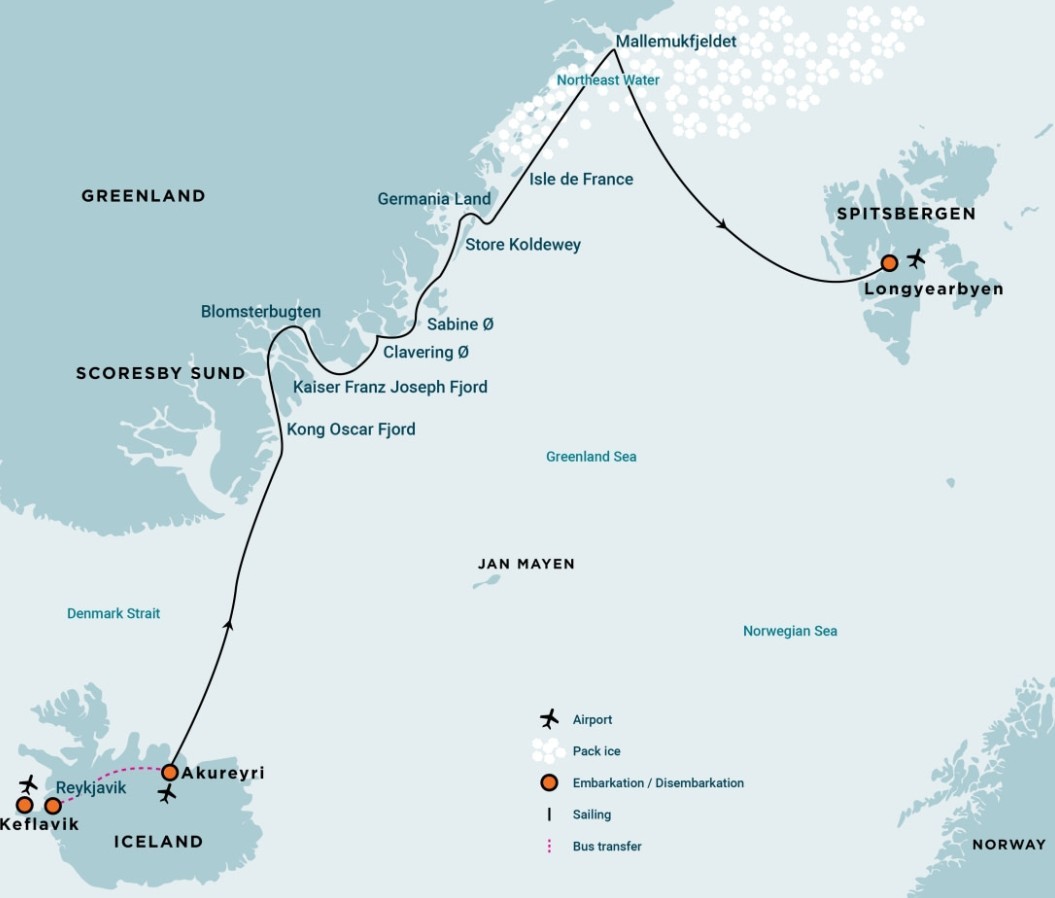
Venturing to the dramatic, rugged coastline of Northeast Greenland, you'll enter the world's largest fjord, Scoresby Sund, encountering whales, seabirds, and musk oxen before voyaging north through the most beautiful straits and fjords. Along the way, sea ice, polar bears, and landing opportunities will guide your Arctic adventure through historical, natural, and scientific wonder.
Highlights
• Icebergs - Slabs of frozen fresh water, icebergs are the free-floating offspring of glaciers and ice shelves
• Ittoqqortoormiit - A small settlement on Greenland’s rugged eastern coast, Ittoqqortoormiit is one of the most remote towns on the island and in the world
• Kaiser Franz Joseph Fjord - This large East Greenland fjord system lies between Cape Mackenzie and Cape Franklin
Your journey begins in the morning, departing Akureyri. By request, you can transfer via chartered bus (T) from the bus stop Harpa Concert Hall and Conference Centre at Austurbakki, Reykjavik (the meeting point) to the ship in Akureyri (the embarkation point). You arrive in the afternoon after a six-hour drive through the beautiful landscapes of northern Iceland.
PLEASE NOTE: This transfer (T) must be booked and paid for in advance.
In the early evening, the ship departs from the port of Akureyri, where we often see whales at the mouth of the fjord. At night, we cross the Arctic Circle close to the island of Grimsey.
We will sail northward, following warmer waters, before entering colder seas, where a multitude of sea life (whales, seals, seabirds) can be found in the mixing zones of these waters. A sea day grants you the opportunity to spot whales and seabirds – and, at night, the magical Northern Lights.
In the morning, we will find ourselves in the mouth of Kong Oscar Fjord in the strait between the island of Isikaja and the mainland. Until 30 years ago, Isikaja was connected to the mainland by a glacier.
On the south side, we will land at Wegener Halvöya and pay a tribute to this great explorer. Another possibility is Antarctic Havn, where muskoxen are often spotted. This bay is named for the ship Antarctic, used by Arctic explorer Alfred Gabriel Nathorst in 1899, while searching for the survivors of Salomon August Andrée's failed attempt to reach the North Pole by air balloon.
At Ymers Ø, we will aim to land at Karl Jakobsens Bugt, near a historic trapper's cabin. A few hundred meters east, at Botaniker Bugt, ruined dwellings of the Thule culture people from about two centuries ago can be encountered. A walk into Juluts dal provides good chances to a variety of polar fauna, including musk oxen, Arctic hares, and ptarmigans. A spectacular transit through the Antarctic Sund firmly places us in the most Alpine landscapes of the journey, with peaks on either side of the fjord in excess of 1000 meters.
We will aim to land in Blomsterbugt (Flower Valley) with excellent walking opportunities, opposite Teufelsloss (Devil's Castle), a spectacular mountain with impressive layered geology, described by Austro-Hungarian explorer Julius Payer as "A cubic rock colossus stretched far out into the fjord."
We hope to land at Eskimonaes on the southern shore of Clavering Ø, where Douglas Clavering met a small group of Thule culture people in 1823. This group represents the only living Thule people ever seen in Northeast Greenland. The remains of their existence can be found across Greenland, including indications that they traded and interacted with Norse settlers in some form.
Sir Edward Sabine performed his pendulum experiments on Sabine Ø (formerly Inner Pendulum Island) in 1823. Carl Koldewey built a station there in 1869 at Germaniahavn. On its south side is Hvalros Island, where the population of walruses is increasing again. From this day onward, sailing north, we will experience daylight round the clock.
When sailing into Dove Bugt, we may, depending on the conditions, land at Hochstetter Forland, Store Koldewey, named by the second German Polar Expedition of Carl Koldewey at Kap Alf Trolle, or Kap Ahrend. Kap Bismarck, close to Germania Land, is also a possibility. We are now in Muskox territory, and the southernmost realm of some lonely Arctic wolves in Greenland.
We will sail past Danmarks Havn Sirius Patrol Station and land on the east side of Germania Land, for instance, at Thomas Thomsen Naes.
Depotneaset on Stormlandet is another possibility. We are now in muskox territory, and the southernmost realm of lonely Arctic wolves in Greenland, in a region where we have never been with our ships.
If ice and weather conditions are favorable, we land at the south side of Isle de France, which was first reached by the Duke of Orleans on the Belgica in 1905. We aim to go ashore at Kap St. Jacques, where, under the guidance of an archeologist from the National Greenland Museum, we can see the remains of the Independence II culture. We may also land at the ice-free area on the north side of the island.
When sailing by Norske Øer, where we possibly land, we are sailing in territories where we have not been before. We hope to reach Northeast Water, a semi-permanently open water area in extreme Northeast Greenland, where relatively warm bottom water from the sea rises to the surface. It is a water rich with seals, whales, polar bears, and seabirds. We will try to get to Mallemukfjellet, at latitude 80'11 N', to the northernmost colony of northern fulmars, with young still on the ledges. We will be on guard to observe the rare Ross gull, which winters in the central polar seas.
Working our way south-east in the outer fringes of the pack ice, we continue to observe Arctic marine mammals and seabirds, who thrive in this otherworldly habitat.
After leaving the shores and pack ice of Greenland behind, we now find ourselves in the open sea. We sail eastward, across the Greenland Sea, following the northernmost branch of the warm Gulf Stream toward Spitsbergen (Svalbard), along with migrating whales. If time allows, we may land late in the day at the walrus haul-out at Poolepynten.
In Longyearbyen, the administrative center of Spitsbergen (Svalbard), you may enjoy strolling through this former mining town, home to the parish church, the Museum of Arctic Exploration, and the Svalbard Museum, all fascinating attractions. Further opportunities for exploring Svalbard and Longyearbyen's surroundings can be found here before you depart for Oslo and continue your onward journey.
Itineraries are subject to change.
|
Book now |

Quadruple Porthole

Triple Porthole

Twin Porthole

Twin Window

Twin Deluxe

Superior

Junior Suite

Grand Suite with Private Balcony

|
Book now |
Quadruple Porthole
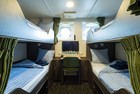
Triple Porthole
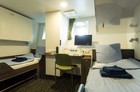
Twin Porthole
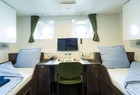
Twin Window
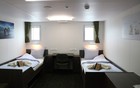
Twin Deluxe
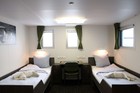
Superior
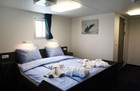
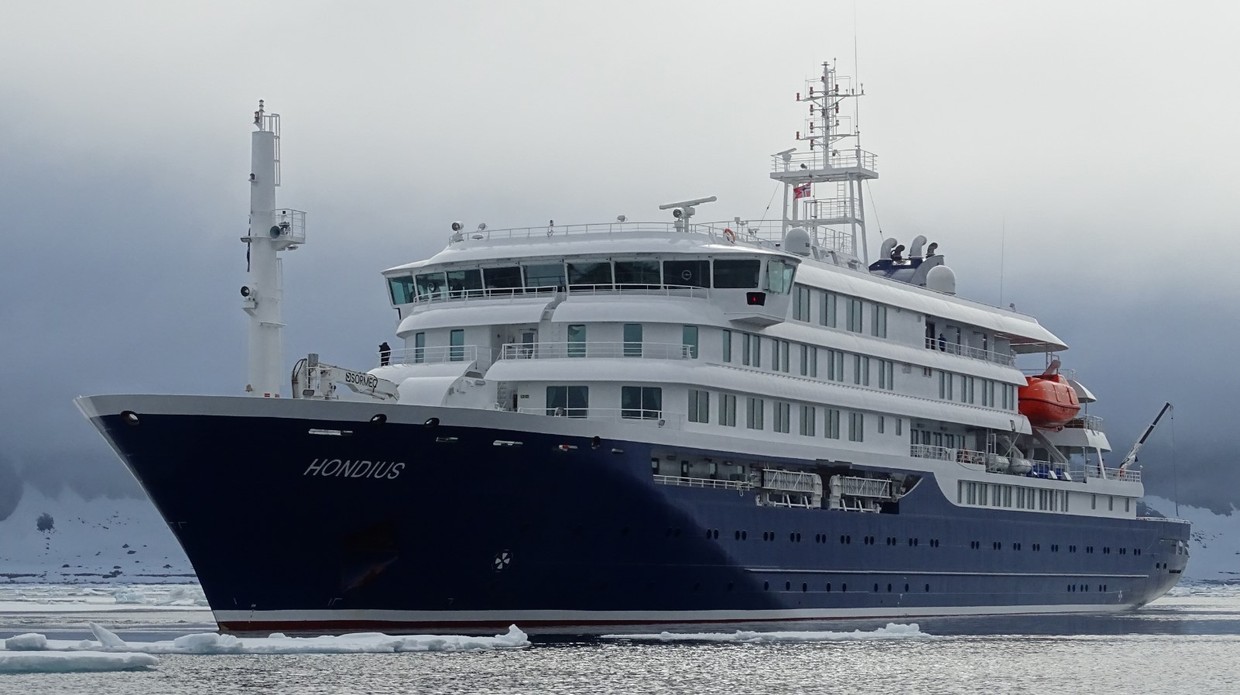
Vessel Type: Polar Class Expedition Ship
Length: 107.6 metres
Passenger Capacity: 170
Built: 2019
Hondius is a purpose-built Polar Class 6 expedition ship designed to operate safely and efficiently in the Arctic and Antarctica. Its ice-strengthened hull, advanced navigation systems, and powerful twin engines support fast repositioning and reliable performance in challenging polar conditions. Interiors follow a clean, mid-century modern style, with accommodation for 170 guests across a wide range of cabin types, from suites with balconies to porthole cabins for groups. Public spaces include an expansive observation lounge and a dedicated lecture room used for workshops and briefings, reinforcing the vessel’s focus on education and discovery rather than traditional cruise entertainment.
The ship is engineered for low environmental impact, using modern power management, LED lighting, and biodegradable materials. Shore access is prioritised through two gangways, an indoor Zodiac boarding area, and a large fleet of rigid-hull inflatables that support quick landings and near-shore exploration. With 70 crew, guides, and staff on board, Hondius offers the comfort of a well-run hotel while maintaining the flexibility required for wildlife encounters, shifting ice, and rapidly changing weather, ensuring maximum time in the field and minimal time at sea.


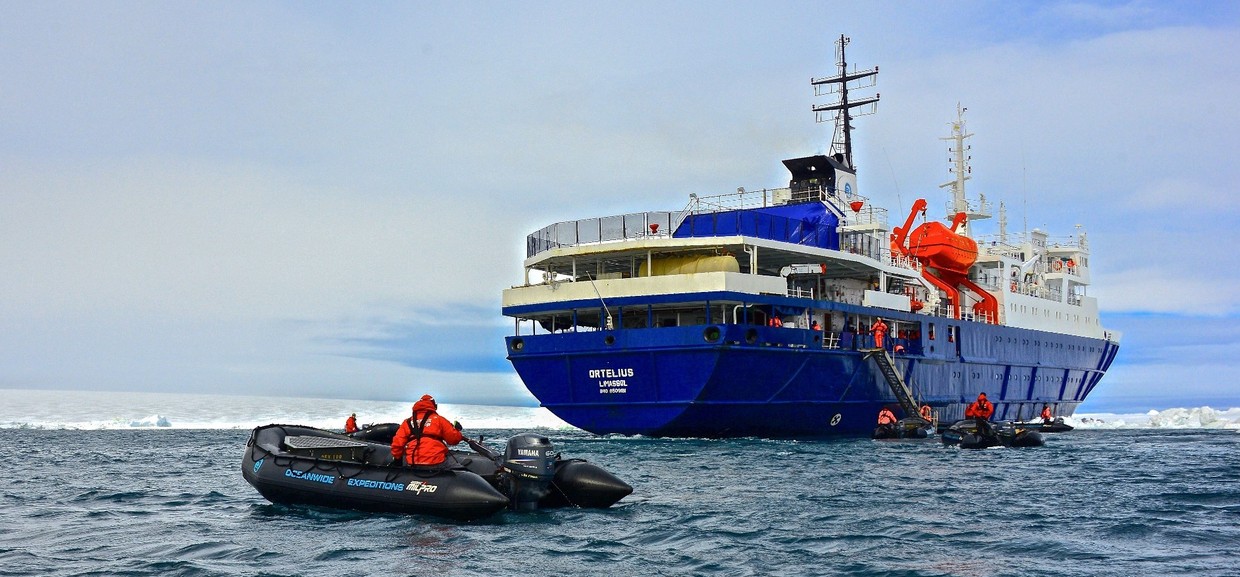
Vessel Type: Expediton
Length: 91m
Passenger Capacity: 108-123
Built / Refurbished : 1989 / 2015
Ortelius is a fully ice-strengthened Polar Class UL1 vessel built for demanding expeditions in one-year and multi-year sea ice. Originally constructed in 1989 for the Russian Academy of Science, its robust engineering and wide open-deck spaces make it well suited to deep-field exploration in the Arctic and Antarctica. The ship carries 108 passengers and operates with a substantial team of nautical crew, hotel staff, expedition leaders, and lecturers, supported by a fleet of ten Zodiacs for frequent shore landings and wildlife access. Interiors are functional and comfortable, offering standard hotel amenities alongside a lecture room and bar.
The vessel is designed for maximum time ashore and flexible routing, prioritising nature observation over traditional cruise programming. Some cabins may have partially obstructed views due to structural requirements, but the best vistas are always outside on deck or from the bridge. Ortelius offers stable performance, reliable ice navigation, and a straightforward, expedition-focused environment, making it a strong choice for travellers who want direct contact with polar landscapes without unnecessary embellishment.


Inclusions
• Voyage in selected accommodation category
• All meals while on board the ship
• Coffee and Tea while on board
• All shore excursions and landings by zodiac as per the itinerary
• Lectures held on board by Expedition Team and naturalists
• Port Charges/Taxes
• Comprehensive Pre-departure materials
• Free internet (1.5 GB of free internet connectivity per day)
• Free use of rubber boots and snowshoes
Exclusions
• International and domestic airfares whether commercial or charter
• Pre and Post-voyage accommodation
• Passport and visa costs if applicable
• Travel insurance including medical evacuation cover
• Beverages not listed in inclusions
• Any items of a personal nature including any medical costs incurred on board
• Meals when not on board the ship
• Gratuities (Recommended USD$15 per passenger per day)
Our Associates Include


