North Spitsbergen Expedition Cruise - In Pursuit of the Bowhead Whale
This expedition focuses on the versatility of north Spitsbergen's visually stunning landscapes, vast spans of sea ice, and the many opportunities to spot wildlife like whales, polar bears, seabirds, and walruses.
Highlights
• Exploring North Spitsbergen's Natural Beauty and Wildlife. Sail through rugged landscapes, vast sea ice, and pristine fjords while spotting polar bears, whales, walruses, and diverse seabirds in their natural habitats.
• Sailing into the Pack Ice. Experience the thrill of navigating the remote pack ice, a multi-day highlight where you'll have opportunities to observe polar bears, seals, and elusive Greenland whales in the icy wilderness.
• Historic and Scenic Landings. Visit iconic sites like Ytre Norskøya, with its 17th-century whaling history, and Monaco Glacier, where thousands of kittiwakes feed and polar bears hunt near the ice's edge.
You touch down in Longyearbyen, the administrative center of Spitsbergen, the largest island of the Svalbard archipelago. Enjoy strolling around this former mining town, whose parish church and Svalbard Museum make for fascinating attractions. Though the countryside appears stark, more than a hundred species of plant have been recorded in it. In the early evening the ship sails out of Isfjorden, where you might spot the first minke whale of your voyage.
This voyage will take you into the pack ice and along the remote shorelines of rugged north Spitsbergen. Our landings are subject to change due to sea ice, weather conditions, and wildlife sightings. The expedition leader determines the final plan. Places you might visit include:
Raudfjord
On the north coast of Spitsbergen, you can enjoy this expansive fjord spilling with glaciers – and maybe even visited by ringed and bearded seals. The cliffs and shoreline at Hamiltonbukta support thriving seabird colonies with Brünnich's guillemots, rich vegetation, and the possibility of polar bears. We will try to land at Alicehamna or Buchananhalvøya.
Ytre Norskøya
This small island was used for many years as a lookout point for Dutch whalers, and in fact we can still follow their tracks to the summit of the island. The remains of 17th-century blubber ovens can also be seen near about 200 graves. The north side of the island offers the rare opportunity to see puffins near their breeding places, and there is even a small colony of kittiwakes.
Monaco Glacier
Depending on the weather and sea ice, you could sail into Liefdefjorden, land at Texas Bar and cruise within sight of the 5-kilometer-long (3.1 miles) face of Monaco Glacier. The waters in front of this precipitous glacier are a favorite feeding spot for thousands of kittiwakes, and the base of the ice is a popular polar bear hunting ground. If ice conditions prevent us from sailing here early in the season, we can implement an alternate route along the west coast of Spitsbergen.
Northwest of Raudfjord
We aim to sail into the pack ice outside the territorial waters of Svalbard, watching for polar bears and elusive Greenland (bowhead) whales. As we sail from 80 N to 76 N along and in the outer fringes of the ice edge, we will also look for harp seals, hooded seals, polar bears, and migrating seabirds like little auks, Brünnich’s guillemots, and kittiwakes. On previous voyages in this area, we have sometimes seen up to hundred bowhead whales. We also have the chance to see northern bottlenose whales and the first fin whales of the season. The pack ice sailing will be a highlight of this voyage and may take up to three days.
Sailing in the pack ice
We aim to sail into the pack ice at quite some distance from the coast of Spitsbergen, watching for polar bears and other animals at the edges of the pack. Our voyage through the pack ice may be a multi-day affair, depending on the position of the ice and local sea and weather conditions. Regardless of how long we spend in the ice, these days at sea will be a highlight of the trip. Note that while the ship navigates the pack ice, we will not make any shore landings or excursions from the ship. However, wildlife encounters are the main draw here, with good chances to encounter many species that thrive in this icy habitat, including polar bears, seals, and whales.
After our time on the ice, we will retrace our route west, keeping watch for polar bears, ringed seals, and elusive Greenland (bowhead) whales. This is also the habitat of ivory gulls. About 40 nautical miles (74 km) west of Spitsbergen, we will sail along the edge of the continental shelf. Here, fin whales forage during the summer in the upwelling zones (where cold, nutrient-rich water wells up from below the sea’s surface) that run along the Spitsbergen banks. At the mouth of Kongsfjorden, you will have a good chance of sighting minke whales.
Forlandsundet, St. Johns Fjord, or Alkhornet
Walruses sometimes haul out in Forlandsundet at Poolepynten. Alternatively, we might sail into St. Johns Fjord or south to the mouth of Isfjorden, landing at Alkhornet. Seabirds nest on these cliffs, Arctic foxes search below for fallen eggs and chicks, and reindeer graze the sparse vegetation.
The vessel will arrive back in Longyearbyen in the early morning. Bus transportation to the airport will be provided.
All itineraries are for guidance only. Programs may vary depending on ice, weather, and wildlife conditions. Landings are subject to site availabilities, permissions, and environmental concerns per AECO regulations. Official sailing plans and landing slots are scheduled with AECO prior to the start of the season, but the expedition leader determines the final plan. Flexibility is paramount for expedition cruises. The average cruising speed of our vessel is 10.5 knots.
|
Book now |
Quadruple Porthole
Triple Porthole
Twin Porthole
Twin Window

Twin Deluxe
Superior
Vessel Type: Expedition
Length: 89 metres
Passenger Capacity: 108 - 116
Built / refurbished: 1976 / 2009
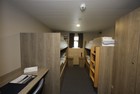
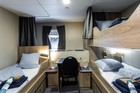
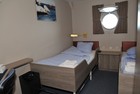
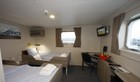
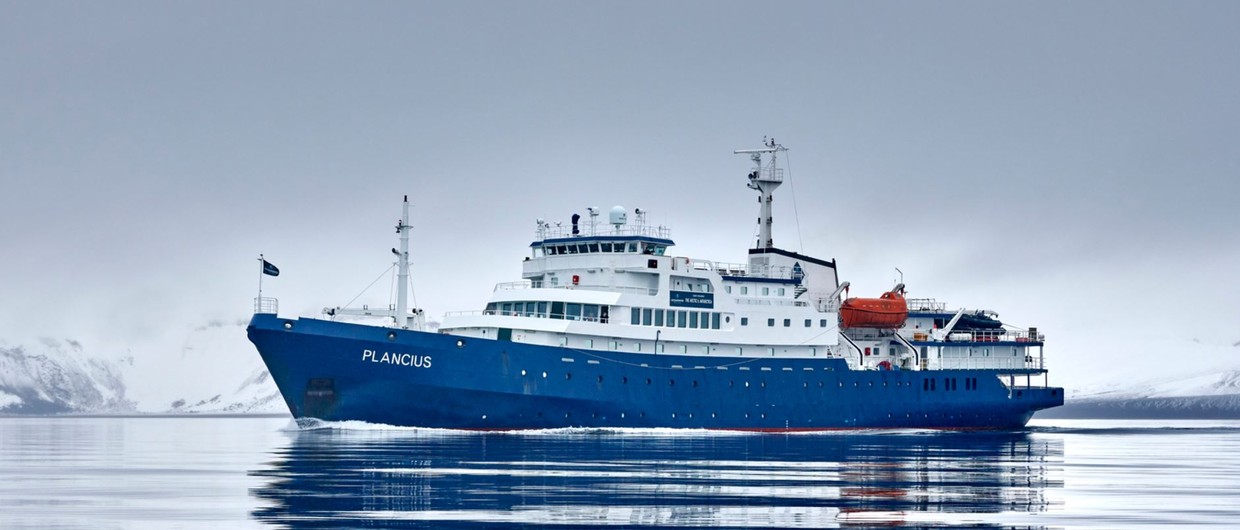
Plancius is an ice-strengthened expedition ship purpose-built for oceanographic work and later rebuilt for passenger exploration, giving it a solid, capable feel that suits remote polar travel. Its diesel-electric propulsion keeps vibration low, while wide open decks, a walk-around viewing level, and a large observation lounge support long hours of wildlife watching. Cabins are simple, functional, and consistent in layout, all with private facilities, while shared spaces such as the lecture room and bar-lounge form the centre of the ship’s educational and social life.
The vessel carries 108 passengers and a full expedition team, supported by a large, international crew that maintains steady operations even in challenging conditions. Zodiac capacity and dual gangways ensure efficient landings, maximising time ashore throughout Antarctica and the Arctic. Plancius is not styled as a luxury ship; its value lies in reliability, stability, and an expedition-first approach that prioritises learning, terrain access, and time in the field.


Inclusions
• Voyage in selected accommodation category
• All meals while on board the ship
• Coffee and Tea while on board
• All shore excursions and landings by zodiac as per the itinerary
• Lectures held on board by Expedition Team and naturalists
• Port Charges/Taxes
• Comprehensive Pre-departure materials
• Free internet (1.5 GB of free internet connectivity per day)
• Free use of rubber boots and snowshoes
___________
• Transfers and baggage handling between the airport, hotels and ship only for those passengers on a selection of flights (advised by Oceanwide) to and from Longyearbyen.
Exclusions
• International and domestic airfares whether commercial or charter
• Pre and Post-voyage accommodation
• Passport and visa costs if applicable
• Travel insurance including medical evacuation cover
• Beverages not listed in inclusions
• Any items of a personal nature including any medical costs incurred on board
• Meals when not on board the ship
• Gratuities (Recommended USD$15 per passenger per day)
 Expedition
Our Associates Include


