Arctic Ocean Expedition, Aberdeen - Fair Isle - Jan Mayen - Ice edge - Spitsbergen - Birding
Search for whales, and other Arctic wildlife of the land, sea, and air on an adventurous voyage from the Scottish port of Aberdeen to our favorite Arctic island group.
Birding: -
We will have at least one dedicated expedition guide in our team who will share their expert knowledge about bird species and who will be available to help you identify, photograph on deck and learn more about the birds that we see. In addition to outdoor sessions, our guide will focus on species and related information on the birds of the Arctic in re-caps and lectures onboard.
Highlights
• Acoustics Workshop
• Birding
• Walk on Fair Isle
• Shore-Based Walking
• Whale safari
• Birds of Fair Isle
• Weather station on Jan Mayen
• The Birds of Jan Mayen
• Sailing under the midnight sun & along the ice edge
• Harp Seal
• Puffin
• Walrus
• Gray Seal
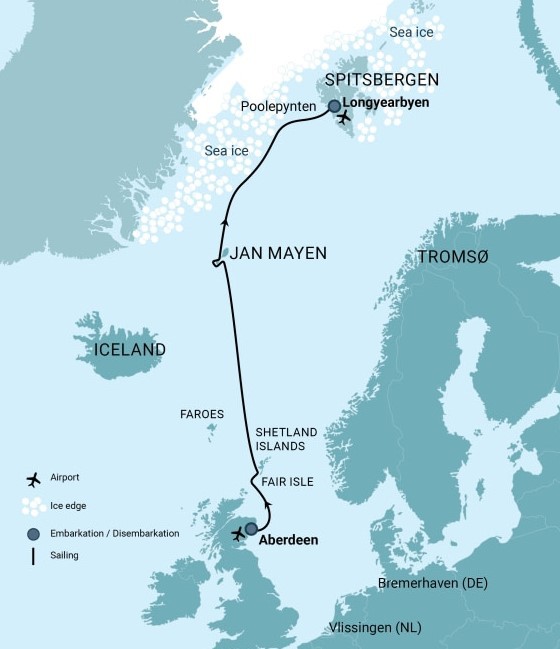
You arrive in Aberdeen, the Granite City, frequent winner of the Britain in Bloom competition. This is the true start of your trip. Several cetaceans, including orcas (killer whales), are native to these seas. To the south you see the lighthouse on Girdle Ness that was designed by the grandfather of Robert Louis Stevenson, the famed Scottish writer who gave us such classics as Treasure Island and Dr. Jekyll and Mr. Hyde. More passengers join you in Aberdeen.
We plan to stay the day on Fair Isle, an island in the Shetlands whose seventy-odd inhabitants are known for their beautiful knitwear. This is a fantastic location with accessible seabird breeding grounds, and you may even spot grey seals.
You sail north to the Norwegian island of Jan Mayen, 300 nautical miles northeast of Iceland. Your two days at sea do not pass idly, however. Keep a close lookout for any spouts of water from the surrounding seas, heralding the arrival of a minke, fin, orca, or blue whale.
Jan Mayen is a stark volcanic island crowned by the snow-capped summit of Mt. Beerenberg. From the slopes of this imposing 2,300-meter-high (7,545 feet) volcano, broken glaciers grasp out into the frigid sea. With permission from the Norwegian authorities, you can now visit the weather station. You can also walk to the remains of a 17th- century Dutch whaling station amid the thick moss beds of this stark volcanic landscape.
Basking in the midnight sun, you sail north along the edge of the sea ice in search of bowhead whales, harp seals, polar bears, and a variety of seabirds. You then change direction after about 79° north, cutting west to the rocky edges of the continental shelf of west Spitsbergen. Here you have a good chance of seeing fin whales and – near the glacial mouths of the gaping Spitsbergen fjords – surfacing minke whales.
Forlandsundet, between the main island of Spitsbergen and the narrow Prins Karls Forland, is a place of great beauty and fascinating wildlife. Walruses sometimes haul out here. Alternatively, you might sail into St. Johns Fjord or head south to the mouth of Isfjorden, landing at Alkhornet. Seabirds nest on these cliffs, Arctic foxes search below for fallen eggs and chicks, and reindeer graze the sparse vegetation.
Every adventure, no matter how grand, must eventually come to an end. You disembark in Longyearbyen, the administrative center of Spitsbergen, taking home memories that will accompany you wherever your next adventure lies. But if you’re still craving additional chances to spot the Arctic’s most iconic apex predator, stay on board for our seven-night north Spitsbergen voyage, “in search of polar bears & pack ice.”
All itineraries are for guidance only. Programs may vary depending on ice, weather, and wildlife conditions. Landings are subject to site availabilities, permissions, and environmental concerns per AECO regulations. Official sailing plans and landing slots are scheduled with AECO prior to the start of the season, but the expedition leader determines the final plan. Flexibility is paramount for expedition cruises. The average cruising speed of our vessel is 10.5 knots.
|
Book now |

Quadruple Porthole

Triple Porthole

Twin Porthole

Twin Window

Twin Deluxe

Superior

Junior Suite

Grand Suite with Private Balcony

|
Book now |
Quadruple Porthole
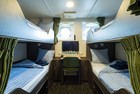
Triple Porthole
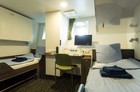
Twin Porthole
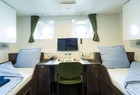
Twin Window
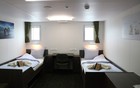
Twin Deluxe
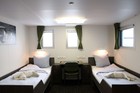
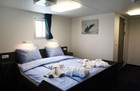
Superior
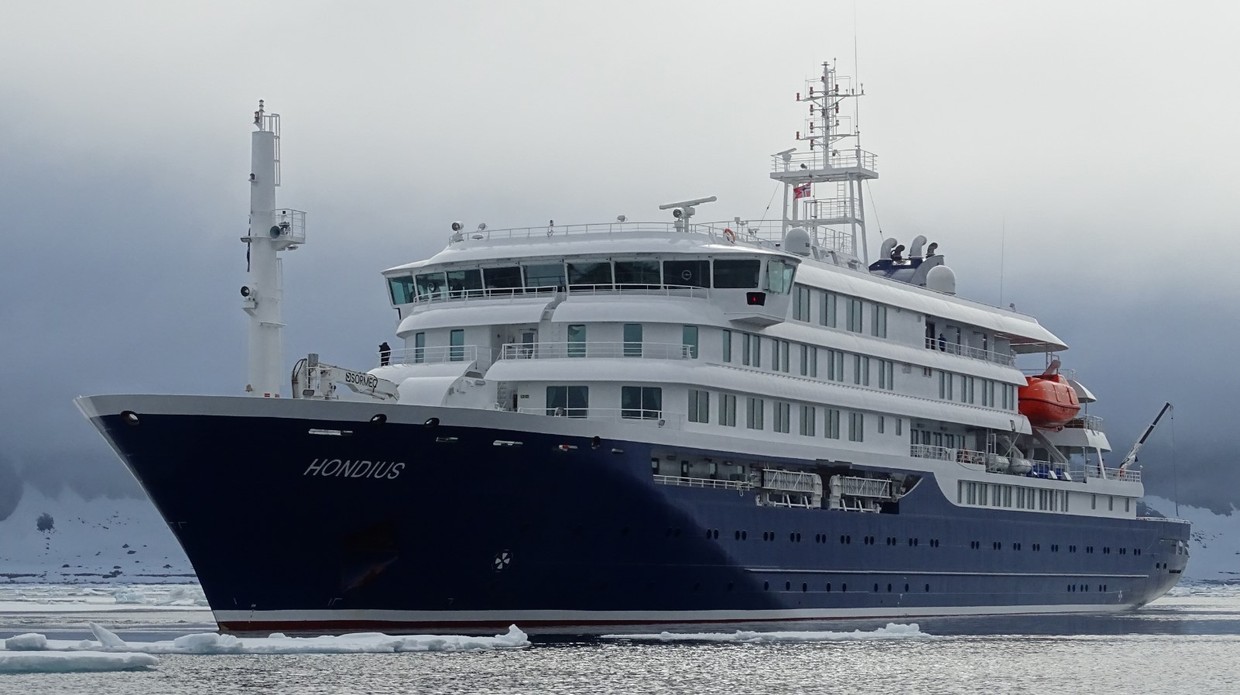
Vessel Type: Polar Class Expedition Ship
Length: 107.6 metres
Passenger Capacity: 170
Built: 2019
Hondius is a purpose-built Polar Class 6 expedition ship designed to operate safely and efficiently in the Arctic and Antarctica. Its ice-strengthened hull, advanced navigation systems, and powerful twin engines support fast repositioning and reliable performance in challenging polar conditions. Interiors follow a clean, mid-century modern style, with accommodation for 170 guests across a wide range of cabin types, from suites with balconies to porthole cabins for groups. Public spaces include an expansive observation lounge and a dedicated lecture room used for workshops and briefings, reinforcing the vessel’s focus on education and discovery rather than traditional cruise entertainment.
The ship is engineered for low environmental impact, using modern power management, LED lighting, and biodegradable materials. Shore access is prioritised through two gangways, an indoor Zodiac boarding area, and a large fleet of rigid-hull inflatables that support quick landings and near-shore exploration. With 70 crew, guides, and staff on board, Hondius offers the comfort of a well-run hotel while maintaining the flexibility required for wildlife encounters, shifting ice, and rapidly changing weather, ensuring maximum time in the field and minimal time at sea.


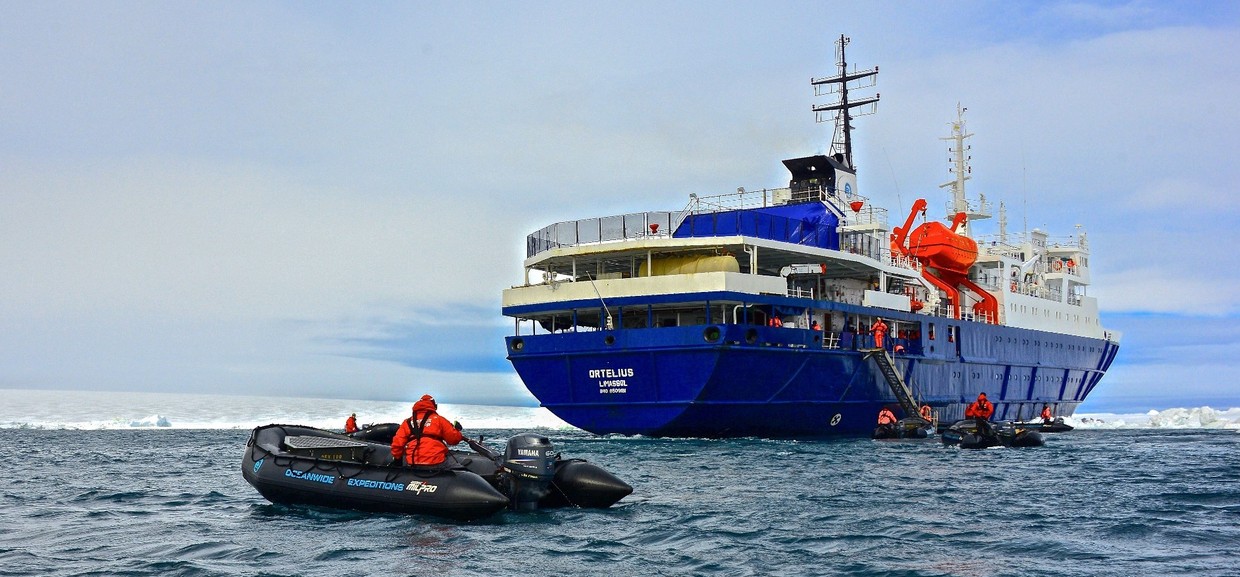
Vessel Type: Expediton
Length: 91m
Passenger Capacity: 108-123
Built / Refurbished : 1989 / 2015
Ortelius is a fully ice-strengthened Polar Class UL1 vessel built for demanding expeditions in one-year and multi-year sea ice. Originally constructed in 1989 for the Russian Academy of Science, its robust engineering and wide open-deck spaces make it well suited to deep-field exploration in the Arctic and Antarctica. The ship carries 108 passengers and operates with a substantial team of nautical crew, hotel staff, expedition leaders, and lecturers, supported by a fleet of ten Zodiacs for frequent shore landings and wildlife access. Interiors are functional and comfortable, offering standard hotel amenities alongside a lecture room and bar.
The vessel is designed for maximum time ashore and flexible routing, prioritising nature observation over traditional cruise programming. Some cabins may have partially obstructed views due to structural requirements, but the best vistas are always outside on deck or from the bridge. Ortelius offers stable performance, reliable ice navigation, and a straightforward, expedition-focused environment, making it a strong choice for travellers who want direct contact with polar landscapes without unnecessary embellishment.


Inclusions
• Voyage in selected accommodation category
• All meals while on board the ship
• Coffee and Tea while on board
• All shore excursions and landings by zodiac as per the itinerary
• Lectures held on board by Expedition Team and naturalists
• Port Charges/Taxes
• Comprehensive Pre-departure materials
• Free internet (1.5 GB of free internet connectivity per day)
• Free use of rubber boots and snowshoes
__________
• Transfers and baggage handling between the airport, hotels and ship only for those passengers on the group flights to and from Longyearbyen.
Exclusions
• International and domestic airfares whether commercial or charter
• Pre and Post-voyage accommodation
• Passport and visa costs if applicable
• Travel insurance including medical evacuation cover
• Beverages not listed in inclusions
• Any items of a personal nature including any medical costs incurred on board
• Meals when not on board the ship
• Gratuities (Recommended USD$15 per passenger per day)
Our Associates Include


