Architecture, Lifestyle, and Oriental Charm from Spain to Morocco
This extended voyage links Spain, Morocco, and the Canary Islands through a sequence of culturally distinct coastlines and open-sea passages. Departing Palma de Mallorca, the route explores Ibiza, Valencia, and Cartagena, where historic quarters, bold architecture, and contemporary city life intersect, before continuing to Málaga and Cádiz in southern Spain. After crossing to Morocco, time in Casablanca and Agadir reveals a blend of modern urban life and traditional markets shaped by Moorish heritage. The journey then turns west to the Canary Islands, calling at Lanzarote, Tenerife, and Gran Canaria, where dramatic volcanic landscapes, distinctive island cultures, and Atlantic sailing complete the passage.
Highlights
• Relaxed Variety: Full days under sail and plenty of time ashore along Spain’s and Morocco’s sun-drenched coasts.
• Spain’s Architectural Diversity: From Art Nouveau splendor and Gothic heritage to Calatrava’s modern vision.
• Trendy Málaga: As a modern cultural metropolis, Picasso’s birthplace attracts museums and street artists.
• Mint Tea, Moorish Cafés, and Minarets: Morocco enchants with royal cities and atmospheric artisan markets.
• Volcanoes as Master Builders: From crater landscapes to frozen lava flows on Lanzarote and through Tenerife’s Teide National Park.
Majorca's beautiful capital is an elegant city and its picturesque old town and architectural mix of Arab, Catalan and Art Nouveau elements are part of its success story. In the center you will be lured by shops behind splendid facades, and cafés and bars set on beautiful squares invite you to stay a while. Not far from the sophisticated marina you will find the dignified cathedral, affectionately known as "La Seu" for short. With pure Gothic beginnings, none other than Antonio Gaudi created part of its interior at the start of the 20th century.
Ibiza's motto is ""live and let live"". Artists, hedonists and the international jet set discovered the beauty of this Balearic island many years ago. The little island's character has a Moorish influence, which has given it the pseudonym of ""the white island"". The tidy old quarter in Ibiza Town, surrounded by huge fortified walls, has been carefully restored and, like the entire island, is under the protection of UNESCO. In contrast, the spectacular, sometimes wildly rugged island coastline with its innumerable bays and beaches shows the traditional side of Ibiza. The primordial backdrop is one of gentle hills cris-crossed with a scattering of fincas.
On one corner its centuries old and around the next totally modern – Valencia is everything all at once. Today the beautiful old town and the old silk market "La Lonja de la Seda", which is a UNESCO World Heritage Site, still bear witness to the city's wealth in the Middle Ages. A brand new part of the city is situated in a drained river bed and has avant-garde buildings including a futuristic opera house, the largest aquarium in Europe, a botanical garden and a public park. Valencia is one of the few cities that has a heritage of over 2,000 years and is also so intriguingly combined with the future. And no other city in Europe can proudly make the claim that the America’s Cup has already taken place twice right on its front door.
On one corner its centuries old and around the next totally modern – Valencia is everything all at once. Today the beautiful old town and the old silk market "La Lonja de la Seda", which is a UNESCO World Heritage Site, still bear witness to the city's wealth in the Middle Ages. A brand new part of the city is situated in a drained river bed and has avant-garde buildings including a futuristic opera house, the largest aquarium in Europe, a botanical garden and a public park. Valencia is one of the few cities that has a heritage of over 2,000 years and is also so intriguingly combined with the future. And no other city in Europe can proudly make the claim that the America’s Cup has already taken place twice right on its front door.
An important port as long ago as Carthaginian and Roman times, Cartagena can look back on an eventful history. The "La Manga" headland, over 20 kilometers (12 miles), is a geographical curiosity which divides the long sandy beach of the "Mar Menor" salt water lagoon from that of the Mediterranean. Inland, the Fuensanta convent is mainly famous for a vision of the Virgin Mary which appeared there around 200 years ago and sits high up above the town of Murcia. It affords a delightful view over this lively university town. The huge Cathedral of Murcia was built in 1394 on the former site of a Moorish mosque.
Climbing the rigging, untying ropes, setting sails – today is all about sailing. Time to lean back and relax in the deck chair and watch the passionate crew hoisting the sails by hand.
Málaga has spruced itself up. In 2003, the Museo Picasso opened in a 16th century Renaissance palace and is dedicated to the artist's extensive life's work. This historic old city invites you to take a stroll and its buildings gleam like new. And above everything towers the Alcazaba, a mighty walled fortress. The port was completely redesigned when the city was opened to the sea and you can now take a lovely stroll along the promenade. In Malaga's hinterland you can see the most beautiful aspects of traditional Andalusia. From a distance the typical Andalusian villages look like white dabs of paint shining out from the brown of the barren mountain landscape.
The old city of Cádiz, around 3,000 years old, has a picturesque location on a narrow headland, right by the Playa de la Caleta with its elegant beachside promenade. Visit the Andalusian capital of Seville and you will be transported back to the heyday of Moorish splendour and rule, but also the age of discovery. This town sits on the Guadalquivir River was a center of Spanish maritime trade with the New World. Many buildings in the old town are registered as UNESCO World Heritage Sites, including the splendid Moorish Alcazar fortress and the huge Gothic Cathedral of Santa Maria de la Sede. Seville is a fun-loving city that is still at the center of Andalusian culture and is considered the proud birthplace of Flamenco.
Climbing the rigging, untying ropes, setting sails – today is all about sailing. Time to lean back and relax in the deck chair and watch the passionate crew hoisting the sails by hand.
Around 90 kilometers (56 miles) from Casablanca is Rabat, one of the country's four imperial cities. This modern capital with its historic center was accepted onto the list of UNESCO World Heritage Sites in 2012. Hassan Tower, Rabat's landmark, dates back to the time when the city was the Sultanate's capital. Close by, and yet built hundreds of years later, is the Mausoleum of Mohammed V. You can find this regal residence in the elegant French-influenced residential quarter, Ville Nouvelle, with its boulevards and splendid Art Deco colonial buildings.
Climbing the rigging, untying ropes, setting sails – today is all about sailing. Time to lean back and relax in the deck chair and watch the passionate crew hoisting the sails by hand.
With more than 5 miles of beach, a modern promenade, and countless restaurants and bars, Agadir, the "White City by the Sea," is a mecca for sun lovers – and a starting point for exciting excursions into the back country. Taroudant, about 50 miles to the east, was once the residence of a Berber prince, a rich caravan centre, and an important trading post. Through one of the five massive city gates in the mighty clay walls, you enter the lively medina with its numerous souks, where Berber handicrafts, leather goods, silver jewellery, and the famous argan oil are traded.
Climbing the rigging, untying ropes, setting sails – today is all about sailing. Time to lean back and relax in the deck chair and watch the passionate crew hoisting the sails by hand.
The "Island of Fire", a UNESCO Biosphere Reserve, has been continually recreated by volcanic eruptions. A third of Lanzarote is a bizarre lunar landscape of barren, beige-grey lines of hills and "fire mountains". In sharp contrast to this are the snow white houses, golden beaches and sparse green vegetation. Its quaint wine-growing areas of La Geria have been declared an all-embracing art form by the Museum of Modern Art. The painter, sculptor and architect César Manrique understood art as the link between man and nature and made a vital contribution to the look of his island home through his artistic creations.
The "Island of Fire", a UNESCO Biosphere Reserve, has been continually recreated by volcanic eruptions. A third of Lanzarote is a bizarre lunar landscape of barren, beige-grey lines of hills and "fire mountains". In sharp contrast to this are the snow white houses, golden beaches and sparse green vegetation. Its quaint wine-growing areas of La Geria have been declared an all-embracing art form by the Museum of Modern Art. The painter, sculptor and architect César Manrique understood art as the link between man and nature and made a vital contribution to the look of his island home through his artistic creations.
Santa Cruz is the perfect starting point if you want to discover Tenerife's diverse mix of beach, nature, and avant-garde culture. The capital and port city in the northeast of the island is not only decked out with historic buildings but also features a lively art scene and spectacular modern architecture by Calatrava or Herzog, and De Meuron. Santa Cruz is also not far from other highlights in the north. For example, the lively colonial town of La Laguna, with its impressive mansions, or quaint Taganana in the Agana Landscape Park, which has retained the charm of an old mountain village.
With its black volcano almost 6,561 feet high and endless white beaches along the coastline, the island of Gran Canaria displays a huge variety of landscapes. It's a "continent in miniature" with rugged rock formations, dense pine forests, dry valleys and reservoirs inland, lush vegetation in the north, shimmering dune landscapes in the south and weirdly shaped cliffs in the west. Almost half the island has been registered by UNESCO as a Biosphere Reserve. The capital, Las Palmas, is no less colorful, with its port and history stretching back 500 years. The showpiece of this historic old town is the magnificent Santa Ana Cathedral.
Itineraries are subject to change.
|
Book now |
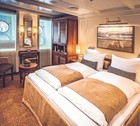
Category E: Superior cabins, outside. From
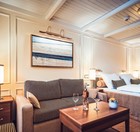
Category D: De luxe cabins, outside. From
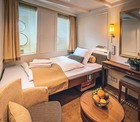
Category F: Superior single cabins, outside. From
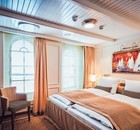
Category C: De luxe lido cabins, outside. From
Category B: Junior suites with balcony. From
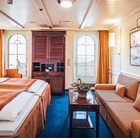
Category A: Suites with balcony. From
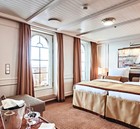
Vessel Type: Three-mast full-rigged ship
Length: 138 meters
Passenger Capacity: 136
Built: 2021
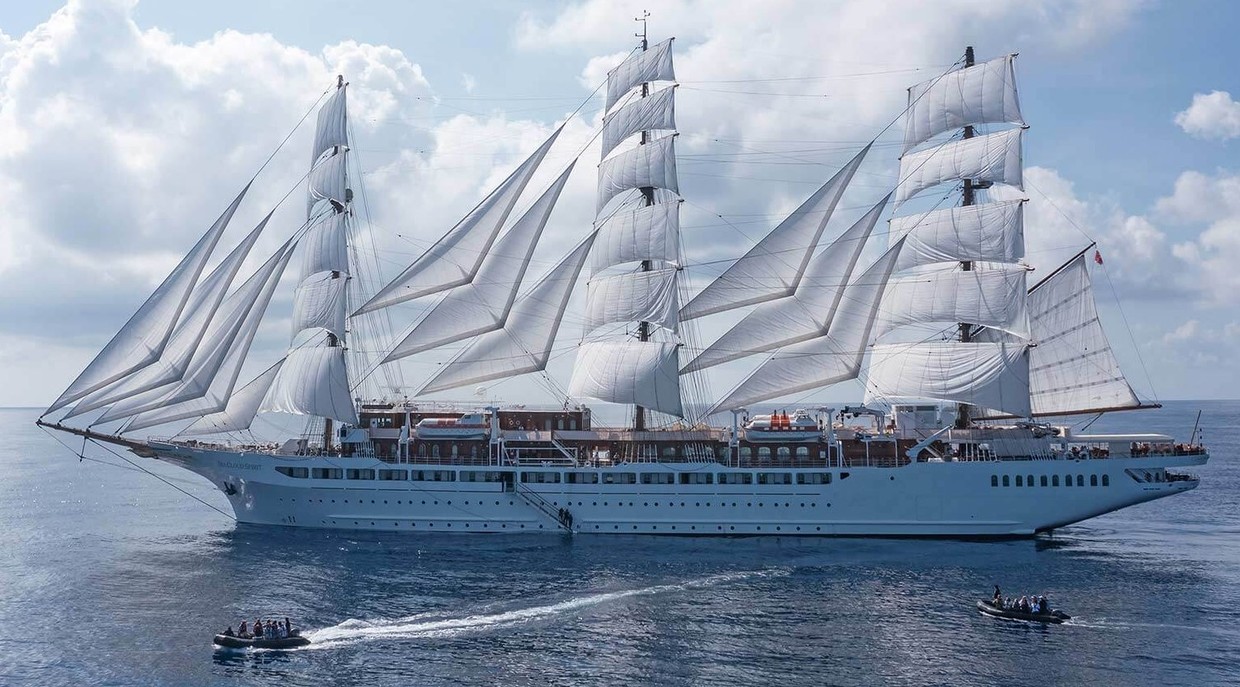
SEA CLOUD SPIRIT is a modern three-mast, full-rigged windjammer launched in 2021, combining traditional sailing heritage with contemporary shipbuilding and engineering. With an overall length of 138 metres and carrying up to 4,100 m² of sail across 28 sails, she is one of the largest and most advanced sailing cruise ships in the world. Built under the Maltese flag, the vessel accommodates a maximum of 136 passengers supported by a crew of approximately 85, preserving an intimate onboard atmosphere while delivering authentic tall-ship sailing. In addition to her classic rigging, SEA CLOUD SPIRIT is equipped with efficient diesel-electric propulsion, ensuring modern operational reliability alongside genuine sail-powered navigation.
Onboard, the ship offers 69 outside cabins and suites, many with private balconies, all fitted with high-end amenities and refined finishes. Public spaces include a panoramic restaurant, lido bar and bistro, elegant lounge with a Steinway grand piano, library, sun deck, and boutique. A full wellness and spa area, fitness centre with ocean views, swim platform, water sports equipment, and Zodiac boats support both relaxation and active exploration. Designed as a true sailing vessel rather than a conventional cruise ship, SEA CLOUD SPIRIT sets a benchmark for combining windjammer tradition, spacious design, and 21st-century comfort at sea.


Inclusions
• Beautifully appointed cabin in selected category
• Gratuities
• Welcoming bottle of champagne in your cabin
• All meals from early-bird breakfast to the exquisite 4-course dinner menu with choice of main course
• 5-course gala dinner during the cruise
• Welcome and farewell cocktail with champagne
• Selected wines and beers thoughtfully chosen to complement lunch and dinner
• All soft drinks and juices throughout the cruise
• All alcohol-free coffee and tea specialties
• Bottled water on the excursions
• Fresh fruit basket in your cabin, replenished daily
• English-speaking tour guide
• Travel documents
• All port fees
• Use of watersports facilities such as snorkeling equipment, Stand-Up-Paddles and Towable Tube (weather permitting)
• Free laundry service for cat. A-C (SEA CLOUD) and cat. A+B (SEA CLOUD II and SEA CLOUD SPIRIT)
Exclusions
• International and domestic flights unless otherwise stated
• Travel Insurance
• Passport and visa costs where applicable
• Shore excursions
• Alcoholic beverages other than those listed in inclusions
 Yacht
Yacht
Our Associates Include


