Wild Scotland - An Exploration of the Remote Islands
If you have always had a hankering to visit some of the remotest and most inaccessible islands in Scotland, this is the ideal opportunity. Join us aboard the Ocean Nova as we sail from the port of Oban visiting both inhabited and uninhabited islands and places of great natural beauty, rich in wildlife and mystical history, many with a long history dating back to the Iron Age.
Few cruise ships offer the chance to explore in-depth the islands off the northern coast of Scotland and this unique expedition ventures far north to the Shetland and Orkney Islands as well as the magical Hebridean islands. We will discover spiritual Iona, lovely Loch Scavaig, the remote, uninhabited outposts of St Kilda and Isle Martin, the inhabited islands of Foula and North Ronaldsay and the northernmost point of the United Kingdom at Unst.
Whether your interest lies in horticulture or the natural world, history or bird watching or simply being there to witness the beauty of the islands, this trip will lift the spirits and gladden the heart. Such an itinerary would be almost impossible to arrange independently and requires a small ship with the expeditionary qualities of the Ocean Nova. With just seventy travelling companions, the atmosphere on board is convivial and when ashore with our local experts and expedition team, we will divide into small groups thereby enjoying a comprehensive and peaceful experience with the opportunity to revel in the timeless enchantment that these islands exude to all those who appreciate the natural world.
Embark the Ocean Nova this afternoon. Transfers will be provided from Glasgow Central Railway Station and Glasgow Airport at a fixed time. Enjoy welcome drinks and dinner as we sail this evening.
Gigha is a place apart: heather covered hills, deserted beaches, and a single lane verged with wildflowers that meanders for some six miles between cottages and farms. Privately owned by its 120 inhabitants, it is a gem of a place and somewhere not easily forgotten. After landing by Zodiac, we will walk to the gardens of Achamore House where the Horlick family have created a lovely and eclectic garden with their collection of azaleas, rhododendrons and exotic plants. This afternoon we will use our Zodiacs to land on Jura where we will go ashore at the village of Craighouse and be welcomed at the cooperage of the Jura Distillery for an introduction to the distilling process and an opportunity to taste the local whisky. Alternatively, join one of our naturalists on a walk along the shore.
Overnight we will sail to Staffa, where the perpendicular rock face features an imposing series of black basalt columns, known as the Colonnade, which have been cut by the sea into cathedralesque caverns, most notably Fingal’s Cave. Weather permitting, we will use our Zodiacs to explore more closely. Sail over lunch to Iona which has been occupied for thousands of years and has been a place of pilgrimage and Christian worship for several centuries. It was to this flat, Hebridean island that St Columba fled from Ireland in 563 and established a monastery. Here his followers were responsible for the conversion of much of pagan Scotland and Northern England. No less than 62 Scottish Kings are buried in the Abbey. Visit the Abbey or perhaps walk along the white sandy beaches or go in search of the corncrake amongst the irises.
We will spend the morning at the lovely Loch Scavaig. Just beyond is the freshwater Loch Corruisk with its breathtakingly beautiful view over the Cuillins. This is great walking country, but for those who prefer a less energetic morning our Zodiacs will explore the coast looking out for seals. Return to the Ocean Nova for lunch and an afternoon at sea.
Arrive this morning at St Kilda, a remarkable uninhabited archipelago some 50 miles beyond the Outer Hebrides. Dominated by the highest cliffs and sea stacks in Britain, Hirta, St Kilda’s main island was occupied on and off for at least 2,000 years, with the last 36 Gaelic speaking inhabitants evacuated at their request in 1930. Immediately after the evacuation, the island was bought by the Marquess of Bute to protect the island’s thousands of seabirds including puffins and fulmars, and in 1957 it was bequeathed to the National Trust for Scotland. St Kilda is one of the few UNESCO World Heritage Sites with dual status reflecting its natural and cultural significance. The local ranger will join us on board before our expedition staff lead several guided walks on the island. This afternoon we cruise past two of the largest gannetries in the world at Stac Lee and Boreray. These impressive stacs rise 170 metres from the sea and are home to up to 60,000 breeding pairs of northern gannets.
Sail overnight to the Summer Islands. Isle Martin, Eilean Mhartainn in Scots Gaelic, is an uninhabited island in Loch Broom, on the west coast of Scotland. During the 1980s and 1990s it became the site of a reforestation experiment by ecologists with native woodlands planted throughout, and these are now flourishing and improving soil fertility and biodiversity. Then in 1999, the island became one of the first handovers of land to community ownership. We will be offered a warm welcome by volunteers from the community trust and will learn about the work they do on the island promoting the landscape, community and traditions. In the late afternoon we will anchor off Handa where we will use our Zodiacs to explore the magnificent sea cliffs of Torridonian sandstone which rise from the Atlantic. The island comes alive each summer when nearly 100,000 seabirds gather to breed including internationally important numbers of guillemot, razorbill, puffins and great skua.
This morning we arrive at the Orkney capital of Kirkwall from where we will head into the west of Mainland, Orkney’s largest island. We will pass through a gentle rolling landscape and into the Neolithic Heartland of Orkney; an area designated as a World Heritage Site due to its wealth of pre-historic archaeology. We will see the Ring of Brodgar; a huge ceremonial circle of stones dating back almost 5000 years before continuing to the 5000-year-old village of Skara Brae and see the remarkable dwellings revealed from beneath the sand dunes by storms only 150 years ago. The afternoon is free to explore at your own pace, perhaps visit St Magnus Church which dates back over 900 years.
Continuing our exploration of the Orkney Islands we arrive at Papa Westray. Here you have time to stretch your legs on a number of island walks. You can choose to visit the 3500 year-old Knap of Howar, a Neolithic farm building that claims to be the oldest standing house in Europe, or the 12th century St Boniface Kirk. Alternatively, search for birds at the nearby Loch of Tredwell. A short sail over lunch brings us to the northernmost isle of North Ronaldsay. The birdlife here is prolific as the wetland habitats support the wildfowl and wader species whilst the rugged coastline provides nesting sites for seabird colonies. If weather conditions permit, a series of walks will include the bird observatory and we also hope to view the seals hauled up on the beaches. Those wishing to explore further can visit the lighthouse with views over the nearby islands or the wool mill where yarn is produced from the island’s seaweed-eating sheep.
This morning we visit Foula, one of Britain’s most remote inhabited islands. Apart from a narrow coastal strip of fertile croft land, Foula is an expanse of peat and moorland rising steeply to five dramatic peaks. Translated as ‘Bird Island’ from Old Norse the island is designated as a Special Protection Area for Birds and is home to the world’s largest colony of great skuas, known locally as bonxies, which compete fiercely with Arctic skuas for breeding territories. Kittiwakes and Arctic terns return annually to nest whilst the cliffs teem with puffins, shags and fulmars. Over lunch we will sail the short distance to Papa Stour where we will use our Zodiacs to explore the stunning cliff scenery, sea stacks, arches, blowholes and coastal caves which are home to Arctic skua and large numbers of Arctic terns.
Spend the morning in Unst, Britain’s most northerly inhabited island. At the Heritage Centre we will learn about the islanders’ struggles over the centuries and the industries that have prospered whilst the Unst Boat Haven is dedicated to the history of the island’s distinctive wooden boats which descend from Viking craft. We also visit Saxa Vord with views over the Hermaness National Nature Reserve and Muckle Flugga stacks, home to thousands of gannets and puffins as well as rare Arctic alpine plants. Later we will sail to Fetlar which has been inhabited for over 5000 years and lays claim to being the first Norse landing site in the Shetlands. Known as the most fertile of the Shetland Islands, the wildflowers bring colour to the landscape whilst the birdlife on the island is prolific. Our expedition team will lead walks ashore including the Fetlar Interpretative Centre and Museum where we will learn about the wildlife and archaeological history of the island.
This morning we anchor off the remote island of Fair Isle. Located midway between the Shetland and Orkney Islands, the tiny population of sixty or so islanders always extend us a warm welcome. Enjoy a walk across the island searching out the puffin slopes, visit the community hall for a cup of tea or maybe purchase some of the famous knitwear. Return to the ship for lunch and an afternoon at sea as we return to the Scottish mainland.
Disembark after breakfast. Transfers will be provided to Aberdeen Airport and Railway Station at a fixed time.
Itineraries are subject to change.
|
Book now |
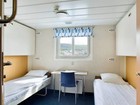
Twin cabin
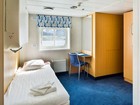
Single cabin
Vessel Type: Expedition
Length: 73 metres
Passenger Capacity: 86
Built / Refurbished: 1992 / 2006
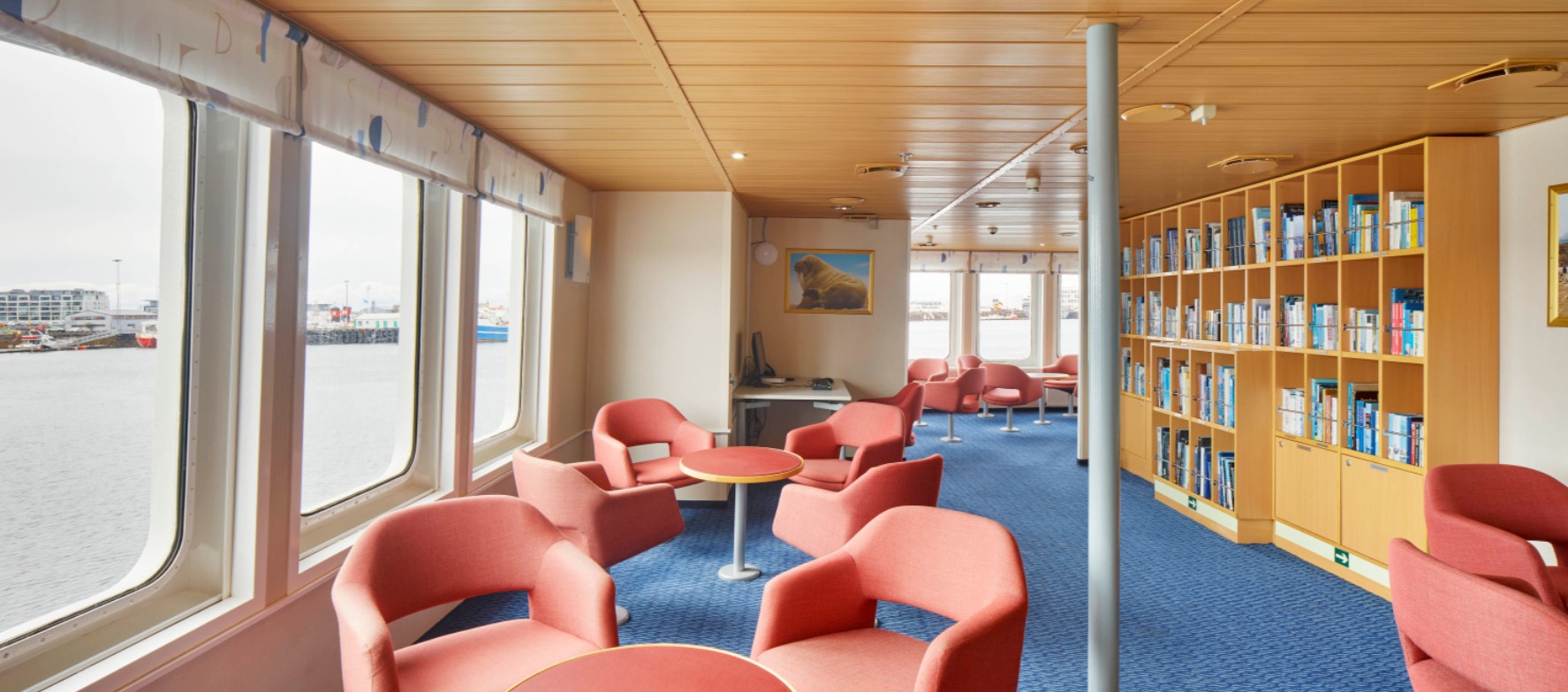
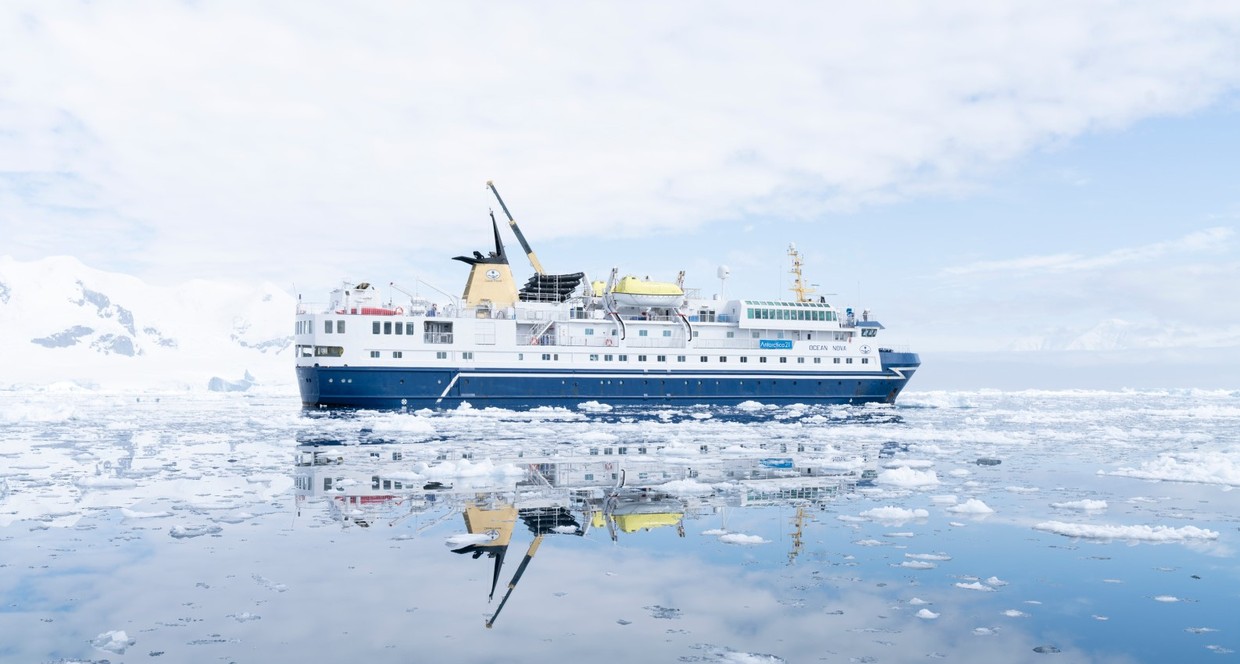
The Ocean Nova, built in Denmark in 1992 and fully refurbished in 2006, is a small yet comfortable expedition vessel accommodating up to 84 passengers. Cabins are spread across two decks and include single, double, and triple accommodations, all with sea views and private facilities. Designed with Scandinavian light woods, the cabins feature ample storage, desks, and flexible bedding arrangements, ensuring a practical and cosy retreat after a day of exploration. Passengers can relax in the Panorama Lounge, which offers panoramic views, daily briefings from the expedition team, and lectures on subjects ranging from ornithology to geology, while the library, small gym, and medical facilities enhance onboard comfort.
Dining aboard the Ocean Nova is informal yet enjoyable, with a single-sitting dining room offering a combination of table service and buffet, allowing all guests to dine together while taking in views through the portholes. Life on board is relaxed and immersive, often spent on deck watching for wildlife or simply admiring the surrounding landscapes. With one of the highest ice classes (1B) and a powerful 2000 hp diesel engine, the Ocean Nova is equipped to navigate icy waters or tranquil lochs with ease. A crew of 34, including North European officers, ensures both passenger safety and an enriching expedition experience, complemented by fully enclosed lifeboats and an onboard medical clinic.



Inclusions
• Voyage on board in selected cabin category
• House wine, beer and soft drinks with lunch and dinner on board
• Expedition team
• Shore excursions as per the itinerary (Note: Some itineraries have optional excursions as per the specific exclusions)
• Gratuities
• Port Charges/ Taxes
• Transfers as per the itinerary (Note: Transfers are offered in conjunction with group flights only when booked together, both can be taken off if included in the itinerary and credited - if the trip shows no flights then none are included)
Exclusions
• Passport and Visa costs where applicable
• Travel insurance
• Beverages other than those listed in inclusions
• Meals when not on board the ship unless otherwise stated
• Pre and post voyage accommodation unless otherwise stated
• Optional excursions as per specific itinerary
• Any items of a personal nature
 Expedition
Highlights
• Explore Scotland’s remote islands by small ship – Journey from the Hebrides to Orkney and Shetland, visiting secluded islands including St Kilda, Foula, Fair Isle, Unst, North Ronaldsay and Papa Westray by Zodiac and on foot.• Experience exceptional island wildlife and wilderness – Search for puffins, gannets, Arctic terns, great skuas, seals and other seabirds, from the cliffs of Handa and St Kilda to the bird-rich islands of Foula and Hermaness.
• Discover Scotland’s ancient island heritage – Explore Iona’s historic abbey, the Neolithic Heartland of Orkney, including Skara Brae and the Ring of Brodgar, and learn about Viking heritage, traditional island life and community-led conservation.
Our Associates Include


