Scotland, The Faroe Islands, & Iceland: North Atlantic Saga
Follow the sea roads that have connected Scotland, the Faroe Islands, and Iceland for generations. Travelling by expedition ship reveals a shared northern world shaped by Norse voyagers, maritime exchange, and island cultures unmistakably their own. In May, lengthening days illuminate green hills, soaring basalt cliffs, seabird colonies, fjords, and volcanic shores. Approach remote islands as earlier seafarers did, discovering how ocean, wildlife, landscape, and community remain profoundly connected across the North Atlantic through a remarkable island world still unfolding.
Highlights
• Explore Scotland’s northern islands – Discover Orkney and Shetland, including remote Foula and Papa Stour, with ancient archaeological sites, dramatic coastlines and vibrant seabird colonies.
• Discover the Faroe Islands by expedition ship – Journey through the Faroes from Suðuroy and Tórshavn to the remote western islands, experiencing towering basalt cliffs, green hills and distinctive island communities.
• Follow the historic sea roads to Iceland – Trace centuries-old Norse maritime routes across the North Atlantic, visiting volcanic Heimaey and finishing in Reykjavík while experiencing the region’s wildlife, landscapes and island cultures.
Facing the North Sea, Aberdeen is a city of silver-grey granite and nearly nine centuries of maritime ambition. Established in 1136, its harbour is Britain’s oldest existing business. Fishing, shipbuilding, global trade, and offshore energy have each shaped this working waterfront.
Beyond the harbour, medieval Old Aberdeen, the colourful fishing quarter of Footdee, striking civic architecture, contemporary galleries, and a lively food scene give the Granite City a character all its own.
Board the expedition vessel in the heart of this historic port. As Aberdeen’s granite skyline recedes, the sea roads to Orkney, Shetland, the Faroe Islands, and Iceland open ahead.
Across Orkney’s open landscape, standing stones, ceremonial monuments, and remarkably preserved settlements form one of Western Europe’s richest surviving Neolithic landscapes. Built five thousand years ago, these sites reveal a sophisticated society of farmers, builders, and seafarers. Low green hills, broad skies, lochs, and the surrounding sea remain inseparable from their extraordinary presence.
Kirkwall adds another layer to the story. Founded in 1137, St. Magnus Cathedral rises above the town in local red and yellow sandstone, a magnificent legacy of Orkney’s Norse heritage and Scotland’s most complete medieval cathedral. The winding streets around it reflect a continuing tradition of exceptional Orcadian craftsmanship, particularly jewellery, textiles, and design inspired by the islands. Kirkwall also honours Arctic explorer John Rae, whose grave lies in the cathedral grounds.
Set between the North Sea and North Atlantic, Shetland has long been a crossroads of northern cultures. Norse rule lasted for centuries, leaving its mark on place names, language, traditions, and a strong island identity that remains distinctive within Scotland today.
Explore archaeological sites that reveal thousands of years of human presence, wander through communities shaped by fishing, crofting, and the sea, and watch for the abundant birdlife that gathers along Shetland's rugged coast. Music and storytelling remain strong threads in island culture, connecting contemporary Shetland with generations that came before.
As you explore, discover a place whose character has been shaped by connections in every direction: north toward Scandinavia, south toward Scotland, and outward across the North Atlantic.
Foula, whose Old Norse name means “bird island,” is home to only a few dozen people, living amid some of Britain’s highest sheer sea cliffs. Discover an island where crofting continues, peat is still cut for fuel, and traditions of music and storytelling remain part of community life. In season, thousands of seabirds gather along the cliffs, adding another dimension to an island already rich in character.
On Papa Stour, another small island community occupies a landscape of ancient volcanic rock carved into stacks, arches, blowholes, and some of Britain’s finest sea caves. Together, Foula and Papa Stour offer a rare glimpse of life on Shetland’s smaller islands, where longstanding traditions continue amid extraordinary wildlife and geology.
Set along a deep fjord and surrounded by steep mountains, Vágur grew into one of Suðuroy’s important fishing towns. Its boats and salt-fish trade connected this southern island with markets across Europe, while traditional boathouses, warehouses, and the working harbour still reflect its maritime character.
The cultural life of Suðuroy comes into closer view at the Ruth Smith Art Museum, where the celebrated Faroese painter captured the islands’ shifting light, landscapes, and people. Join in the Faroese chain dance, moving together as traditional ballads carry stories across generations. This much-loved communal tradition reveals the importance of music, memory, and shared participation in Faroese culture.
Above the village, the cliffs of Eggjarnar overlook the open Atlantic, bringing Vágur’s maritime heritage, creative expression, and dramatic setting into one remarkable place.
Few capitals feel as closely tied to their harbour as Tórshavn. At Tinganes, red timber buildings with turf roofs occupy one of the world’s oldest parliamentary meeting places, where assemblies have been held since the Viking Age. Nearby, the narrow lanes of the old town wind between black-tarred houses and sheltered gardens.
The city is also the creative centre of the islands. Faroese language, visual art, music, design, and an ambitious food culture flourish in its galleries, venues, workshops, cafés, and restaurants. Fishing boats and ferries keep the harbour in motion, while the surrounding hills and sea remain close at hand. Tórshavn brings the culture and character of eighteen islands together in one lively harbour.
Founded as a Viking trading settlement, it remains the cultural heart of the Faroe Islands, where old timber buildings with turf roofs stand alongside contemporary galleries, cafés, and restaurants. Wander quiet lanes and discover a confident island society where language, craftsmanship, music, and design continue to evolve while remaining firmly anchored in place.
Across the western Faroe Islands, the land rises from the North Atlantic with an almost improbable beauty. Dark walls of layered basalt are draped in vivid green, waterfalls descend from high plateaus, and narrow fjords disappear between mountains. Sea stacks, arches, and isolated islets stand offshore, while Atlantic puffins, northern fulmars, guillemots, and kittiwakes return in their thousands to the cliffs for the breeding season. Mist, sunlight, and passing weather continually transform the view, heightening the elemental beauty of these remarkable islands.
Two days allow this extraordinary island world to unfold from different perspectives. Hikes cross sweeping headlands and reveal views deep into the archipelago, while Zodiac cruises bring the immense proportions of the coast fully into view from the water. Beneath cliffs alive with seabirds and beside formations carved by the Atlantic, the western Faroes offer some of the voyage’s most stirring natural encounters with the forces that have shaped this island world.
The North Atlantic unfolds during the crossing to Iceland, its changing light, weather, and wildlife holding attention far beyond the decks. Fulmars and gannets follow the winds above the waves, while the possibility of whales keeps watch focused on the horizon.
Aboard, presentations and conversations explore the natural and human histories carried through these waters, from seabird migrations and ocean currents to the generations of voyagers who travelled between islands. Time at sea brings the expedition’s central story into focus: across the North Atlantic, the ocean has long been a route of movement, exchange, and connection.
Heimaey rises from the North Atlantic in a dramatic meeting of volcanic earth and ocean. In 1973, Eldfell erupted without warning, forcing nearly the entire population to evacuate as lava and ash buried parts of the town. When molten rock threatened to close the harbour, islanders pumped seawater onto the advancing flows, helping preserve the sheltered waters at the heart of community life.
Today, brightly painted homes and a busy fishing harbour stand beneath the still-young volcanic cone. Lava fields reach toward the town, while Atlantic puffins return in vast numbers to breed along the surrounding cliffs. Heimaey reveals an island continually shaped by powerful natural forces and by the ingenuity of those who call it home.
The expedition reaches Reykjavík, Iceland’s lively capital and a fitting culmination to a journey across the North Atlantic. Set between mountains and sea, the city pairs colourful streets and corrugated houses with bold architecture, an inventive culinary scene, and a creative culture expressed through literature, music, and design. Geothermal energy warms its homes and outdoor pools, bringing Iceland’s volcanic landscape into the rhythms of daily life.
After disembarkation, those staying on can discover a capital whose museums, galleries, restaurants, and waterfront offer many reasons to linger. Here, at the journey’s final shore, the sea roads followed from Scotland through the Faroes arrive in a country profoundly shaped by the forces and connections of the North Atlantic.
Published itineraries reflect our intended route and experiences but cannot be guaranteed. Weather, sea and ice conditions, government regulations, operational considerations, wildlife, and other circumstances may require changes to the planned schedule. Visits to specific communities also depend on local conditions and the needs, availability, and requests of the communities themselves. When changes are necessary, we will seek the best available alternatives, including another community visit where circumstances allow.
|
Book now |
Triple Stateroom
$6,747 USD pp

French Balcony Stateroom
$8,584 USD pp
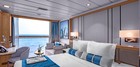
Balcony Stateroom
$9,072 USD pp

Superior Balcony Stateroom
$9,447 USD pp

Grand Balcony Stateroom
$10,009 USD pp
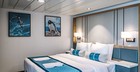
Balcony Suite
$10,572 USD pp

Junior Suite
$11,322 USD pp

Single Stateroom
$11,472 USD pp
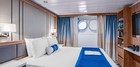
Freydis Suite/Premium Suite
$12,897 USD pp

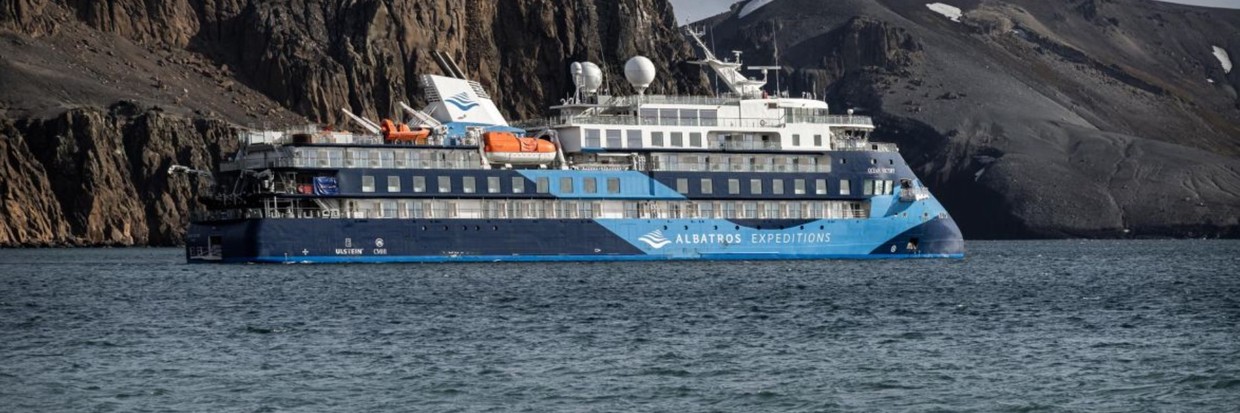
Vessel Type: Luxury X-Bow®-Infinity Class Vessel
Passenger Capacity: 174 passengers in 93 cabins
Built: 2021
Ocean Victory carries the same next-generation expedition design as its sister ship, purpose-built for the demands of Antarctica and the Arctic. The patented X-Bow structure delivers a steadier, more comfortable ride through heavy seas and deeper ice, while the heated mudroom and multiple exterior access points streamline zodiac operations. Large stateroom windows, broad observation areas and hydraulic platforms keep the Polar environment in constant view, and amenities such as Jacuzzis, spa, gym, lounge spaces and bistro service support a high standard of comfort without dulling the focus on exploration.
Efficiency and environmental performance are central to the vessel’s build. Diesel–electric propulsion reduces fuel consumption and lowers emissions by roughly 50 percent compared with traditional expedition ships. Most cabins include private balconies, communal spaces are deliberately generous, and all core expedition infrastructure - photography support, science areas, medical capability and dedicated passenger services - is integrated into daily operations. The result is a modern, stable and environmentally responsible platform for seamless travel across both Polar regions.


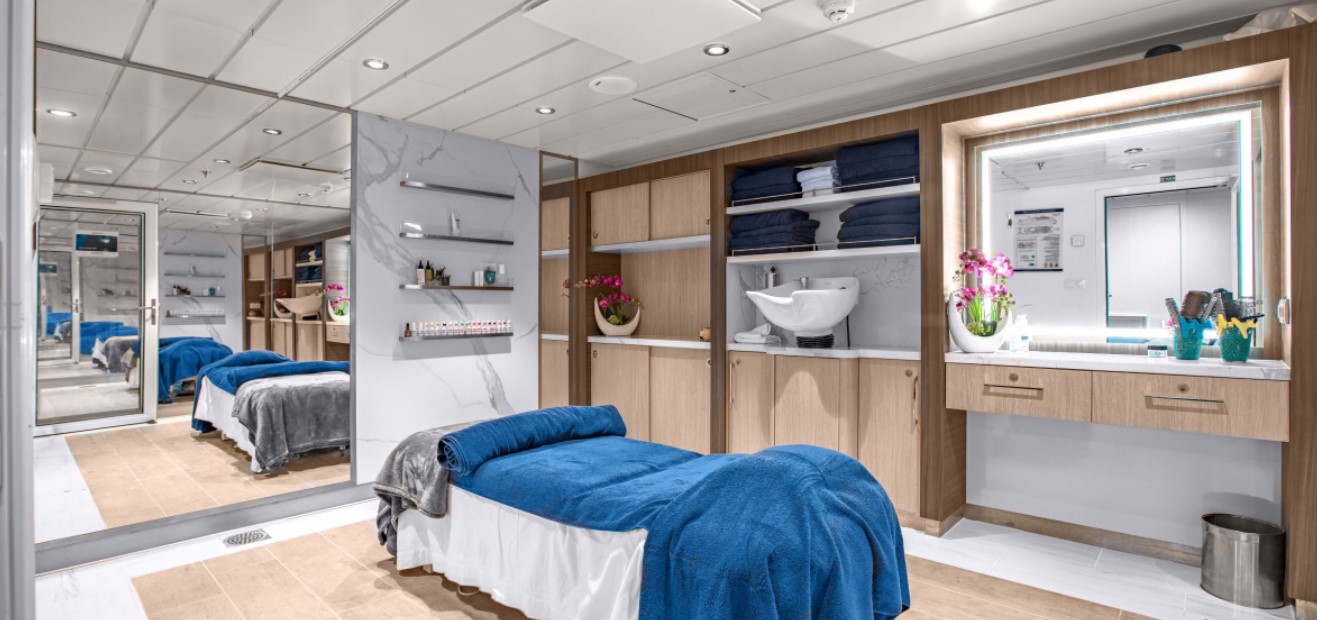


2028 Kayaking - North Atlantic $1,045 USD
Save 25% on all Ocean Victory expeditions
Early Booking Bonus: save up to 25% on 2028 expeditions. Offer ends December 8, 2026. Terms and conditions apply. This special offer is subject to availability. Please contact us for more details.
Inclusions
• Accommodation – Comfortable cabins with private bathrooms, towels, bathrobes, and toiletries
• All Meals – Buffet-style breakfast and lunch, à la carte dinners, early-bird breakfast, afternoon tea, and late-night snacks
• Expedition Activities – Guided excursions, including Zodiac cruises, onshore explorations, wildlife viewing, and community visits
• Onboard Educational Programming – Expert-led presentations, workshops, and interactive learning sessions about the destinations visited
• Onboard Facilities – Lounges, libraries, bars, wellness facilities (gym, sauna), and observation areas for scenic viewing
• Specialized Equipment – Rubber boots and life jackets provided for excursions
• Complimentary Expedition Jacket – Provided on all voyages.
• All Applicable Taxes and Fees – Credit card fees and port charges included in the expedition cost
• Basic wifi is included in the price on Exploris One, however, connectivity may vary depending on region
• Beverage package is included in the fare on Exploris One
Exclusions
• Optional Activities – Kayaking, pre/post tour extensions, and other specialized enhancements (eg, Fibre Arts Program)
• Gratuities – Recommended but not included in the expedition fare.
• Pre and Post Night Hotel Accommodation – we recommend travellers arrive in the gateway city at least 1 night prior to departure, and continue homeward travel one day after disembarkation
• Medical Evacuation Insurance – Mandatory for all travelers but not included.
• Alcohol and other beverages (such as canned soda) are available for purchase aboard Ocean Endeavour and Ocean Nova
• Wifi packages are available for purchase on Ocean Endeavour and Ocean Nova
 Expedition
Our Associates Include


