Sailing To Eleven Island Paradises - Caribbean Islands Sailing from Philipsburg
This sailing itinerary explores the northern and eastern Caribbean through a varied sequence of island cultures, natural landscapes, and open-water passages. Beginning and ending in St. Maarten, the journey blends lively ports such as Gustavia and Saint-Pierre with quieter anchorages in the British Virgin Islands, Dominica, and Nevis. Days under full sail are interspersed with time ashore to experience sheltered bays, volcanic coastlines, rainforest-covered peaks, and relaxed island harbours, creating a balanced voyage that moves fluidly between refined ports, unspoilt nature, and classic Caribbean seascapes.
Highlights
• French Flair, Dutch Charm: See cultures come together in inspiring ways on the shared island of St. Maarten.
• Celeb-Packed Paradise: St. Barths calls all A-listers with VIP beaches, high-end shopping, and luxe private parties.
• The Baths: Float in Virgin Gorda’s tidal pools and grottoes, formed from granite boulders on a picturesque beach.
• It’s a Yachtie Life: Indulge in the Virgin Islands’ carefree customs of beach, bar, and sea.
• At the Foot of the Volcano: Martinique charms with its colonial town of Saint-Pierre.
• Pure Nature on the Pitons St. Lucia and Dominica are tropical utopias with volcanoes covered in rainforests.
• Evening Light Show: Enjoy alfresco cocktails with backdrops of sunsets in rich Caribbean colors.
Dutch in the south, French in the north – on St. Maarten you will find an unusual piece of Europe in the middle of the Caribbean. Because of the natural salt deposits, the Dutch West India Company once claimed the island for itself and – according to legend – divided the island up in 1648 after a drinking competition with the French. In the colorful port city of Philipsburg, a day at the beach can be perfectly combined with a stroll through town: From the fine sandy Great Bay Beach it is only a stone's throw to the Boardwalk with its restaurants and to the boutiques of the small city center.
St. Barthélemy, affectionately known as St. Barths by most, already had many "owners" before the Lesser Antilles were acquired by France in 1877. When the first estate was acquired by the banker David Rockefeller in 1957, the island's future was finally sealed. It became a refuge for the international jet set and an elegant holiday paradise for many Hollywood stars. For over 40 years, St. Barths has cultivated a luxurious lifestyle with a Caribbean laissez-faire approach. You can stroll through the charming main town of Gustavia, whose beautifully restored houses and colonial facades look out over the sea with its elegant superyachts, browse in the shops for precious items, or enjoy a sundowner in the picturesque harbor surrounded by clusters of high class bars and restaurants.
Climbing the rigging, untying ropes, setting sails – today is all about sailing. Time to lean back and relax in the deck chair and watch the passionate crew hoisting the sails by hand.
St John’s is the capital of this small island in the Antilles, a former British colony. From Shirley Heights in the south you have a fantastic view over the English harbor and Nelson's Dockyard, an old restored shipyard named after the Admiral. Visit Betty's Hope, a restored sugar mill where "white gold" would have been processed during the island's bitter past. Now sweet black pineapples grow in the gentle rolling landscape around Boggy Peak. The coast is lined with bays and lagoons, dazzling white palm-filled beaches – one for every day of the year – and an almost unbroken coral reef.
Explorers once used to cross swords in the Sir Francis Drake Channel. Nowadays the sea around the British Virgin Islands is one of the world's best sailing areas. Heavenly bays, gorgeous beaches, idyllic anchoring spots, smart yacht clubs and charming little beach bars make the island a popular haunt for sailors. On Virgin Gorda, once called "The Fat Virgin" by Columbus due to its shape, you can find "The Baths", one of nature's most beautiful oddities, in the National Park. Ground to a sphere and polished to a shine, the huge granite formations on the beach and in the water create a multi-branched labyrinth of giant boulders.
Explorers once used to cross swords in the Sir Francis Drake Channel. Nowadays the sea around the British Virgin Islands is one of the world's best sailing areas. Heavenly bays, gorgeous beaches, idyllic anchoring spots, smart yacht clubs and charming little beach bars make the island a popular haunt for sailors. On Virgin Gorda, once called "The Fat Virgin" by Columbus due to its shape, you can find "The Baths", one of nature's most beautiful oddities, in the National Park. Ground to a sphere and polished to a shine, the huge granite formations on the beach and in the water create a multi-branched labyrinth of giant boulders.
The Sir Francis Drake Channel, where swords once crossed, is now one of the most beautiful sailing spots. Jost van Dyke, the smallest of the main islands in the British Virgin Islands, is a mountainous volcanic object of beauty with fewer than 300 inhabitants. One of them, Foxy, has been mixing his cocktails since 1968 and the bar of the same name enjoys a legendary reputation as perhaps the most famous beach bar in the Lesser Antilles. The island's past is less reputable – it was named by a Dutch pirate. The island gives its most beautiful treasures to all who visit – fine sand, green palm trees, colorful beach bars and the luminous blue of the sea.
The Sir Francis Drake Channel, where swords were once crossed, is now one of the most beautiful sailing spots. Jost van Dyke, the smallest of the main islands in the British Virgin Islands, is a mountainous volcanic object of beauty with fewer than 300 inhabitants. One of them, Foxy, has been mixing his cocktails since 1968 and the bar of the same name enjoys a legendary reputation as perhaps the most famous beach bar in the Lesser Antilles. The island's past is less reputable – it was named by a Dutch pirate. The island gives its most beautiful treasures to all who visit – fine sand, green palm trees, colorful beach bars and the luminous blue of the sea.
It almost seems as if no other career choice than pirate was possible in the 17th and 18th centuries in the British Virgin Islands. Jost van Dyke, Blackbeard, Francis Drake – they all went on the prowl in the Dream Territory during the golden age of privateering. Norman Island was named after the pirate captain Norman, who allegedly hid his treasures here, and inspired Robert Louis Stevenson to write his adventure novel “Treasure Island”. If you dig a little in the fine sand on the uninhabited private island today, you probably won’t discover any gold coins, but you will discover an equally valuable treasure: deep, Caribbean relaxation.
Dutch in the south, French in the north – on St. Maarten you will find an unusual piece of Europe in the middle of the Caribbean. Because of the natural salt deposits, the Dutch West India Company once claimed the island for itself and – according to legend – divided the island up in 1648 after a drinking competition with the French. In the colorful port city of Philipsburg, a day at the beach can be perfectly combined with a stroll through town: From the fine sandy Great Bay Beach it is only a stone's throw to the Boardwalk with its restaurants and to the boutiques of the small city center.
Climbing the rigging, untying ropes, setting sails – today is all about sailing. Time to lean back and relax in the deck chair and watch the passionate crew hoisting the sails by hand.
The 'Paris of the Islands,' the 'Pearl of the Antilles,' or the 'Venice of the Tropics' – Saint-Pierre in the northwest of the French dream island Martinique has always inspired romantic comparisons. Founded in 1635, the city at the foot of the volcanic mountain Pelée flourished due to sugar and slave trade, becoming the economic and cultural center of the island. Prosperity continued until 1902 when Pelée erupted, destroying Saint-Pierre and burying 30,000 people under lava, embers, and ash. Today, the coastal town is officially classified as a 'City of Art and History': In addition to the ruins of the theater and the old church, the intricate buildings of the Chamber of Commerce and the cathedral are worth a visit.
Two famous volcanic cones are indisputably the emblem of St. Lucia and have been designated as UNESCO World Heritage Sites. Gros and Petit Piton tower over the southern, windward side of the island and, in Soufrière, seem close enough to touch. The volcanoes have in fact long been extinct, but the sulphur springs demonstrate the power of the earth's core and still bubble up. In the Botanical Gardens, natural abundance is combined with artistic arrangements to create a colorful tropical paradise. Some people claim that Josephine, who later became Napoleon's wife, used to bathe in the little pool in the garden.
Dominica, nicknamed the Nature Isle of the Caribbean, is one of the most untouched of the Windward Islands. It boasts some of the highest mountains in the Lesser Antilles, as well as many beautiful national parks. Its interior is characterized by thick forest, where rivers plunge into the depths and tiny streams wind through the jungle. Two extinct volcanoes are at the center of the Cabrits National Park and, recaptured by nature, the former strategically important Fort Stanley appears like a picturesque backdrop in the heart of the lush woodlands.
With an area of 100 square miles and a population of only around 53,000, the Federation of St. Kitts and Nevis is one of the twelve smallest recognized states in the world. Located to the southeast, Nevis is the smaller and quieter of the two leeward islands – and a true Caribbean dream. Lush green rainforests stretch along the slopes of its extinct volcano, flowing into long sandy beaches that shimmer seductively in various shades of yellow, black and red toward the ocean. Charlestown itself is quite manageable, and offers two museums as cultural alternatives to splashing around in the warm Caribbean waters.
Anguilla is one of the Leeward Islands in the Lesser Antilles, a British Overseas Territory that also includes several small, uninhabited coral islands. This small island is host to more than 30 superb beaches protected by coral reefs. Enjoy the turquoise blue sea and white sandy beaches of Road Bay as you swim against a backdrop of palm trees.
Dutch in the south, French in the north – on St. Maarten you will find an unusual piece of Europe in the middle of the Caribbean. Because of the natural salt deposits, the Dutch West India Company once claimed the island for itself and – according to legend – divided the island up in 1648 after a drinking competition with the French. In the colorful port city of Philipsburg, a day at the beach can be perfectly combined with a stroll through town: From the fine sandy Great Bay Beach it is only a stone's throw to the Boardwalk with its restaurants and to the boutiques of the small city center.
Itineraries are subject to change.
|
Book now |
Category E: Superior cabins, outside. From
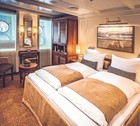
Category D: De luxe cabins, outside. From
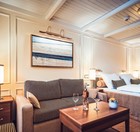
Category F: Superior single cabins, outside. From
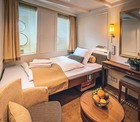
Category C: De luxe lido cabins, outside. From
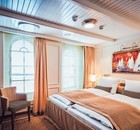
Category B: Junior suites with balcony. From
Category A: Suites with balcony. From
|
Book now |
Category E: Superior cabins, outside. From
Category D: De luxe cabins, outside. From
Category F: Superior single cabins, outside. From
Category C: De luxe lido cabins, outside. From
Category B: Junior suites with balcony. From
Category A: Suites with balcony. From
|
Book now |
Category E: Superior cabins, outside. From
Category D: De luxe cabins, outside. From
Category F: Superior single cabins, outside. From
Category C: De luxe lido cabins, outside. From
Category B: Junior suites with balcony. From
Category A: Suites with balcony. From
Vessel Type: Three-mast full-rigged ship
Length: 138 meters
Passenger Capacity: 136
Built: 2021
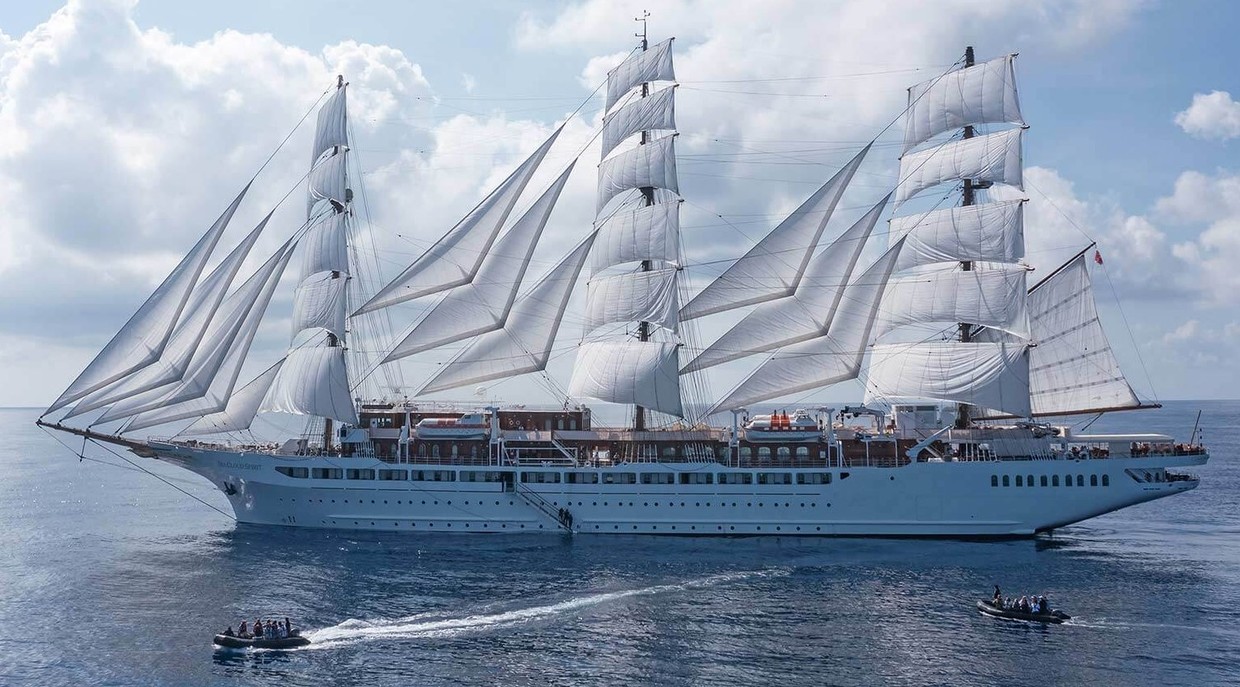
SEA CLOUD SPIRIT is a modern three-mast, full-rigged windjammer launched in 2021, combining traditional sailing heritage with contemporary shipbuilding and engineering. With an overall length of 138 metres and carrying up to 4,100 m² of sail across 28 sails, she is one of the largest and most advanced sailing cruise ships in the world. Built under the Maltese flag, the vessel accommodates a maximum of 136 passengers supported by a crew of approximately 85, preserving an intimate onboard atmosphere while delivering authentic tall-ship sailing. In addition to her classic rigging, SEA CLOUD SPIRIT is equipped with efficient diesel-electric propulsion, ensuring modern operational reliability alongside genuine sail-powered navigation.
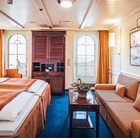
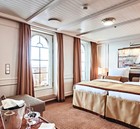
Onboard, the ship offers 69 outside cabins and suites, many with private balconies, all fitted with high-end amenities and refined finishes. Public spaces include a panoramic restaurant, lido bar and bistro, elegant lounge with a Steinway grand piano, library, sun deck, and boutique. A full wellness and spa area, fitness centre with ocean views, swim platform, water sports equipment, and Zodiac boats support both relaxation and active exploration. Designed as a true sailing vessel rather than a conventional cruise ship, SEA CLOUD SPIRIT sets a benchmark for combining windjammer tradition, spacious design, and 21st-century comfort at sea.


Inclusions
• Beautifully appointed cabin in selected category
• Gratuities
• Welcoming bottle of champagne in your cabin
• All meals from early-bird breakfast to the exquisite 4-course dinner menu with choice of main course
• 5-course gala dinner during the cruise
• Welcome and farewell cocktail with champagne
• Selected wines and beers thoughtfully chosen to complement lunch and dinner
• All soft drinks and juices throughout the cruise
• All alcohol-free coffee and tea specialties
• Bottled water on the excursions
• Fresh fruit basket in your cabin, replenished daily
• English-speaking tour guide
• Travel documents
• All port fees
• Use of watersports facilities such as snorkeling equipment, Stand-Up-Paddles and Towable Tube (weather permitting)
• Free laundry service for cat. A-C (SEA CLOUD) and cat. A+B (SEA CLOUD II and SEA CLOUD SPIRIT)
Exclusions
• International and domestic flights unless otherwise stated
• Travel Insurance
• Passport and visa costs where applicable
• Shore excursions
• Alcoholic beverages other than those listed in inclusions
 Yacht
Yacht
Our Associates Include


