North Spitsbergen Explorer - Into the Pack Ice
This expedition focuses on the pack ice of north Spitsbergen and many opportunities to spot whales, polar bears, seabirds, walruses, and other such wildlife.
Highlights
• Monacobreen
• Sjuøyane
• Isfjord
• Arctic Fox
You touch down in Longyearbyen, the administrative center of Spitsbergen, the largest island of the Svalbard archipelago. Enjoy strolling around this former mining town, whose parish church and Svalbard Museum make for fascinating attractions. Though the countryside appears stark, more than a hundred species of plant have been recorded in it. In the early evening the ship sails out of Isfjorden, where you might spot the first minke whale of your voyage.
This voyage will take you into the pack ice and along the remote shorelines of rugged north Spitsbergen. Places we might visit include the following:
Raudfjord
On the north coast of Spitsbergen, you can enjoy this expansive fjord spilling with glaciers – and maybe even visited by ringed and bearded seals. The cliffs and shoreline also support thriving seabird colonies, rich vegetation, and the possibility of polar bears.
Monaco Glacier
Depending on the weather and sea ice, we could sail into Liefdefjorden and cruise within sight of the 5-kilometer-long (3.1 miles) face of Monaco Glacier. The waters in front of this precipitous glacier are a favorite feeding spot for thousands of kittiwakes, and the base of the ice is a popular polar bear hunting ground. If ice conditions prevent us from sailing here early in the season, we may sail along the west coast of Spitsbergen.
The Seven Islands
The northernmost point of the voyage may be north of Nordaustlandet, in the Seven Islands. Here we may reach 80° north, just 870 km (540 miles) from the geographic North Pole. At Phippsøya there is a walrus haul-out site, while Rossøya is the northernmost landmass in Spitsbergen. The vessel may sail deeper into the pack ice when wheeling around west again.
Sailing in the pack ice
While we retrace our route west, keep watch for polar bears, ringed seals, and elusive Greenland (bowhead) whales. This is also the habitat of ivory gulls. About 40 nautical miles (74 km) west of Spitsbergen, we’ll sail the edge of the continental shelf. Here fin whales forage during the summer in the upwelling zones (where cold, nutrient-rich water wells up from below the sea’s surface) that run along the Spitsbergen banks. At the mouth of Kongsfjorden, you have a good chance of sighting minke whales.
Forlandsundet wildlife
Walruses sometimes haul out in Forlandsundet, at Palfyloddden. But if we cannot go there, we might sail to the mouth of Isfjorden, where we may see different species of rorqual whales. Our intended landing site is Alkhornet, where seabirds nest on the cliffs, Arctic foxes search below for fallen eggs and chicks, and reindeer graze the sparse vegetation. Another possibility is the glacier front in Ymerbukta, where you can see congregations of various eider duck species.
Even great adventures must eventually come to an end. The vessel arrives back in Longyearbyen in the early morning, and bus transportation to the airport will be provided.
Itineraries are subject to change.
|
Book now |
Polar Bear Special Departure
Quadruple Porthole
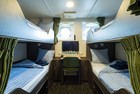
Triple Porthole
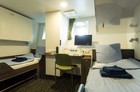
Twin Porthole
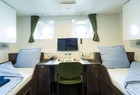
Twin Window
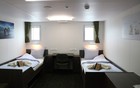
Twin Deluxe
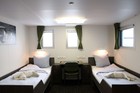
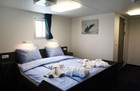
Superior
|
Book now |
Polar Bear & Summer Solstice Special Departure
Quadruple Porthole
Triple Porthole
Twin Porthole
Twin Window
Twin Deluxe
Superior
Vessel Type: Expediton
Length: 91m
Passenger Capacity: 108-123
Built / Refurbished : 1989 / 2015
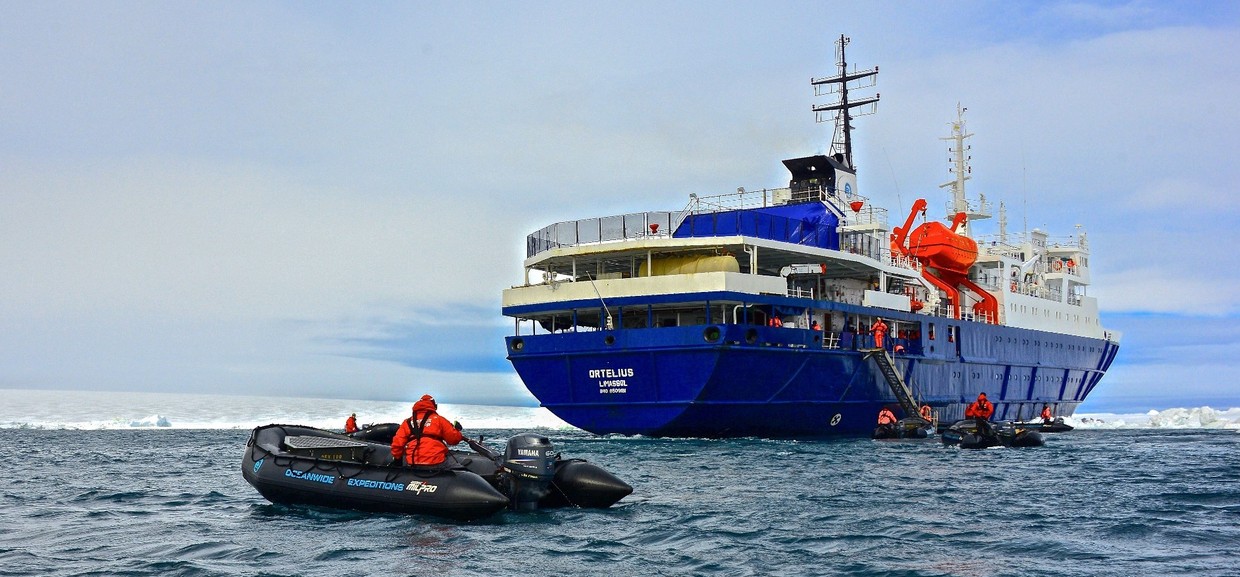
Ortelius is a fully ice-strengthened Polar Class UL1 vessel built for demanding expeditions in one-year and multi-year sea ice. Originally constructed in 1989 for the Russian Academy of Science, its robust engineering and wide open-deck spaces make it well suited to deep-field exploration in the Arctic and Antarctica. The ship carries 108 passengers and operates with a substantial team of nautical crew, hotel staff, expedition leaders, and lecturers, supported by a fleet of ten Zodiacs for frequent shore landings and wildlife access. Interiors are functional and comfortable, offering standard hotel amenities alongside a lecture room and bar.
The vessel is designed for maximum time ashore and flexible routing, prioritising nature observation over traditional cruise programming. Some cabins may have partially obstructed views due to structural requirements, but the best vistas are always outside on deck or from the bridge. Ortelius offers stable performance, reliable ice navigation, and a straightforward, expedition-focused environment, making it a strong choice for travellers who want direct contact with polar landscapes without unnecessary embellishment.


Inclusions
• Voyage in selected accommodation category
• All meals while on board the ship
• Coffee and Tea while on board
• All shore excursions and landings by zodiac as per the itinerary
• Lectures held on board by Expedition Team and naturalists
• Port Charges/Taxes
• Comprehensive Pre-departure materials
• Free internet (1.5 GB of free internet connectivity per day)
• Free use of rubber boots and snowshoes
• Transfers and baggage handling between the airport, hotels and ship only for those passengers on the group flights to and from Longyearbyen.
Exclusions
• International and domestic airfares whether commercial or charter
• Pre and Post-voyage accommodation
• Passport and visa costs if applicable
• Travel insurance including medical evacuation cover
• Beverages not listed in inclusions
• Any items of a personal nature including any medical costs incurred on board
• Meals when not on board the ship
• Gratuities (Recommended USD$15 per passenger per day)
 Expedition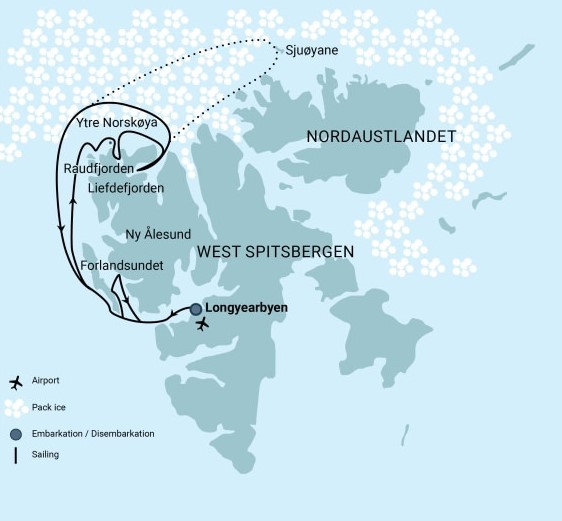
Our Associates Include


