Kyushu and Beyond: Sacred Shores of Japan
Discover the diverse cultures, historic ports and sacred landscapes of Japan on this 12-day voyage aboard SH Minerva, travelling from Hiroshima through the Seto Inland Sea and around the coast of Kyushu. Explore traditional fishing villages such as Ine, with its distinctive waterfront boathouses, and visit Maizuru, Sakaiminato and Nagasaki, where naval history, local traditions and international influences have shaped the region. Continue to Busan in South Korea before discovering the Hidden Christian heritage of Sakitsu Village, the pottery and glassmaking traditions of Kagoshima, and the historic castle and gardens of Uwajima. Along the way, experience Japan’s rich spiritual and maritime heritage, from ancient shrines and Buddhist temples to the tranquil island scenery of the Seto Inland Sea, before returning to Hiroshima.
Highlights
• Expert-led Talks - Learn more about the region you're exploring from our team of expedition experts.
• Japan in Detail - Experience Japan through places that still carry the country’s feudal and craft traditions, from castle towns to ports shaped by trade.
• Natural Walks - Enjoy expert-led excursions to historic landmarks, serene temples, and national parks.
Hiroshima is a city of quiet strength, where modern life sits beside places of remembrance. It is also a gateway to nearby sacred landscapes, with calm coastal scenery and a strong sense of local tradition. It is an opening that sets a thoughtful tone for the voyage
Sailing through the Kanmon Strait is challenging with strong currents and an S-shaped bend. One of the world’s busiest shipping lanes, the strait cuts a dramatic 38 km (24 mi) channel, narrowing to 700 m (0.4 mi) at its tightest point. The graceful Kanmon Bridge, a 1,068-m (3,504-ft) suspension bridge, spans the waterway between Honshu and Kyushu. Shimonoseki overlooks the strait from Honshu, while Moji district stands watch from Kyushu
A fishing village on the northern coast of the Tango Peninsula, where around 230 funaya — traditional boathouses built directly over the water — line the inner shore of a near-circular bay. Residents moor their boats on the ground floor and live above. The village has changed little in two centuries and carries national preservation status. Approached from the sea, the funaya present an unbroken wooden facade at the waterline — one of the most distinctive streetscapes in Japan
Maizuru carries naval history and a clear link to the Meiji era, with brick warehouses and a harbour built for strategy. The wider region opens into classic Kyoto area scenery, where refined culture, temples, and historic districts are within reach. It is a day that balances port history with inland elegance
Sakaiminato has the feel of a working coastal town, shaped by seafood, folklore, and a slower pace. Nearby landscapes shift quickly from shoreline to forested mountains, with gardens and museum spaces that match the region’s quiet aesthetic. It is a softer, more intimate stop after Busan
Busan is a port city with beaches, hills, and a busy harbour energy. It blends memorial sites and modern neighbourhoods with markets that still feel local and direct. Compared to Japan’s smaller ports, it is louder, bigger, and more urban
Though devastated by an atomic blast in 1945, this resilient harbour city of Nagasaki still stands. The Atomic Bomb Museum and adjoining Peace Memorial Hall document the tragic history. A cable car ascends Mount Inasa for sweeping city views, while leafy Glover Garden features historic Western mansions. On tiny artificial Dejima Island, reconstructed 17th-century warehouses recall the former Dutch trading post
Sakitsu Village, on the Amakusa Islands in western Kumamoto, is a UNESCO World Heritage Site tied to Japan’s Hidden Christian history. Once a secret hub of worship during prohibition, it’s home to Sakitsu Church, known as the “Church of the Sea,” with a European Gothic exterior and rare tatami-mat interior. The village’s story is further told at the Minato-ya Museum, which displays artefacts used to practice the faith in secret
Kagoshima, on the southwest tip of Japan’s Kyushu Island, is home to several glassmakers and potteries where artisans specialise in making Satsuma pottery and delicately cut Kiriko glassware. This city is a mix of classic Japanese architecture, modern high-rises and a spattering of Art Deco buildings. Observation points around the city provide dramatic views of Mount Sakurajima, an active volcano on a nearby island that regularly smokes
Uwajima, a bustling coastal city, is anchored by the elegant Uwajima Castle, one of twelve Edo-period survivors, with spectacular cityscapes for hikers ascending to its keep. The Tensha-en Garden is a tranquil space with bamboo groves, towering culms and seasonal blooms. In the nearby village of Uchiko, the Old Quarter's streets are lined with well-preserved wooden houses and merchant buildings, frozen in time from the 18th and 19th centuries
The Seto Inland Sea, known as Setouchi, stretches between Honshu, Shikoku and Kyushu, its sheltered waters scattered with hundreds of islands. Sailing through its channels reveals wooded shores, small fishing communities and bridges spanning the water between islands. Ancient maritime routes once carried traders and pilgrims through this region, while today its calm seas and closely gathered islands create one of Japan’s most distinctive coastal landscapes. Spend time on deck as SH Minerva moves through this quieter side of Japan toward Onomichi
On the Seto Inland Sea, Itozaki Shrine serves as an 8th-century guardian of the sea with rich local legend. Nearby Onomichi offers stunning beauty and culture, known for its Temple Walk connecting 25 Buddhist temples along a 2.5km path and the Path of Literature with 25 natural stone monuments engraved with passages on Mount Senkoji. This charming city is also the starting point of the Shimanami Kaido, a world-famous 70km cycling route.
Hiroshima is a city of peace and resilience. The Hiroshima Peace Park and Museum, designated a UNESCO World Heritage Site, vividly portrays the aftermath of the atomic bombing. Designed by Kenzō Tange and inaugurated in 1955, the museum serves as a global symbol of peace, featuring a solemn cenotaph bearing the victims' names and the Flame of Peace, lit in 1964. The Genbaku Dome stands as the sole original structure left at the blast site
Itineraries are subject to change.
|
Book now |
Oceanview D4. From

Oceanview M4. From
Balcony D5. From

Balcony M5. From
Balcony D6. From
Suite. From

Premium Suite. From

Vessel Type: Expedition Ship
Length: 115 meters
Passenger Capacity: 158
Built: 2020-2021
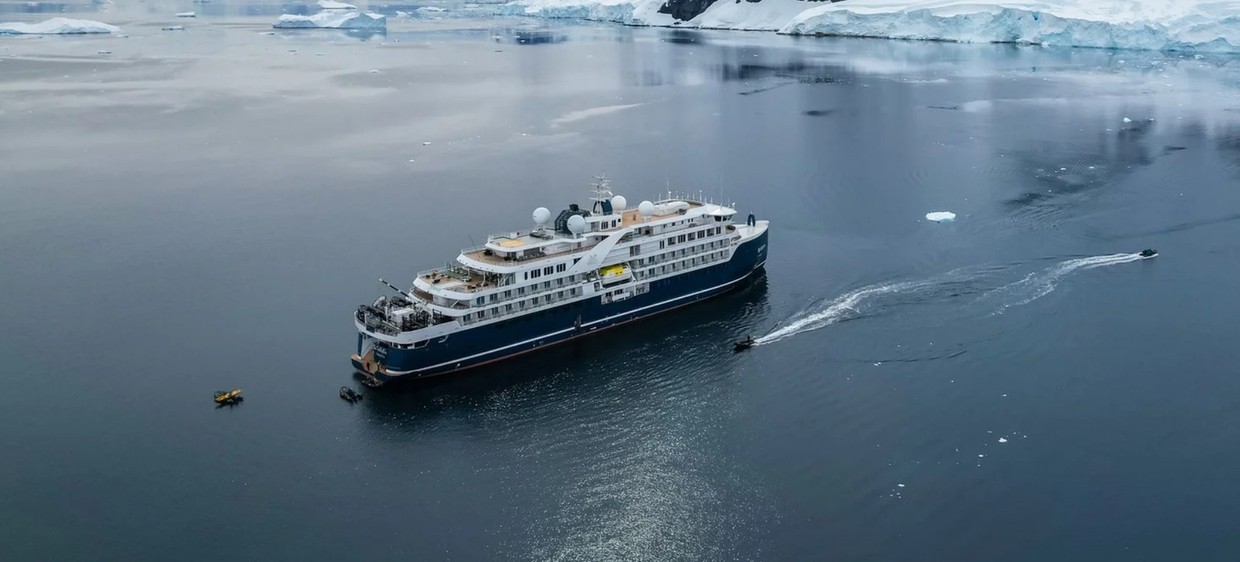
The SH Minerva is a boutique expedition ship purpose-built for exploring far-flung destinations and remote polar regions in comfort and style. Crafted at Finland’s esteemed Helsinki Shipyard, she features a Polar Class PC5 ice-strengthened hull and advanced stabilisers, ensuring smooth sailing even in challenging waters. With just 158 guests served by 122 crew across nine decks, the atmosphere on board is intimate and welcoming. Elegant Scandinavian-inspired interiors, panoramic observation spaces, and a range of facilities – from the stargazing deck and library to the spa, heated outdoor pool, and fine dining venues – make every moment at sea a pleasure.
Accommodation ranges from well-appointed oceanview staterooms to spacious premium suites, each offering thoughtful touches such as a flame-effect fireplace, Illy espresso machine, luxury toiletries, and complimentary binoculars for wildlife spotting. Many feature private balconies for uninterrupted views of the passing scenery. Attentive crew provide a warm, personalised service, ensuring that every guest feels at home while enjoying a journey that blends adventure with refined comfort. Whether navigating icy channels or gliding into sunlit harbours, the SH Minerva offers an unforgettable cruising experience.


Inclusions
• Charter flights to the port of embarkation/ disembarkation (Longyearbyen, Ushuaia, Kangerlussuaq, Nuuk)
• Group return transfers from airport to cruise port and to the hotel (where included - please enquire)
• One night pre-cruise accommodation with breakfast in a 4/5-star hotel (where included - please enquire)
• All meals onboard
• 24-hour room service
• Coffee, tea, soft drinks, and selected alcoholic beverages, available 24 hours per day
• Lecture programs by our experienced expedition team and guest speakers
• Standard WiFi
• Onboard gratuities and port taxes
• One selected shore excursion/expedition activity per port of call (kayaking not included – however this can be pre-booked)
• In polar regions: Branded Swan Hellenic expedition parka to take home and use of rubber boots for wet zodiac landings.
Exclusions
• Kayaking, private tours, special arrangements, and private Zodiac tours on request and based on availability.
• Additional shore excursions are also offered (excluding polar regions, where all excursions are Zodiac-based and included). At each destination/ port of call, one pre-selected shore excursion will be included free of charge. All other excursion offers will be available at additional cost.
• Premium wines and spirits from the bar menu
• Purchases from the ship’s boutique, laundry expenses, premium WiFi packages, and spa treatments
• Visas where required, travel insurance, flights, domestic transfers, and any hotel requirements pre- or post-cruise, unless otherwise stated within the itinerary description.
 Luxury Expedition

Our Associates Include


