High Arctic Expedition: Where Art Meets Land 2028
Journey through Greenland and the Canadian High Arctic, where glaciers, shifting ice, wildlife, and endless summer light have inspired generations of artists and travellers. In partnership with the McMichael Canadian Art Collection, explore how art shapes perceptions of the North while Inuit artists and cultural voices reveal a living homeland known through place, memory, and knowledge. From Sarvarjuaq/Pikialasorsuaq to Ellesmere Island and Devon Island, encounter landscapes whose scale and vitality no single image can contain in all its living complexity.
Highlights
• Explore Greenland and the Canadian High Arctic – Journey from Ilulissat and Upernavik to Smith Sound, Kane Basin, Ellesmere Island, Devon Island and Tallurutiup Imanga, travelling through vast landscapes of glaciers, ice and Arctic wilderness.
• Experience exceptional Arctic wildlife and landscapes – Discover iceberg-filled waters, fjords and remote islands, with opportunities to encounter whales and other High Arctic wildlife amid the endless summer light.
• Discover Inuit culture, art and Arctic history – Gain insights into Inuit knowledge, culture and contemporary artistic perspectives, while visiting communities and historic sites including Beechey Island, associated with the Franklin expedition.
Arrive by charter flight in Kangerlussuaq, whose Kalaallisut name means “big fjord.” The community developed around an American airbase established during the Second World War, its sheltered inland setting chosen for comparatively stable flying conditions. From here, transfer by Zodiac to your expedition vessel and prepare to follow the fjord toward the sea.
Kangerlussuaq Fjord carries the journey westward through a landscape shaped by ice and meltwater. Rounded mountains rise above broad glacial valleys, while suspended sediment lends the shallows a milky turquoise colour. As the long waterway opens gradually toward Davis Strait, cross the Arctic Circle and leave the continental interior behind. The transition from land to fjord to open sea marks a fitting beginning to the northern passage ahead.
Cruise along the dramatic Sisimiut coast, where mountains rise sharply from the sea and small settlements cling to the shoreline. This region reflects Greenland’s seafaring traditions, with communities deeply tied to land and water. As you sail, shifting light continually redraws the jagged peaks, revealing new textures, colours, and contours along the coast.
Ilulissat means “icebergs,” a fitting name for a city beside one of the world’s great moving ice systems. At the head of the UNESCO-listed Ilulissat Icefjord, Sermeq Kujalleq ranks among the fastest and most active glaciers on Earth. Its immense icebergs travel slowly through the fjord before entering Disko Bay, continually transforming the seascape.
The icefjord has shaped human life here for more than four thousand years. That relationship continues in contemporary Ilulissat, a lively Greenlandic city where fishing boats crowd the harbour and the streets bustle with residents and travellers. Restaurants showcase Greenlandic ingredients, while cafés, shops, and the striking Ilulissat Icefjord Centre reflect the city’s growing cultural and creative energy.
Here, deep human history, vibrant city life, and constant environmental change come together at the edge of the ice.
Sail among towering glaciers and drifting bergs, each one a shifting sculpture in white and blue. Fjords echo with the sound of calving ice, and mountains rise sheer above waters crowded with floes. Immense, elemental, and constantly changing, this landscape invites you to consider how something so vast and dynamic can ever be captured in paint, photography, or words.
Greenland’s coast breaks apart here into a vast maze of islands, narrow channels, and drifting ice. Upernavik, meaning “the springtime place,” rises from this intricate seascape in a bright sweep of colourful houses and a working harbour.
Fishing and hunting remain central to life across the archipelago, connecting Upernavik with the smaller communities scattered along the coast. Its historic quarter forms the world’s northernmost open-air museum, preserving the church, trading buildings, boats, and tools of an earlier era. Surrounded by rock, sea, and ice, Upernavik reveals the remarkable character of life along Greenland’s northern coast.
Continue north through Melville Bay, following Greenland’s coast toward Smith Sound. Icebergs drift through these waters in an ever-changing procession, while distant mountains, seabirds, and the possibility of marine wildlife keep attention fixed beyond the decks.
A day aboard creates time to look more closely at the region unfolding around us. Presentations, workshops, and informal conversations with educators explore the wildlife, geography, history, and living cultures of the High Arctic. Between sessions, the decks and observation spaces invite shared discoveries as the journey presses steadily north.
Venture through Smith Sound, the dramatic channel connecting Baffin Bay with Kane Basin and part of the greater Pikialasorsuaq region. Pikialasorsuaq means “great upwelling” in Kalaallisut and is known in Nunavut as Sarvarjuaq.
Recurring open water within the surrounding sea ice makes this the Arctic’s largest polynya and one of the most biologically productive regions north of the Arctic Circle. Nutrient-rich waters sustain an extraordinary abundance of life, drawing whales, seals, and millions of seabirds to this vital Arctic ecosystem.
Sail into Kane Basin, where Ellesmere Island and Greenland nearly meet. Glaciers tower above drifting sea ice, and the shifting Arctic light continually transforms the passage. Long travelled by Inuit, these waters later became a route for expeditions seeking both the lost Franklin expedition and a way to the North Pole. The basin bears the name of American explorer Elisha Kent Kane, who crossed it in 1854 during his search for Franklin.
Explore the rugged coastline of Ellesmere, Canada’s northernmost island. Towering mountains, vast ice caps, and deep fjords define a landscape of extraordinary scale. Here, the High Arctic exceeds the images that first inspired us, revealing a world more intricate, dynamic, and alive than any single representation can capture.
Set between the mountains of southern Ellesmere Island and the waters of Jones Sound, Ausuittuq (Grise Fiord) is Canada’s northernmost civilian community. Its Inuktitut name means “the place that never thaws,” a reference to the enduring ice above the community.
Ausuittuq was established through the High Arctic Relocations of 1953 and 1955, when the Canadian government moved Inuit families from Inukjuak and Mittimatalik, in part to reinforce Canadian sovereignty. The hardship and injustice of that history remain part of the community’s story, commemorated by a monument overlooking the shore. Today, family, language, harvesting, and community life give this small and remarkable Inuit hamlet its enduring character.
Sail through Tallurutiup Imanga, one of Canada’s largest marine protected areas, alive with whales, seals, and seabirds. Beneath towering cliffs and drifting ice, the sea glimmers with shifting light. Step ashore on Devon Island, the world’s largest uninhabited island, where glaciers meet the sea and tundra unfolds in broad, glacial valleys. Here, light and silence create their own compositions, inviting stillness, reflection, and a deep sense of the Arctic’s living beauty.
Beechey Island holds one of the most tangible chapters in the Franklin mystery. HMS Erebus and HMS Terror spent the winter of 1845–46 here before sailing south and disappearing. The graves of three crew members, remains of the winter camp, stone cairns, and traces left by later search expeditions still mark its narrow, windswept shore.
Protected as part of Beechey Island Sites National Historic Site, these remains capture the expedition at the threshold of mystery. The island later became a base for the vast search effort that helped map much of the Canadian Arctic Archipelago. Inuit testimony proved essential to tracing the expedition’s final movements and, generations later, locating its lost ships. Beechey Island connects Franklin’s failed voyage with its wider legacy, including expanded geographical knowledge, growing colonial ambitions, and an increasingly sustained southern presence in Inuit homelands.
Set among the gravel plains and raised beaches of Cornwallis Island, Qausuittuq occupies a strategic place within the waterways of the Canadian High Arctic. Its Inuktitut name means “place with no dawn,” a reference to the long polar night, while the summer season brings light that lingers around the clock.
The modern community began with the Canadian government’s High Arctic Relocation of 1953. The Qausuitturmiut who call it home have built a distinct community that now serves as an important centre for northern research, transportation, and expedition travel.
Disembark in Qausuittuq and transfer to the airport for the charter flight to Ottawa. Here, at a historic crossroads of Inuit travel, Arctic exploration, and contemporary northern life, the sea journey ends and the route turns south.
Published itineraries reflect our intended route and experiences but cannot be guaranteed. Weather, sea and ice conditions, government regulations, operational considerations, wildlife, and other circumstances may require changes to the planned schedule. Visits to specific communities also depend on local conditions and the needs, availability, and requests of the communities themselves. When changes are necessary, we will seek the best available alternatives, including another community visit where circumstances allow.
|
Book now |
Cabin Category 1
$11,066 USD pp
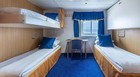
Cabin Category 2
$12,866 USD pp
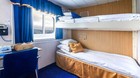
Cabin Category 3
$13,946 USD pp
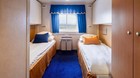
Cabin Category 4
$14,666 USD pp
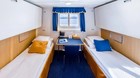
Cabin Category 5
$15,566 USD pp
Cabin Category 6
$20,970 USD pp
|
Book now |
Cabin Category 1
$11,066 USD pp
Cabin Category 2
$12,866 USD pp
Cabin Category 3
$13,946 USD pp
Cabin Category 4
$14,666 USD pp
Cabin Category 5
$15,566 USD pp
Cabin Category 6
$20,970 USD pp
Vessel Type: Expedition
Length: 73 metres
Passenger Capacity: 86
Built / Refurbished: 1992 / 2006
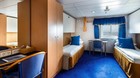
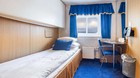
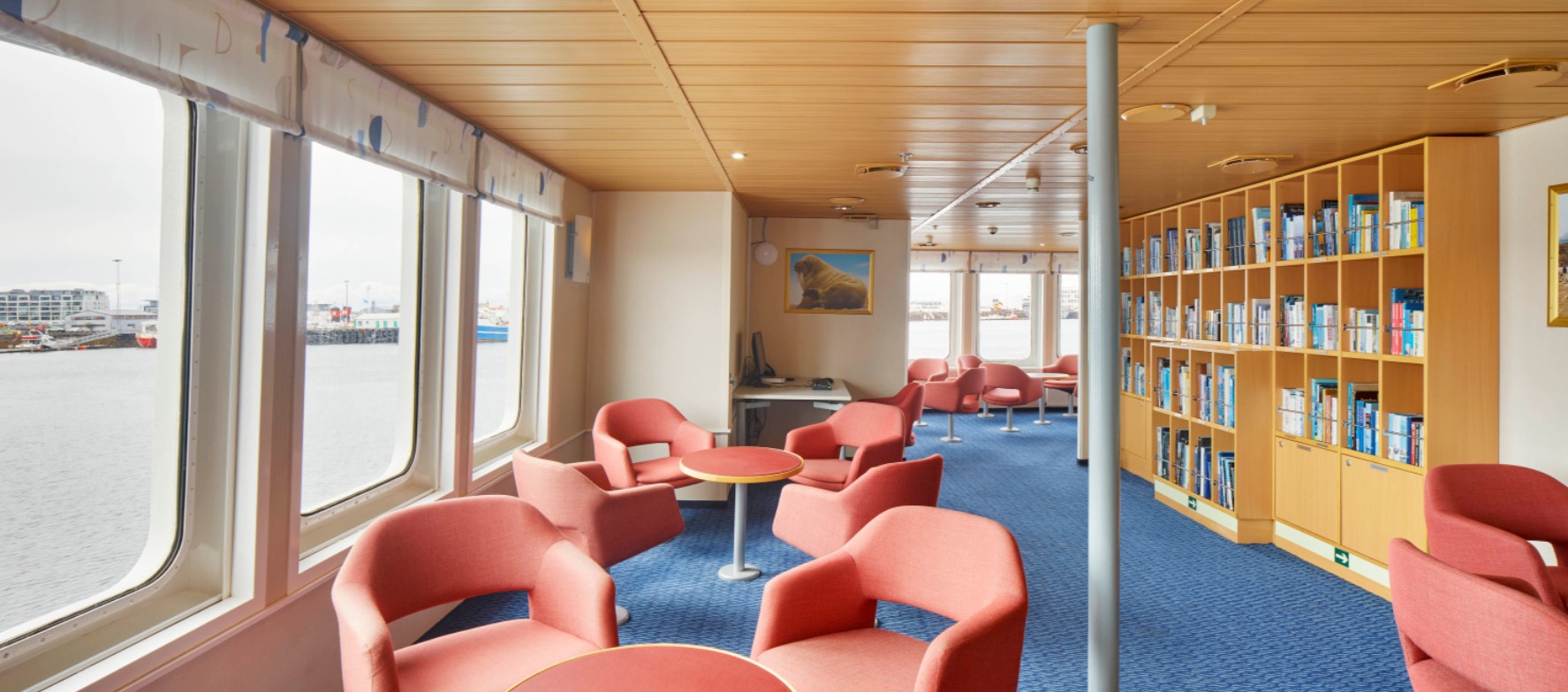
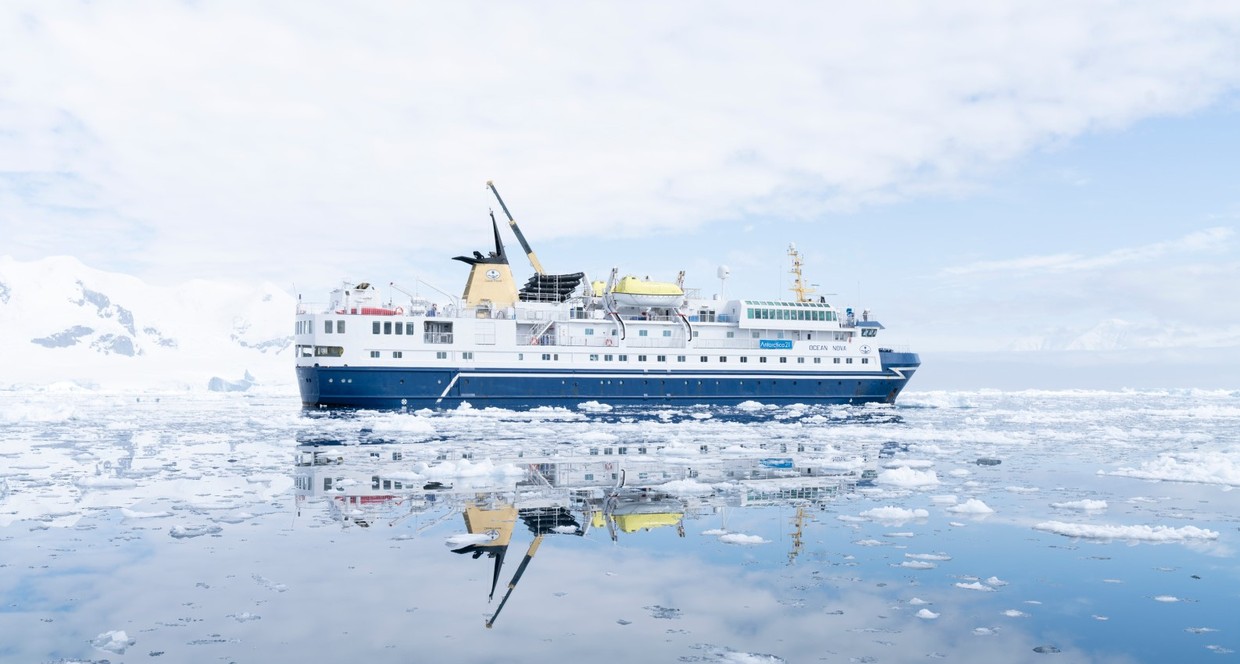
The Ocean Nova, built in Denmark in 1992 and fully refurbished in 2006, is a small yet comfortable expedition vessel accommodating up to 84 passengers. Cabins are spread across two decks and include single, double, and triple accommodations, all with sea views and private facilities. Designed with Scandinavian light woods, the cabins feature ample storage, desks, and flexible bedding arrangements, ensuring a practical and cosy retreat after a day of exploration. Passengers can relax in the Panorama Lounge, which offers panoramic views, daily briefings from the expedition team, and lectures on subjects ranging from ornithology to geology, while the library, small gym, and medical facilities enhance onboard comfort.
Dining aboard the Ocean Nova is informal yet enjoyable, with a single-sitting dining room offering a combination of table service and buffet, allowing all guests to dine together while taking in views through the portholes. Life on board is relaxed and immersive, often spent on deck watching for wildlife or simply admiring the surrounding landscapes. With one of the highest ice classes (1B) and a powerful 2000 hp diesel engine, the Ocean Nova is equipped to navigate icy waters or tranquil lochs with ease. A crew of 34, including North European officers, ensures both passenger safety and an enriching expedition experience, complemented by fully enclosed lifeboats and an onboard medical clinic.



Save 10% on all Ocean Nova expeditions
Save 10% on all Ocean Nova expeditions. Offer ends December 8, 2026. This special offer is subject to availability. Please contact us for more details.
Inclusions
• Accommodation – Comfortable cabins with private bathrooms, towels, bathrobes, and toiletries
• All Meals – Buffet-style breakfast and lunch, à la carte dinners, early-bird breakfast, afternoon tea, and late-night snacks
• Expedition Activities – Guided excursions, including Zodiac cruises, onshore explorations, wildlife viewing, and community visits
• Onboard Educational Programming – Expert-led presentations, workshops, and interactive learning sessions about the destinations visited
• Onboard Facilities – Lounges, libraries, bars, wellness facilities (gym, sauna), and observation areas for scenic viewing
• Specialized Equipment – Rubber boots and life jackets provided for excursions
• Complimentary Expedition Jacket – Provided on all voyages.
• All Applicable Taxes and Fees – Credit card fees and port charges included in the expedition cost
• Basic wifi is included in the price on Exploris One, however, connectivity may vary depending on region
• Beverage package is included in the fare on Exploris One
Exclusions
• Optional Activities – Kayaking, pre/post tour extensions, and other specialized enhancements (eg, Fibre Arts Program)
• Gratuities – Recommended but not included in the expedition fare.
• Pre and Post Night Hotel Accommodation – we recommend travellers arrive in the gateway city at least 1 night prior to departure, and continue homeward travel one day after disembarkation
• Medical Evacuation Insurance – Mandatory for all travelers but not included.
• Alcohol and other beverages (such as canned soda) are available for purchase aboard Ocean Endeavour and Ocean Nova
• Wifi packages are available for purchase on Ocean Endeavour and Ocean Nova
 Expedition
Our Associates Include


