Escapade between Greek Islands and Italian Treasures Luxury Cruise
This cruise will cultivate the art of peaceful travel as well as a family spirit, thanks to its customised activities on board and on shore for youngsters, with the Kid Explorers Club.
The mildness of summer on the waters of the Mediterranean Sea promises you an unforgettable journey between Greece and Italy. Fall under the spell of the Mediterranean landscapes and the ancient vestiges that will tell you a fascinating story. During this escapade, you will cross the mythical Corinth Canal and set off to discover the beauty of the Greek islands, between the Cyclades, the Dodecanese, the Saronic Islands and the Ionian islands. The wide variety of landscapes and the historic riches of these territories will reveal themselves, offering you a timeless moment, featuring white sandy beaches, rocky bays and UNESCO World Heritage Sites. You will enjoy a veritable eclectic experience, discovering the ancient Mediterranean and the exceptional landscapes of southern Italy.
Highlights
• Kids Explorer team for 4-13 year-olds, organising customised activities on board and on shore (outings, swimming sessions, workshops, paper chases, etc.).
• An exceptional journey to discover the treasures of Greece and Italy, and an unforgettable crossing of the Corinth Canal, linking the Aegean Sea to the Ionian Sea.
• UNESCO World Heritage Sites: the monastery of Saint John and the Cave of the Apocalypse in Patmos, the island of Lipari, the sacred site of Delphi from Galaxidi.
The Greek capital city is located on the edge of the Saronic gulf, in the east of the country. It bears a plural name in reference to the first villages that surround the Acropolis. You will be enchanted by the rocky plateau presided by its monuments listed as UNESCO World Heritage. In the city below, you can visit some of the liveliest districts in Athens: Plaka, with its maze of colourful streets, and where, in the evenings the drifting aroma of moussaka and garlic prawns will tickle your taste buds. The National Archaeological museum and the Cycladic Art Museum are also some of the city’s key attractions and allow visitors to discover Athens’ cultural past.
Patmos is one of the legendary must-see islands in the Dodecanese. This is where Saint John resided, presumed author of the last book in the Bible. The cave of the Apocalypse and the Saint John Monastery are dedicated to him. These sites, which are listed by UNESCO as World Heritage, are located at the top of a hillside planted with vines and orchards. On the shore, the crystalline coves of Kambos and Lampi offer absolutely gorgeous swimming areas.
A simply ravishing gem in the Dodecanese, Symi is located north-west of Rhodes. This island of cypress forests, vineyards and olive orchards, possesses a capital city of the same name that is as colourful as the surrounding countryside. The charm of the port district of Gialos is not to be missed: its quaysides are lined with picturesque houses with multi-coloured facades. You can get to the upper town by car or climb the 500 steps up the Kali Strata ramp. The second option offers superb viewing points of the coast and gorgeous turquoise waters.
Another best kept secret of the Dodecanese, Nisyros Island is located to the north-west of Rhodes. Its capital is Mandraki. As you approach by sea, you’ll be dazzled by the white houses spread out below the hillsides planted with fig and olive trees. Another site with characteristic architecture is the village of Nikia. Its charming square is decorated with lava stone mosaics. Don’t miss the museum where you’ll find all the lowdown on the activity of the Nisyros volcano. In the high areas, you can get close up to the liquid sulphur crater lakes. Further down, Palaikastro’s obsidian artefacts will reveal secrets of an ancient acropolis built opposite the shore.
Located to the west of Mykonos, Syros is an attractive island in the Cyclades. The island has been inhabited since ancient times and Ermoupolis, its capital, built in an amphitheatre, is spread over two hills. You may wish to visit its archaeological museum and the historical district, where the beautiful houses are evidence of the island’s strategic location for trade, between the East and the West. Admire the superb Agios Nikolaos Church or the Church of the Assumption of Virgin Mary. Further on, the medieval town of Ano Syros allows to admire charming stairways and arched passageways, as well as small, white houses decorated with bougainvilleas.
The Corinth Canal cuts through the Isthmus of Corinth, turning the Peloponnese into an island as it separates the region from the Greek mainland. Inaugurated in 1893, the canal is a little over six kilometres long and enables merchant vessels and passenger to avoid a long 400-km detour around the peninsula. The two sides of the canal reach a height of approximately fifty metres. From the exterior decks, don’t miss this unique opportunity to watch the ship as it navigates along the narrow strip of water encased between tall, ochre cliffs. What an experience!
This unusual gem belonging to the Saronic islands is located to the east of the Peloponnese. There are no cars here. Named after the island, the harbour town is layered up the slopes of a mountainous bay. You may be surprised to see beautiful stone mansions. These are traditional here, as are the multi-coloured caïques along the quays. Further along the shore, you will discover the Historical Archives Museum. Collections from Athens National History Museum are exhibited in the elegant villa Koundouriotis.
Encircled by captivating arid mountains and a sea front of unrivalled beauty, picturesque Galaxidi stands proudly in the Gulf of Corinth, on the shores of Krisaikos Bay. You will fall in love with the authentic character of this preserved and majestic town, with its paved little streets edged with former neo-classical residences, remnants of the naval era, and sumptuous religious buildings. Like one of the town’s symbols: the church of Agios Nikolaos (Saint Nicholas). The building with Byzantine architecture dominates the town, and boasts two bell towers and a monumental dome.
Near the pretty port of Gaios, discover Paxos, a lush hideaway resting in the Ionian Sea. The island is planted with cypresses and ancient olive trees that once provided oil to Venice. The architecture is marked by a distinct Venetian influence. Succumb to the charms of this island where nature, ever-present, forms beautiful landscapes. From mountainous terrain to lovely fishing villages and hidden coves, Paxos reveals its authenticity to those willing to discover it.
Gallipoli, which comes from the Greek kalle polis, meaning beautiful town, is very aptly named. Located on the heel of the boot, the town known as “the pearl of Puglia” has many attractions. The whiteness of its façades recalls its Greek origins while its architecture echoes its multiple influences. Its old town, perched on a limestone island, concentrates the cultural heritage of this city with a thousand faces, alternately a Roman colony, then Byzantine, the property of the Popes, Norman, under the rule of Taranto… By itself, it tells the story of the different civilisations of the Mediterranean Sea.
Located on Sicily’s eastern coast, in the province of Messina, the seaside town of Taormina is Sicily’s Saint-Tropez, boasting heritage sites, secluded beaches and luxury shopping. You can visit its medieval centre, suspended 300 metres above sea level, where terraces offer a spectacular view of the Mediterranean Sea. Another vestige from its past are the ruins of the Greco-Roman theatre. This extremely well-preserved site attracts visitors who are fascinated by the natural beauty of the area which overlooks a turquoise bay.
Of the seven Aeolian islands, this is the largest and the most populated. Lying off the north coast of Sicily, in the Tyrrhenian sea, Lipari is one of UNESCO’s marvellous World Heritage sites. Its lava stone quarries and obsidian flow of Rocce Rosse are indications of its volcanic nature. The town, the largest urban area in the whole archipelago, proudly houses its citadel and its castle, both rooted in Antiquity. If you head further into the centre, you’ll be surprised to come across a Norman cathedral, complete with a magnificent baroque façade.
Palermo is the guardian of the Sicilian soul. Many have been attracted to this city, the largest capital of the Italian islands. Phoenicians, Carthaginians, Romans, Byzantines, Arabs, Normans... Palermo is a rich culmination of so many cultural influences as seen in the Moorish designs on the cathedral, and the Byzantine mosaics of the Palatine chapel, which is itself housed within the precincts of the Norman palace. You will fall under the spell of the palaces, baroque splendours that grace the town with their obsolete beauty. It is thrilling to stumble upon one of those fabulous markets, high in colour, and headily picturesque.
Itineraries are subject to change.
|
Book now |
Deluxe Stateroom

Prestige Stateroom Deck 4
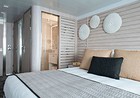
Prestige Stateroom Deck 5
Prestige Stateroom Deck 6
Deluxe Suite Deck 3

Deluxe Suite Deck 4
Deluxe Suite Deck 5
Deluxe Suite Deck 6
Prestige Suite Deck 5

Prestige Suite Deck 6
Privilege Suite Deck 5
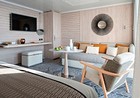
Privilege Suite Deck 6
Grand Deluxe Suite
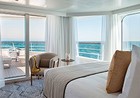
Owner's Suite
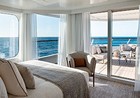
Vessel Type: Luxury
Passenger Capacity: 92 cabins
Built: 2017/2018
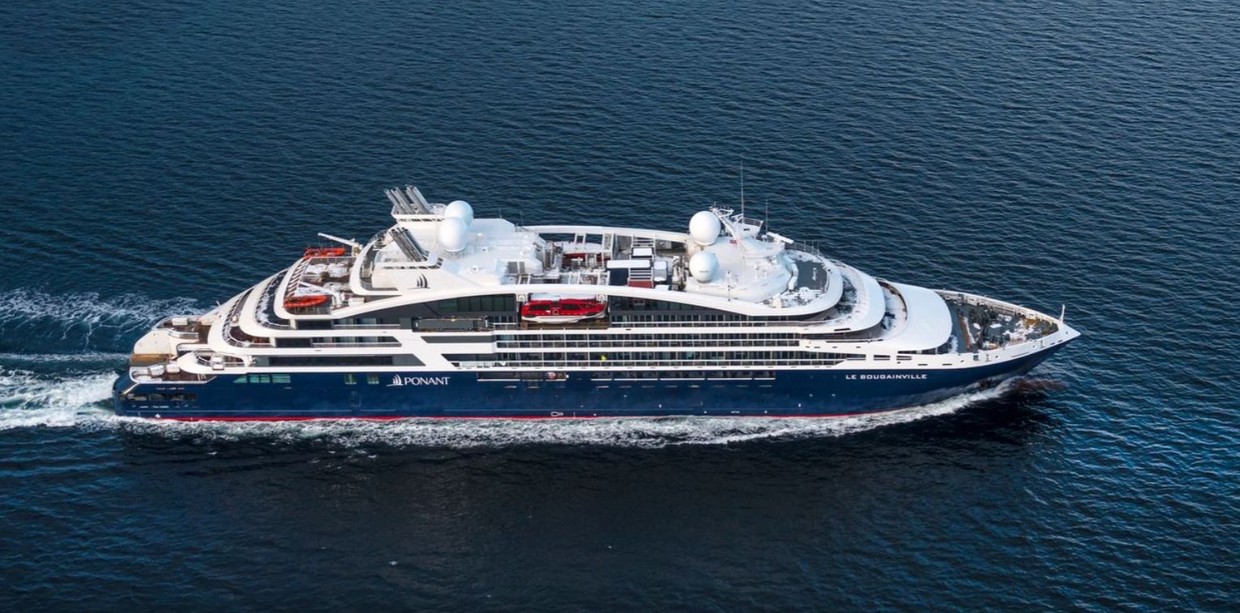
Le Bougainville is the third ship in the PONANT Explorers series, designed to merge elegant French style with advanced expedition technology. Carrying up to 184 guests across 92 luxurious staterooms and suites, it offers an intimate atmosphere with a focus on comfort and open connection to the sea. The ship’s sleek design invites light and space, featuring expansive lounges, panoramic decks, a swimming pool, theatre, and wellness facilities that create a relaxed yet sophisticated onboard experience.
True to the French spirit of exploration, Le Bougainville celebrates both discovery and refinement. Guests can savour world-class cuisine in elegant dining venues, enjoy a quiet moment in the ship’s stylish lounges, or embark on Zodiac excursions directly from the marina platform. Equipped with the latest environmental technologies, the vessel embodies responsible luxury travel—offering guests the chance to explore the world’s most extraordinary destinations in style and harmony with nature.


Special Offers on Escapade between Greek Islands and Italian Treasures
Online prices reflect the current brochure fare savings of up to 30%. Prices may change based on demand. Terms and conditions apply. This special offer is subject to availability. Please contact us for more details.
Inclusions
• Accommodation in stateroom
• The full meal plan
• The Open Bar: beginning with boarding, and during the duration of the cruise, a wide selection of drinks (mineral water, soft drinks, wine, beer, champagne, spirits, coffee, tea) is served on request and at any time of the day. Certain premium alcoholic beverages on the menu are not included in the Open Bar
• Free Wi-Fi internet access 24 hours a day*
• Activities offered during expedition cruises
• Access to all the common areas on board our sister ships and Ponant Explorers: fitness room, steam room, hair salon, swimming pool (sea water, heated), solarium, lounges, theater, boutique & leisure area
Exclusions
• Flights other than those mentioned in the itinerary
• Travel insurance
• Passport and visa costs if applicable
• Premium beverages package (Can be purchased on board)
• Optional Excursions where applicable
• Spa treatments on board
• Pre and post cruise accommodation unless otherwise stated
• Transfers unless specified
• Gratuities
 Luxury Expedition
Our Associates Include


