23 Days Luxury South Pacific Cruise - Lautoka to Manila
Hold your breath as the vines creak before a diver plunges forward — witness Pentecost Island’s extraordinary land dive for yourself. This remote voyage also takes you to Ambrym Island’s sacred Rom dance, performed in banana-leaf cloaks and colorfully painted masks. Journey deep into the diverse cultures of the Solomon Islands and Papua New Guinea before discovering the astounding reefs of Palau and the Philippines.
Highlights
• Witness Vanuatu’s extraordinary cultural traditions, including the sacred Rom dance on Ambrym Island and the famous land divers of Pentecost Island.
• Explore the remote islands and rich cultures of the Solomon Islands and Papua New Guinea, with opportunities to encounter traditional communities and pristine tropical landscapes.
• Discover some of the Pacific’s spectacular marine environments, from the pristine waters of Palau to Sohoton Bay, Bohol and the vibrant coral reefs of Apo Reef in the Philippines.
Lautoka is Fiji's second-biggest settlement, known as the Sugar City for its main trade, with botanical gardens showcasing tropical plant life from pearl white lilies to tall orchids. The city's name is said to derive from a battle cry meaning spear hit, called out when a chief was pierced during a duel. The Blue Lagoon offshore offers some of the best tropical beaches in the world.
Days at sea are the perfect opportunity to relax, unwind, and pursue personal interests, whether visiting the gym, the spa, or simply watching for whales from deck. These blue sea days offer an ideal balance to busy days spent exploring ashore.
Volcanically active and fringed by dark sand beaches, Ambrym is known across Vanuatu as the island of magic. Five distinct local languages evolved here, contributing to the archipelago's remarkable linguistic diversity. In the community of Ranon, the traditional Rom dance is performed on special occasions, its masks and costumes prepared in secrecy.
Pentecost Island in Vanuatu is the birthplace of what became bungee jumping. The ancient land diving ritual is practised every harvest season from April to June, when men leap from tall wooden towers with vines tied to their ankles. Introduced to the world by David Attenborough in 1960, the ceremony remains a genuine expression of Pentecost's traditions, performed in remote southern villages.
Days at sea are the perfect opportunity to relax, unwind, and pursue personal interests, whether visiting the gym, the spa, or simply watching for whales from deck. These blue sea days offer an ideal balance to busy days spent exploring ashore.
Santa Ana island, in the Solomon Islands, welcomes visitors to the village of Ghupuna with traditional songs and dances representing its three distinct communities. The island's white sand beach and stilted houses built from local materials reflect a way of life shaped by the sea, and the strings of traditional shell money and hardwood carvings available at local stalls are among the Solomons' finest crafts.
A serene fishhook of green punctuating the electric blue of Vonavona Lagoon. Tiny and densely covered in coconut palms, Kolo Hite is one of hundreds of islets scattered across these waters. Swim out to the shallow reefs just offshore and you can look beneath the surface for turtles, rays, and seahorses in water that is warm and almost perfectly still. Kolo Hite sits in the New Georgia group, one small piece of the more than 900 islands that make up the spectacular Solomons, with the cone of the Kolombangara stratovolcano on the horizon. Islands like this were once the dominion of warrior chiefs, and skull shrines are still protected by local custodians.
Kennedy Island in the Solomon Islands, formerly known as Plum Pudding Island, is where John F. Kennedy and his crew took refuge in August 1943 after their torpedo boat PT-109 was sunk by the Japanese. Kennedy swam dragging an injured crewmate to the island, and he and his crew survived on coconuts for two days before being found by Solomon Islanders. Kennedy kept a coconut shell from the island on his Oval Office desk throughout his presidency.
Days at sea are the perfect opportunity to relax, unwind, and pursue personal interests, whether visiting the gym, the spa, or simply watching for whales from deck. These blue sea days offer an ideal balance to busy days spent exploring ashore.
Rabaul occupies one of the Pacific's most dramatic settings — a town built inside the flooded caldera of a giant volcano, with active sub-vents still steaming around the bay. Mount Tavurvur buried much of the city in ash in 1994, and the ruins it left behind have become part of Rabaul's identity, alongside the extraordinary WWII Japanese tunnels cut into the caldera walls.
The volcanic island of Garove is part of the Witu Islands and once had a 5-kilometre-wide caldera. The island was historically used to produce copra and cocoa, and still is today. The only village inside the caldera is Widu, whose school and Catholic church occupy a promontory at the entrance's southwestern corner.
Madang was founded in 1891 as Friedrich Wilhelms-Hafen, the provincial headquarters of German New Guinea, and renamed after World War I. The Coastwatchers Memorial Lighthouse at Kalibobo, inaugurated in 1959, honours coastwatchers who worked behind enemy lines during WWII. The province has more than 170 languages spoken, and fruit bats roost on the trees along Modilon Road in large numbers.
One of four islands off Papua New Guinea's northern coast near Aitape, Ali Island has a beautiful white sandy beach on its eastern shore and five villages connected by well-maintained trails. The local communities welcome visitors while maintaining their own distinct way of life, expressed through colourful ceremonial headdresses, arm bands, and grass skirts. A village walk leads past homes and gardens to a Catholic church decorated with paintings of the via crucis.
Days at sea are the perfect opportunity to relax, unwind, and pursue personal interests, whether visiting the gym, the spa, or simply watching for whales from deck. These blue sea days offer an ideal balance to busy days spent exploring ashore.
Days at sea are the perfect opportunity to relax, unwind, and pursue personal interests, whether visiting the gym, the spa, or simply watching for whales from deck. These blue sea days offer an ideal balance to busy days spent exploring ashore.
Spread across a handful of islands, Koror is the city at the heart of a surreally beautiful Pacific archipelago. Nearby, dozens of natural green domes rise from turquoise shallows across the Rock Islands, while Jellyfish Lake is famed for its stingless jellyfish. Koror offers an introduction to Palau’s distinct culture — the bai, a thatched, canoe-shaped meeting house, is painted with legends and remains central to community life. See intricate storyboards preserving traditional tales in carved wooden panels, and turtle-shell money that played an important ceremonial role in Palauan society. Koror’s museums walk you through a century of colonial control under Spanish, German, Japanese, and American flags.
Spread across a handful of islands, Koror is the city at the heart of a surreally beautiful Pacific archipelago. Nearby, dozens of natural green domes rise from turquoise shallows across the Rock Islands, while Jellyfish Lake is famed for its stingless jellyfish. Koror offers an introduction to Palau’s distinct culture — the bai, a thatched, canoe-shaped meeting house, is painted with legends and remains central to community life. See intricate storyboards preserving traditional tales in carved wooden panels, and turtle-shell money that played an important ceremonial role in Palauan society. Koror’s museums walk you through a century of colonial control under Spanish, German, Japanese, and American flags.
Days at sea are the perfect opportunity to relax, unwind, and pursue personal interests, whether visiting the gym, the spa, or simply watching for whales from deck. These blue sea days offer an ideal balance to busy days spent exploring ashore.
Sohoton Bay in the Philippines' Leyte island is one of the country's most extraordinary natural environments. Mushroom-shaped limestone formations rise from emerald water, interconnected lagoons wind through the bay, and stingless jellyfish drift in the warm, enclosed Sohoton jellyfish lake. Kayaking through the bay's hidden caves and lagoons is one of the Philippines' most memorable outdoor experiences.
Bohol is home to the Chocolate Hills, more than 1,200 cone-shaped karst mounds scattered in a surreal natural display, and the Philippine tarsier, one of the world's smallest primates, protected in a quiet forest sanctuary. Palm-lined beaches invite relaxation along the coastline, while the Loboc River winds through the lush interior past centuries-old colonial churches and local villages. The island's culture is deeply rooted in its landscape and history.
Capul Island, in the Philippines' San Bernardino Strait, is anchored by a Spanish-era stone church and a lighthouse that has guided ships since 1896. The island's position on one of the Philippines' most important maritime passages shaped its history as a trading outpost, and the quiet beaches and fishing village traditions of this lesser-visited corner of the archipelago reward unhurried exploration.
Apo Reef is the world's second-largest contiguous coral reef system and a designated UNESCO Marine Sanctuary, its glass-clear waters sheltering tropical fish, sea turtles, and reef sharks. The small islands of the reef are fringed by white sand and backed by lush mangroves, offering snorkelling, diving, and birdwatching in some of the Philippines' most saturated natural colour. Few places on the planet combine scale, clarity, and biodiversity so completely.
Manila is the Philippines' sprawling capital, known as the Pearl of the Orient, with Intramuros as its cobbled historic core where the Spanish once ruled. Fort Santiago is a UNESCO World Heritage Site that has survived World War II bombardments, fires, and earthquakes. Rizal Park, where independence hero Jose Rizal was executed, is both a national symbol and a green oasis within the densely populated city.
Itineraries are subject to change.
|
Book now |
Vista
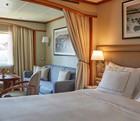
Veranda
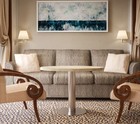
Midship Veranda
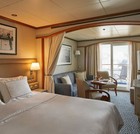
Medallion
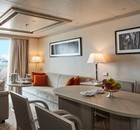
Silver
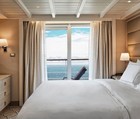
Royal 1 Bedroom
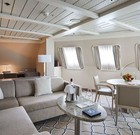
Grand 1 Bedroom
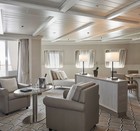
Owner 1 Bedroom
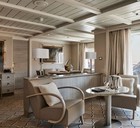
Royal 2 Bedroom
Grand 2 Bedroom
Owner 2 Bedroom
Vessel Type: Luxury Expedition
Length: 157 m
Passenger Capacity: 200/260
Built: 1994 Refurbished & Rebranded: 2017
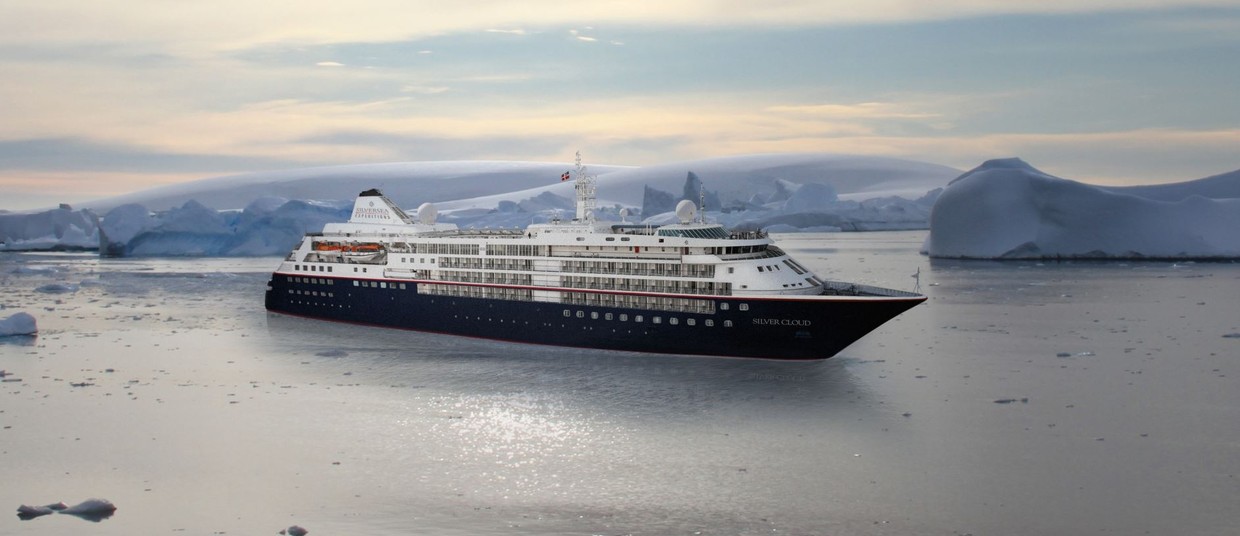
Silver Cloud delivers one of the most personalised expedition experiences at sea, blending ultra-luxury with true adventure. As Silversea’s first crossover ship, she’s built for both comfort and exploration, offering large ocean-facing suites—80% with verandas—and an impressive 1:1 crew-to-guest ratio. With 20 Zodiacs and 10 kayaks, guests enjoy unparalleled access to remote locations, while expert-led excursions ensure meaningful encounters with nature and culture alike. From the icy reaches of Antarctica to the sun-kissed South Pacific, Silver Cloud brings the remarkable within easy reach.
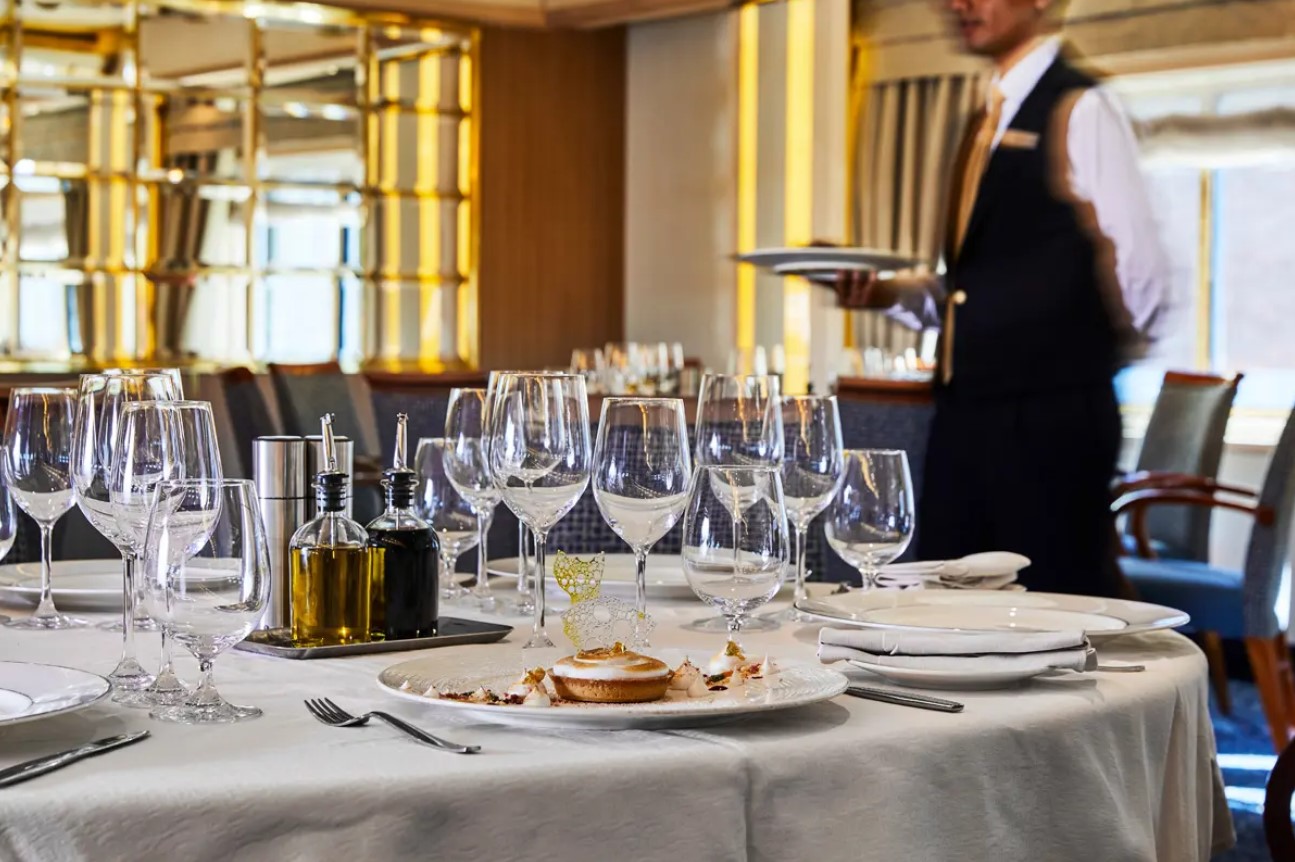
On board, refined living continues with four elegant dining venues, including French fine dining at La Dame and authentic Italian at La Terrazza. Relax in stylish public areas such as the Panorama Lounge or Connoisseur’s Corner, indulge in world-class spa treatments, or learn more about your destinations from passionate experts in the Explorer Lounge. Whether you’re cruising the Kimberley or the Chilean fjords, Silver Cloud offers a sophisticated base for discovering the far corners of the world in sublime comfort.



Inclusions
• All shore excursions (Expedition cruises) or shore excursion credit (Oceangoing voyages)
• Charter flights or overnight hotels (if required by the Expedition itinerary)
• Butler-serviced suites
• Extraordinary dining at up to 14 restaurants
• Onboard entertainment and lectures
Exclusions
• International flights
• Passport and visa costs if applicable
• Travel insurance
• Spa and Salon Treatments
• Complete valet services, including laundry, pressing and dry cleaning, are available at an additional charge
 Luxury Small Ship Cruise
Our Associates Include


