13 Days Luxury Canada Cruise - Montreal to Boston Massachusetts
French-Canadian culture, fall colors, and distant islands — discover maritime Canada and New England. Follow the steep-sided Saguenay Fjord and step ashore on remote Anticosti Island, home to an estimated 160,000 deer and significant fossils. Reach the sheer cliffs of Gros Morne National Park and the Bay of Fundy, where seals and seabirds populate the islands and whales frequent the waters, before you sail for Boston.
Highlights
• Experience the spectacular autumn colours of eastern Canada, from the Saguenay Fjord to the rugged coastlines of Newfoundland and Nova Scotia.
• Explore remote Anticosti Island, renowned for its abundant wildlife, dramatic landscapes and fascinating fossil heritage.
• Discover the natural wonders of maritime Canada before concluding your voyage in the historic city of Boston.
A French-speaking city of festivals, food markets, and cobblestone streets, Montreal wears its European heritage with Canadian confidence. Mount Royal rises at the city's centre, offering panoramic views over a skyline shaped by centuries of history, while the underground city, vibrant neighbourhoods, and St. Lawrence waterfront ensure there is no shortage of ways to spend the day.
Quebec City is North America's most European-feeling city — a UNESCO World Heritage Site where 400-year-old fortifications, cobblestone streets, and the iconic Château Frontenac rise above the St Lawrence River. Samuel de Champlain founded New France here in 1608, and the city's French-speaking character, boardwalk cannon batteries, and Old Town neighbourhood have survived intact into the 21st century.
Dissecting the most southerly ice-age fjord in the northern hemisphere, the Saguenay River rolls through dense forest before emptying into the St. Lawrence, slicing through three National Parks. Wildlife ranges from Atlantic salmon and moose to black bears, wolves, and harbour seals, and where the cool Saguenay meets the warmer St. Lawrence, conditions attract pods of blue whales, belugas, and minke whales. The precipitous cliff edge of Cap Trinite is among the fjord's most celebrated sights.
Located in the Côte-Nord region of the province of Quebec, Canada, the city of Baie-Comeau is nestled on the shores of the Saint Lawrence River near the mouth of the Manicouagan River, and is the seat of Manicouagan Regional County Municipality. The city is comprised of two urban centres, Baie-Comeau proper and Hauterive. The landscape of the Baie-Comeau region has been shaped by glacial retreats and other natural phenomena. Important geological features include the Manicouagan and St. Lawrence rivers in the Manicouagan-Uapishka World Biosphere Reserve, and the immense Manicouagan crater, which was formed by a meteorite. The oldest part of Baie-Comeau is the Old Post, or Vieux-Poste, an area near the mouth of the Amédée River. In 1889, the Saint-Eugène-de-Manicouagan Mission was founded by Eudists, and the first sawmill in the Côte-Nord region was built in 1898. In 1916, Route 138 was extended to Saint-Eugène-de-Manicouagan and in 1929, its post office opened with the English name of Comeau Bay. Eastern Baie-Comeau was founded in 1936 with the construction of a paper mill. The region's burgeoning timber, pulp and paper industries prompted remarkable growth, and the town of Baie-Comeau was incorporated the following year. In 1950, the village of Saint-Eugène-de-Manicouagan was incorporated as the Municipality of Hauterive. In 1982, Hauterive was merged into Baie-Comeau. As a result of its deep-water seaport and access to forestry, energy and mining in northeast Canada, Baie-Comeau combines sustainable industrial development with a thriving natural ecosystem. In fact, few others cities around the world possess a major industrial complex at the heart of a global reserve like the World Reserve Biosphere of Manicouagan-Uapishka. The Baie-Comeau region also boasts engineering masterpieces in the realm of hydroelectricity, including the Jean-Lesage Generating Station, Manic 2Central Dam, Manic 5 Generating Station and Daniel Johnson Dam. The development of the Baie-Comeau region was bolstered by the industrialization of modern Québec by means of its natural resources. The presence of the Saint Lawrence River, forestry, the creation of saw and paper mills, and the emergence of a world-class aluminum smelter all led to the expansion of the territory. Baie-Comeau and its environs are ideally-suited for a variety of popular inland and coastal excursions. Its proximity to the confluence of the Manicouagan and St. Lawrence rivers in the Manicouagan-Uapishka World Biosphere Reserve offers easy access to a vast natural paradise replete with exceptional geological phenomena, incredibly rich wildlife and forest habitats. Explore the exquisite coast and crystal-clear waters teeming with marine mammals and undersea treasures whilst boating, kayaking, scuba diving, fishing, and hunting. In the summer, an abundance of activities include golf, cycling and hiking trails, beaches, parks, flight-seeing, and more. Winter is no less exciting; the region's abundant snowfall is ideal for downhill skiing at the Centre de ski du Mont-Tibasse, and cross-country skiing and ski-skating at Sentier Norfond and Les Sentiers de la Rivière Amédée. Due to its compact size, Baie-Comeau can be easily explored in just a single day.
A sweeping arc of pebble beach curves against the forested backdrop of Anticosti Island, at the mouth of the St. Lawrence. Baie de la Tour takes its name from its tower-like cliff — sheer white limestone terraces capped with pine — and the bay glows turquoise on sunny days, while offshore the waters are patrolled by whales and seals. Inland, hiking trails lead through forest where more than a hundred thousand white-tailed deer wander freely, far outnumbering the island's handful of residents. You can explore the canyon where Vauréal Falls plummets, and it’s the fossils — revealing marine life from 447–437 million years ago — and natural history preserved here that earned Anticosti its UNESCO World Heritage listing in 2023. Pure peace and wild beauty, right at the heart of the river.
Havre St. Pierre overlooks the Mingan Archipelago, whose limestone monoliths have been sculpted by ocean, wind, and ice erosion into towering, precariously balanced rock outcrops. Pods of minke whales may accompany boats weaving between the scattered islands, while eagles soar overhead and puffins nest on sheer cliffs. The boardwalk offers panoramas of the world's largest estuary, which draws blue whales to feed in its krill-rich depths.
Woody Point opens onto Gros Morne National Park, whose Tablelands form a landscape so geologically unique that NASA has studied them as an analogue for possible life on Mars. The flat-topped mountains of peridotite rock were brought up from the Earth's mantle by ancient plate tectonics. The UNESCO World Heritage Site preserves the clearest evidence on Earth of continental drift theory.
Days at sea are the perfect opportunity to relax, unwind, and pursue personal interests, whether visiting the gym, the spa, or simply watching for whales from deck. These blue sea days offer an ideal balance to busy days spent exploring ashore.
The Tusket Islands, southwest of Nova Scotia, sit between the Bay of Fundy and the open Atlantic in waters shaped by some of the world's strongest tidal forces. Strong currents have created a constantly shifting landscape of islands, sand bars, and ledges that shelter important migratory bird populations and saltmarsh ecosystems, and the region's lobster fishing heritage runs through generations of local families.
Grand Manan Island in the Bay of Fundy is 21 miles long and 11 miles wide, with the western side defined by 300-foot cliffs and high winds. The island has been a recognised North American birding hotspot since John James Audubon visited in 1833, with over 240 bird species recorded. The surrounding waters are an important feeding area for minke, fin, and humpback whales, as well as the rare North Atlantic right whale.
Yarmouth, on Nova Scotia's Acadian coast, is a quiet town of lobster fishing and coastal scenery. The French Acadian heritage is expressed in the Acadian flag, the Festival Acadien, and a culinary tradition built on seafood and French-Canadian flavours. The Yarmouth County Museum and the lighthouses of the Fundy Shore offer a distinctive Maritime character at odds with busier Nova Scotia destinations.
Historic yet revolutionary, Boston carries American history on every corner, from the Boston Massacre Site to Bunker Hill, where the first shots of the Revolutionary War were fired. The two-and-a-half-mile Freedom Trail links the city's most significant historic sites, while Fenway Park and fresh New England seafood in the Seaport District round out a city of enduring appeal. Green spaces including Boston Public Garden offer quieter respite amid the dense history.
Itineraries are subject to change.
|
Book now |
Classic Veranda

Superior Veranda

Deluxe Veranda

Premium Veranda

Silver

Grand 1 Bedroom

Owner 1 Bedroom

Vessel Type: Luxury Expedition
Length: 164.40 metres
Passenger Capacity: 200
Built: 2021
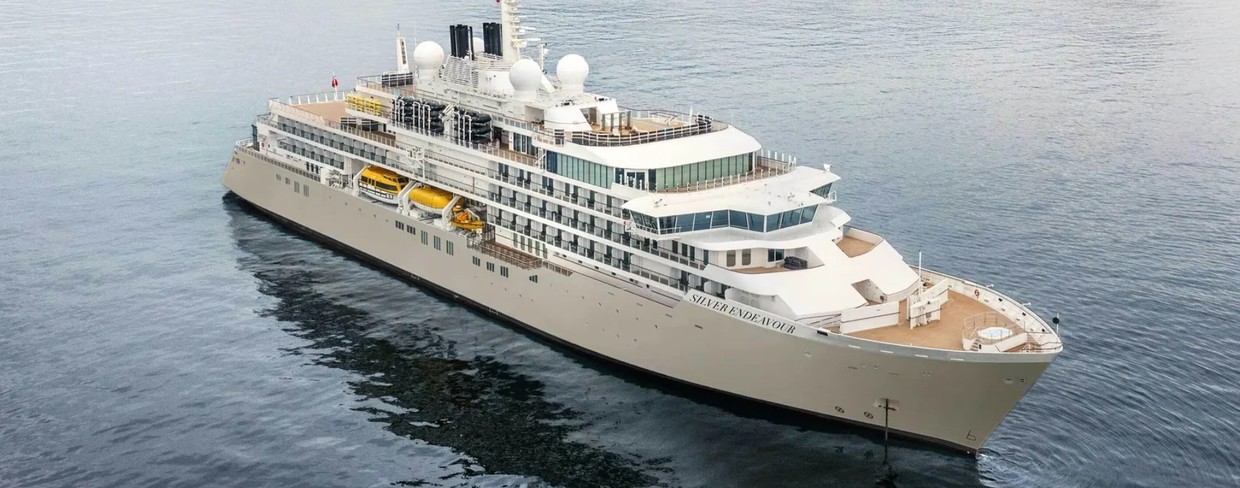
Silver Endeavour is redefining the frontier of luxury expedition cruising. Purpose-built for polar exploration and launched in 2021, this state-of-the-art vessel combines cutting-edge technology, sleek design, and Silversea’s hallmark personalised service to deliver one of the most advanced expedition experiences at sea. With a PC6 ice-class hull, a superb 1:1 crew-to-guest ratio, and the highest expert- and Zodiac-to-guest ratios in the industry, Silver Endeavour is your gateway to the most remote corners of the globe — from the Arctic to Antarctica — with absolute comfort and ease.
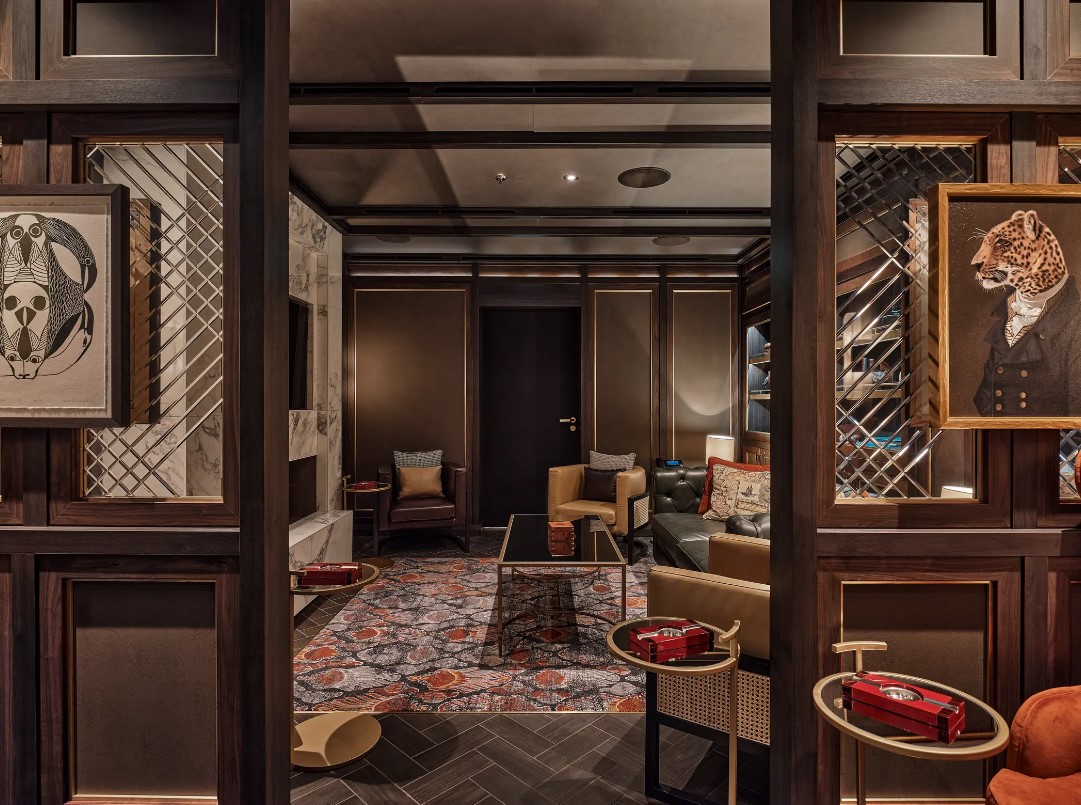
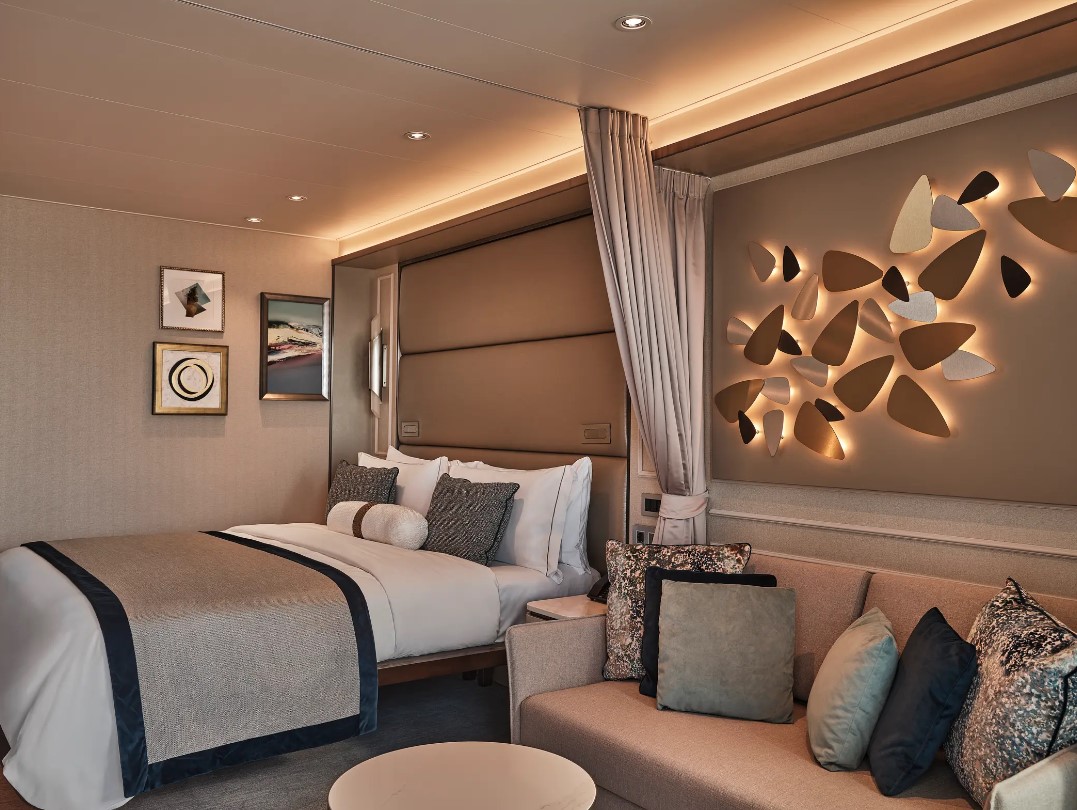
On board, guests enjoy an exceptional array of elegant suites, all with private balconies and expansive views, as well as fine dining across multiple venues, including French gastronomy at La Dame and Italian cuisine at Il Terrazzino. Public spaces such as the Observation Lounge, Explorer Lounge, and glass-enclosed Pool Deck offer stylish havens for relaxation between immersive shore excursions. With her refined interiors, curated library, spa, and mud rooms for expedition prep, Silver Endeavour is the epitome of ultra-luxury travel — built to venture where few have gone before, without compromise.




Inclusions
• All shore excursions (Expedition cruises) or shore excursion credit (Oceangoing voyages)
• Charter flights or overnight hotels (if required by the Expedition itinerary)
• Butler-serviced suites
• Extraordinary dining at up to 14 restaurants
• Onboard entertainment and lectures
Exclusions
• International flights
• Passport and visa costs if applicable
• Travel insurance
• Spa and Salon Treatments
• Complete valet services, including laundry, pressing and dry cleaning, are available at an additional charge
 Luxury Expedition
Our Associates Include


